How to grow Paris polyphylla from seed? A detailed explanation of the key seedling-raising techniques
How do you raise Paris polyphylla seedlings well? What should be noted during the seedling-raising process? We ask netizens to help introduce this. Zhongdiwang has compiled the seedling-raising methods for Paris polyphylla, listed in detail below for netizens' reference. Selection of the seedling site: For Paris polyphylla seed beds, choose a clearing under forest or a slope with relatively high terrain, good drainage, soil rich in organic matter, and fairly good shade (20% light transmittance). For dry land, 3 to 4 layers of shade netting must be erected. On a sunny day, plow the field and level it into beds. The bed surface is 120 cm wide, the ditch is 30 cm wide and 25 cm deep, and the ditches must be unobstructed to facilitate drainage.
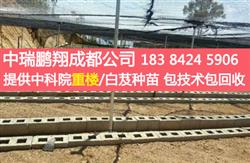 How do you raise Paris polyphylla seedlings well? What should be noted during the seedling-raising process? We ask netizens to help introduce this
Zhongdiwang has compiled the seedling-raising methods for Paris polyphylla, listed in detail below for netizens' reference.
Selection of the seedling site:For Paris polyphylla seed beds, choose a clearing under forest or a slope with relatively high terrain, good drainage, soil rich in organic matter, and fairly good shade (20% light transmittance). For dry land, 3 to 4 layers of shade netting must be erected. On a sunny day, plow the field and level it into beds. The bed surface is 120 cm wide, the ditch is 30 cm wide and 25 cm deep, and the ditches must be unobstructed to facilitate drainage.
Treatment of Paris polyphylla seeds:For Paris polyphylla seeds, select plump, mature seeds free of disease, mildew, and damage. Mix them with clean fine sand at a ratio of 2:1, rub and wash to remove the outer seed coat, wash clean, and soak the seeds in 500-fold carbendazim for 1 hour, then bury them in moist sand. After treating at 20°C for 4 months, sow once the Paris polyphylla seeds have rooted. During this period, pay attention to keeping them moist.
Sowing methods for Paris polyphylla seeds: The treated seeds can be sown in holes or drills, or broadcast. Sow into humus soil and fine sand (2:1). The seeds must be covered with a thin layer of soil 1.5 to 2 cm thick, then covered with pine needles to retain moisture. This not only helps the seedlings emerge but also helps the cotyledons shed their shells and ensures the emergence rate.
During this period, maintain a moist and shaded environment for the seedbed; avoid soil compaction, drying, and excessive sunlight. Seedlings generally emerge in 3 to 4 months.
Paris polyphylla cut-piece propagation method:In winter, cut disease-free, normally shaped Paris polyphylla rhizomes into sections of two nodes (about 2 cm), and treat the wounds with plant ash. Cut pieces with terminal buds can be planted directly in the field. Cut pieces without terminal buds are planted at a spacing of 7×7 cm. After planting, cover with chopped grass or humus soil to retain moisture (soil moisture at 65%), and maintain a shaded environment.
Transplanting methods for Paris polyphylla:Seedlings grown from seed are transplanted 3 years after emergence, at a spacing of 10×20 cm. Cut pieces with terminal buds are planted at a spacing of 10×20 cm. Cut pieces without terminal buds are dug out in the second winter when adventitious buds have already formed, and planted at a spacing of 20×30 cm. After transplanting, cover with pine needles or humus soil to retain moisture and maintain a shaded environment. Transplanting is best done in winter, after the aboveground stems have wilted and while the rhizomes are dormant. During transplanting, take care not to damage the terminal buds and fibrous roots.
The growing environment for Paris polyphylla
Post-planting management methods for Paris polyphylla
Click to get more Paris polyphylla cultivation techniques
Click to get more medicinal herb cultivation techniques