How to grow chives for high yield? A full analysis of cultivation techniques
How can chives be grown for high yield? How should chives be managed after planting? Experienced readers are asked to share their advice. Chives are also called chive flowers, referring to the white flower clusters that grow on the white chive stems in autumn. Chive flowers are a common seasoning eaten in both urban and rural areas across north and south China. Generally, chive flowers are picked when they are about to open but have not yet opened, and after grinding...
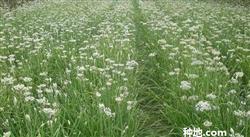 How can chives be grown for high yield? How should chives be managed after planting? Experienced readers are asked to share their advice
Chives are also called chive flowers, referring to the white flower clusters that grow on the white chive stems in autumn. Chive flowers are a common seasoning eaten in both urban and rural areas across north and south China. Generally, chive flowers are picked when they are about to open but have not yet opened, and after grinding they are pickled into a paste for eating.
Eating chive flowers has the effect of promoting fluid production, stimulating the appetite, increasing appetite, and promoting digestion. At the same time, chive flowers are rich in calcium, phosphorus, iron, carotene, riboflavin, ascorbic acid, and other beneficial components for health. Therefore, Zhongdiwang has compiled the cultivation techniques and management methods for chive flowers, listed in detail below for readers' reference.
I. Cultivation techniques for chive flowers:
1. Sowing and seedling-raising time for chive flowers:Chive flowers can be propagated by two methods: seeds and division. Sowing or division propagation can be done throughout the year. At present, in our province, seed sowing propagation is mainly used, and sowing for seedling raising in October is appropriate.
2. Seed disinfection method for chive flowers:Before sowing, first soak the seeds in a 800-1000 times potassium permanganate solution for disinfection for 4 hours, remove them and wash them clean with clear water, then soak them in clear water for 24-48 hours, remove them and put them into a cloth bag or container and cover with cloth, placing them at 20°C for germination. During germination, they must be washed with clear water 2 times every day. After 2-3 days, when 20% of the seeds have sprouted, they can be sown.
3. Selection and treatment of the seedling-raising site for chive flowers:For planting chive flowers, choose slightly acidic sandy loam with convenient drainage and irrigation and good water and fertilizer retention, and a plot whose previous crop was not onion or garlic, as the seedbed. The sowing rate per mu of seedbed is 4 kg. Before sowing, turn and sun the seedbed and finely prepare the soil. While preparing the soil, make beds and apply an appropriate amount of decomposed organic fertilizer, calcium magnesium phosphate fertilizer, and plant ash. For seedbeds with many weeds, butachlor can be sprayed for weed control 2 days before sowing.
4. Sowing and management methods for chive flower seedling raising:Evenly broadcast the disinfected chive seeds on the bed surface, then cover with a thin layer of soil. The soil cover thickness should be uniform and consistent. Cover the bed surface with a shade net, and water thoroughly after sowing.
After the seeds germinate and emerge, uncover the shade net. Strengthen management during the seedling stage, achieving frequent watering, light fertilization, early weeding, and early disease prevention, so as to facilitate early emergence, uniform emergence, and strong emergence.
5. Treatment of the transplanting site for chive flowers:For planting chive flowers, choose loam with deep soil layers, rich organic matter, loose and fertile soil, and convenient drainage and irrigation. Before planting, deep plow and broadcast 2000 kg of decomposed organic fertilizer and 50 kg of calcium magnesium phosphate fertilizer per mu. After fully mixing the base fertilizer with the soil, level and make beds. The bed width is 1.5 m including ditches, and the bed height is 30 cm. While preparing the soil, apply 2 kg of Mirel granules per mu to prevent underground pests such as chive maggots from biting the root system.
6. Transplanting time and method for chive flowers:When the chive flower seedlings reach about 50 days of age, about 20 cm in height, and have 3-4 leaves, they can be planted. For seedlings pulled from the seedbed, part of the root system and leaves should be cut off before planting. Plant 2-3 seedlings per hole, plant 4 rows per bed, with a plant-row spacing of 40 cm x 30 cm, and transplant 3600-4000 holes per mu. After transplanting, water thoroughly to settle the roots.
II. Management of planted chive flowers:
1. Because chive flowers have a long growth and harvest period and a high fertilizer requirement, and are fertilizer-tolerant vegetables, timely and sufficient nutrient supply is needed for the plants to grow robustly; when fertilizer and water are insufficient, they are prone to premature aging and the flower stems become thin and small.
2. During the vigorous vegetative growth period in winter and spring after planting chive flowers, topdressing should be done in time to cultivate thick rhizomes and leaves and increase tillering. After planting, topdress generally once every 7-10 days or so, applying 5-15 kg of compound fertilizer per mu.
3. When chive flowers enter the harvest period, attention should be paid to the rational application of nitrogen, phosphorus, and potassium fertilizers. It is advisable to apply more organic fertilizer, applying 200-500 kg of organic fertilizer and 10-15 kg of compound fertilizer per mu. Topdressing can be combined with intertillage and weeding.
4. During the entire growth period of chive flowers, the soil should be kept moist. Long-term drought will reduce tillering, shorten leaves and flower stems, and affect yield. Therefore, water in time during drought, and water can also be led into ditches for seepage irrigation, but the water level in the ditch should be more than 25 cm below the bed surface.
5. If it rains, attention should be paid to timely drainage to prevent waterlogging. If under severe immersion for a long time, it will cause root rot, leaf yellowing, a sharp decrease in tillering, and in severe cases lead to plant death. Pay attention to intertillage, weeding, and hilling, and appropriately divide and transplant plants at the right time. When controlling diseases and pests, pay attention to alternating and rotating pesticides.
Chive cultivation technique video
Herbicides that can be used in chive fields