What are the grafting methods and precautions for bitter gourd seedlings?
How are bitter gourd seedlings grafted, and what should be noted? We also ask netizens with bitter gourd grafting experience to help explain. Grafted bitter gourd seedlings can effectively prevent bitter gourd fusarium wilt, soil-borne diseases and obstacles caused by continuous cropping, and can increase bitter gourd yield. Therefore, Zhongdi Network has compiled the operating methods and... for grafted bitter gourd seedlings.
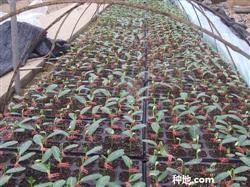 How are bitter gourd seedlings grafted, and what should be noted? We also ask netizens with bitter gourd grafting experience to help explain.
Grafted bitter gourd seedlings can effectively prevent bitter gourd fusarium wilt, soil-borne diseases and obstacles caused by continuous cropping, and can increase bitter gourd yield. Therefore, Zhongdi Network has compiled the operating methods and precautions for grafted bitter gourd seedlings, listed in detail below for netizens' reference.
I. Operating steps for grafted bitter gourd seedlings:
Step 1: For grafted bitter gourd seedlings, the rootstock is raised in nutrient pots, and the scion is raised in clean soil to strictly prevent soil-borne disease infection. Soak bitter gourd seeds in 800-fold diluted 75% thiophanate-methyl solution for 12 hours, then soak in clean water for 16 hours, remove and air-dry, bury in sand and keep warm to promote sprouting for 2 days; disinfect the nutrient soil with quintozene, add 1 kg of 40% quintozene per 1000 kg of nutrient soil and mix well, spread the nutrient soil evenly on the seedbed, water it with clean water, then dibble the sprouted bitter gourd seeds into the nutrient soil and cover with soil.
Step 2: The grafting time is generally 17-20 days after sowing the rootstock, when the cotyledons are 5-6 cm above the ground and 2.0-2.5 mm in diameter.
Step 3: The bitter gourd grafting method generally can use either the slant grafting method or the cleft grafting method. Taking slant grafting as an example, first make a 30° cut 2/3 deep, 0.3-0.4 cm deep, at 0.5-0.6 cm on the vertical face below the rootstock cotyledons; select a robust scion and make an upward 30° cut 2/3 deep, 0.3-0.4 cm deep, at 1 cm on the large side face below the cotyledons. Align the two cuts, join them, and fix with a grafting clip.
Step 4: After bitter gourd grafting, generally 9-10 days after grafting is the wound healing period. ① Temperature: control at 25°C-30°C during the day and about 20°C at night. ② Humidity: keep above 95%. Place the nutrient pots closely together in the greenhouse and water once, and use a small arch, plastic film and shade net to seal in heat and block light. Do not ventilate for the first 5-6 days; after 7 days, under higher temperature and humidity weather conditions, ventilate in the early morning or evening: 1-2 times per day, then gradually uncover the plastic film to increase ventilation amount and time, but still maintain relatively high air humidity, spraying clean water 1-2 times at noon each day. ③ Light: shading is needed after grafting. Fully shade for 3-4 days after grafting, then gradually uncover the covering in the morning and evening, and gradually remove the covering as the wound heals.
Step 5: Remove the grafted seedlings that have not survived. False surviving seedlings are not easy to distinguish at first, so they can be placed in a better-conditioned position. After a period of time, the slow-growing seedlings will gradually catch up with the large seedlings, and then the false surviving seedlings should be removed.
II. Planting method for grafted bitter gourd seedlings:
1. Apply sufficient base fertilizer: apply 4000 kg of high-quality organic fertilizer and 80 kg of ternary compound fertilizer per mu, and deeply plow and prepare the soil.
2. Select seedlings: grafted seedlings survive after 8 days, and fully survive after 12 days. When planting, select surviving seedlings. The planting spacing is (110-120) x (70-80) cm between plants and rows, with 700-800 plants per mu. The graft union should be more than 3 cm above the ground to prevent new roots from growing at the union.
3. Pay attention to heat preservation, using the method of plastic film mulching.
Bitter gourd seed sprouting method
Benefits of hanging vines for bitter gourd