Detailed Guide to Carrot Planting Methods and Pest Control Techniques
Many people like to grow their own carrots because they feel they are healthier and fresher. And now there are more and more varieties, so there are more choices. The shapes are also endless, no longer just the long slender type, but also round types, straight-barrel types, and more, which may appeal more to children. So how exactly do you grow them? Let's take a look together.
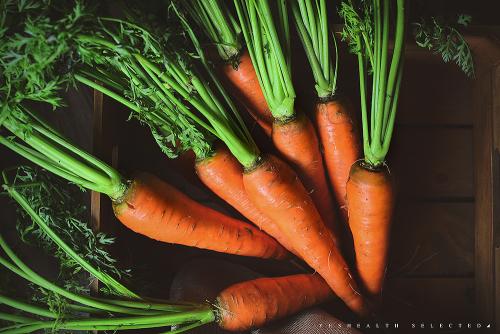
Planting:
Carrots and radishes are both crops grown for their roots, so the most important thing is preparing the soil. Other plants grow upward, but this type of plant grows downward, so however long you want your root to grow, you need to prepare the soil that deep below.
So before planting root crops, you must first dig holes and loosen all the soil. Besides removing all the stones, large and small, you should also replace the soil as much as possible, using loose soil as the ideal, including a good mixed soil, and then mix in some sandy soil, and only then plant. (So-called good soil includes compost, Triple Mix, etc.).
Any small stone, or a clump of hard soil, will make your root twisted and deformed.
Ordinary carrots need a 12-16 week growing period, so the soil is best prepared before winter, or in early spring. Only then do you sow the seeds. Because root crops all need space to grow downward, they cannot be planted too densely, otherwise you will spend a lot of time thinning them later. If you want to grow slender carrots, you can plant them a little more densely, but otherwise you must leave a certain amount of space for them to grow. If you are growing round carrots, the loose soil depth can be shallower, but the spacing needs to be larger.
Because the spacing of root crops is very important, you must be careful when sowing. Some people use small eyebrow tweezers to plant them. Others specifically buy an enlarged type of seed, called pelleted seeds, though these are not always easy to find, and not all varieties have enlarged seeds.
Roughly speaking, early-maturing varieties are more slender and need 12 weeks to mature, while late-maturing crops are shorter and thicker and need 16 weeks to grow. Each seed packet will state the required time to maturity, from as short as 50 days to as long as over a hundred days. Generally it is between 70-80 days.
Before planting, you can mix some balanced fertilizer into the soil, such as 10:10:10 or similar, but not too much. After that there is no need to fertilize again. However, if the weather is dry, remember to water. Lack of water will make the resulting roots loose in texture and flavorless. Just like growing tomatoes and cucumbers, you cannot interrupt watering. If there is drought at one time and then heavy watering at another, it can even cause the carrots to split.
Root crops like cooler weather. In the north you can plant them in early spring as soon as the weather warms up, (you can sow two or three weeks before the frost-free period.) In the tropics it is best to plant them in autumn and winter. If you need a long-term harvest, you can plant a batch every two or three weeks. The last batch must be sown 60-70 days before the frost period.
Raised beds and container planting:
Because growing root crops has special soil requirements, many people use raised beds to grow them, that is, raised beds. For example, use 1-foot-wide boards to enclose an area, fill the middle with soil, and then plant on top. This saves the effort of digging and replacing soil.
Of course, before making a raised bed, you should also loosen the original soil a little, so that the two soil types are not completely different. Doing so also helps drainage run smoothly.Another way is to grow them in a large pot. As long as it is a pot or bucket more than 1 foot deep, it can be used. But the drainage holes at the bottom of the pot must be large enough, and drainage must be good.
In the past some people asked how to grow baby carrots. Besides buying seeds of a more slender variety (including early crop), you can plant them at closer intervals, one plant every 1 inch, and you can also harvest earlier. This type does not need very deep good soil, and can even be grown in pots.
Pests:
Carrots are relatively prone to a small fly, commonly called the Carrot Fly (Carrot Rust Fly). This fly is mostly attracted by the smell of carrot leaves when they are crushed. So whether thinning seedlings or harvesting, avoid crushing the leaves. Also avoid doing these things when it is windy. The larvae of this small insect will go deep into the ground and draw lines across the surface of the carrot, which is very off-putting.
To prevent weeds and maintain soil temperature and moisture retention, you can add fertilizer to the soil surface after the roots begin to swell; ordinary good soil will do. And as soon as you see weeds, pull them out.