Morel Cultivation Techniques Explained: Growing Methods and Growing Conditions
What benefits do morels have? Why do so many people grow morels? And how do you grow morels? Want to know? Let's find out together.
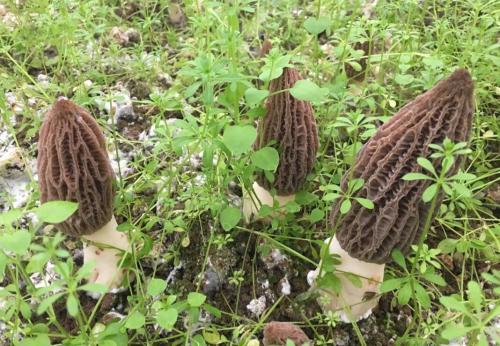
According to tests, every 100 grams of morels contains 28.1 grams of crude protein and 4.4 grams of crude fat, along with as many as 20 amino acids; their vitamin and mineral content is also extremely rich, with some nutrients exceeding the content found in cordyceps. They are a premium natural health food and are known as “the crown of foods”.
The morel is a precious edible mushroom worldwide and is considered a high-grade nutritious tonic. It has the functions of tonifying the kidneys, strengthening yang, nourishing the brain and refreshing the mind, and has a clear improving effect on impotence and reduced sexual function. Long-term consumption can prevent cancer, fight cancer, prevent colds and increase the body's immunity, and it has important development value in medicine. Morels have a unique flavor, a delicious taste and rich nutrition.
I. Biological Environment
1. Temperature and humidity. The morel is a low-temperature, high-humidity fungus, occurring mostly after rain from March to May, and occasionally from August to September. Its growing period is long, and besides requiring a relatively low temperature, it also needs a large temperature difference to stimulate mycelial differentiation. The mycelial growth temperature is 21-24°C; the formation and development temperature of the fruiting body is 4.4-16°C, and the relative air humidity is 65%-85%. For this reason, the cultivation time should be November to December.
2. Sunlight. Weak scattered light is beneficial to the growth and development of the fruiting body. Strong direct light should be avoided.
3. Soil. The soil pH should be 6.5-7.5; neutral or slightly alkaline soil is beneficial to morel growth. Morels often grow in limestone or chalk soils. They can grow in humus soil, black or yellow loam, and sandy mixed soil.
4. Air. In dark places and in overly thick layers of fallen leaves, morels rarely occur. Sufficient oxygen is essential for the growth and development of morels.
II. Cultivation Substrate Formulas
(1) 75% sawdust, 20% wheat bran, 1% phosphate fertilizer, 1% gypsum, 3% humus soil. (2) 75% cottonseed hulls, 20% wheat bran, 1% gypsum, 1% lime, 3% humus soil. (3) 40% corncobs (crushed), 20% sawdust, 15% bean hulls, 20% wheat bran, 1% phosphate fertilizer, 1% gypsum, 1% sugar, 2% plant ash. (4) 74.5% crop straw powder, 20% wheat bran, 1% phosphate fertilizer, 1% gypsum, 0.5% lime, 3% humus soil. The material-to-water ratio of the substrate is 1:1.3, and the moisture content should be 60%.
III. Cultivation Techniques
(A) Bag-removal cultivation with sterilized substrate
1. Mix the material at a material-to-water ratio of 1:1.3, then pile it up to ferment for 20 days. Use 17 cm × 33 cm polypropylene or polyethylene plastic bags for filling, with 500-600 grams of material per bag; sterilize at 100°C for 8 hours, then inoculate with spawn. Use the two-end inoculation method, seal the bag opening, and culture at 22-25°C for 30 days, by which time the mycelium can fill the bag. Five to six days after the mycelium fills the bag, cultivation can begin.
2. Outdoor bag-removal cultivation. Choose woodland with 30% sunlight and 70% shade to make beds. The beds are 1 m wide and 15-20 cm deep. After preparing the beds, spray or lightly water once, and use 10% lime water to kill pests and contaminating fungi in the beds. The methods of removing the bags, arranging the spawn logs and managing mushroom emergence are the same as for indoor cultivation, except that no plastic film needs to be laid on the bottom layer. Pay attention to temperature changes in the beds and prevent direct sunlight.
3. Indoor bag-removal cultivation. Cultivate immediately after disinfecting the mushroom house. First lay plastic film on each shelf surface, cover it with 3 cm of humus soil, pat it level, then arrange the spawn logs with the plastic bags removed one by one on the bed; each square meter of bed surface can hold 40 plastic spawn bags of 17 cm × 33 cm. After arranging the spawn logs, spray water lightly once, then cover with 3-5 cm of soil, and cover the surface with 2 cm of bamboo leaves or broadleaf tree fallen leaves to keep the soil moist; fruiting bodies can grow after 1 month. In southern regions, the best time for mushroom emergence is March 10 to April 20.
(B) Outdoor cultivation with unsterilized substrate
Outdoors, choose a site with 30% sunlight and 70% shade or half shade and half sun, loose and moist soil, and good drainage, and dig a pit 20-25 cm deep. Wet the bottom of the pit with water, mix the prepared cultivation substrate with water evenly, spread a layer of material on the bottom, and press it flat to a thickness of 4-5 cm; use 2 bags of spawn (12 cm × 28 cm) per square meter, break it into walnut-sized spawn pieces, scatter them evenly on the material, and cover with a thin layer of fine humus soil. Then spread a second layer of material on top, still 4-5 cm thick, press it flat, and sow in the same way. After sowing, cover with loose humus soil 3-5 cm thick, and cover with a layer of broadleaf tree leaves. After covering, sprinkle water, and build some branches over the leaves.
(C) Pest and disease control
Pests and diseases can occur during both mycelial and fruiting body growth; prevention should be the main approach, keeping the site environment clean and hygienic. Before sowing, carry out site sterilization and insect-killing treatment. If pests occur later, before the fruiting bodies grow, spray pyrethrum or 10% lime water to kill them.
(D) Management after planting
Morels like moisture, and the growing environment must maintain humidity. In outdoor cultivation, in winter and especially in early spring, if there is more rain and the temperature is suitable, the mycelium and fruiting bodies grow well. If there is drought in early spring, water must be applied in good time. In early spring, a temperature of 4-16°C within a few weeks can stimulate the formation of morel fruiting bodies; if the temperature changes drastically at this time (below 4°C or above 16°C), it will affect the development of the fruiting bodies. In short, maintaining suitable temperature and humidity for morels in early spring is the key to successful cultivation.
(E) Harvesting, processing and storage
The fruiting bodies mature 7-10 days after emerging from the soil; when the color changes from dark gray to light gray or brownish yellow and the honeycomb-like depressions on the cap surface are fully extended, they can be harvested. After harvesting, clean off the soil, dry them promptly in the sun or by machine, and store them sealed in plastic bags. During drying and processing, do not break the mushroom caps. They can be dried using a tobacco curing barn or sun-dried; do not smoke them over firewood, so as not to affect quality. After grading by quality, pack them in plastic bags and store them in a cool, dry, ventilated place.
So morels really do have so many benefits! Now you know the nutritional value of morels, and you also know the cultivation techniques for morels. Will you grow morels?