Common Problems and Answers in King Oyster Mushroom Cultivation
The king oyster mushroom (Pleurotus eryngii) is a common edible mushroom, and many problems are often encountered when growing it. Below are answers to a few common questions, and I hope they are helpful to you.
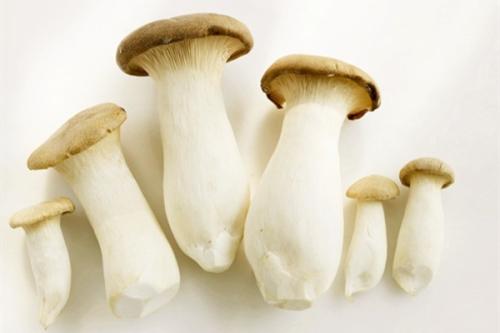
1. How do you deal with the problem of king oyster mushrooms producing many fruiting bodies but having a low marketable rate?
If the mushroom buds are not thinned, after the layer base differentiates, small mushroom buds of varying numbers grow out on both sides of the mushroom bag. Due to limitations of nutrients and space, most of these buds cannot grow into marketable mushrooms, so thinning must be done in time. The principle of thinning: when the buds have just formed, keep 4-6 buds on each side that are well positioned, properly shaped and similar in size; when the fruiting bodies have grown to about 2cm, carry out another round of selection, keeping 2-4 on each side. In this way, a relatively high marketable rate can be ensured.
2. What are the causes of a prolonged spawn-running period in king oyster mushrooms?
① Weak spawn vitality. ② The mushroom bag is packed too tightly or the water content is greater than 65%; because there is not enough oxygen inside the bag, the growth rate of the mycelium is inhibited. ③ The temperature of the spawn-running environment is below 20°C and ventilation is poor, or the pH of the culture material is unsuitable; these can also cause slow spawn running.
3. What are the reasons for incomplete sterilization of king oyster mushrooms?
① When mixing the material, the culture material has not absorbed water thoroughly, and there is a dry core inside the material, especially in harder-textured culture materials such as sawdust and corncob. ② During sterilization, the cold air has not been fully expelled, and there is no good heat circulation. ③ Insufficient sterilization time, stopping the fire or cutting off the steam during sterilization, and placing too many or too tightly packed mushroom bags in the sterilization pot (tank) can also lead to incomplete sterilization.
4. How should the bud-forcing stage of bag-cultivated king oyster mushrooms be managed?
After the mushroom bags are fully colonized, maintain them for about 7 days. Once the mycelium is fully physiologically mature, move them into the mushroom shed; cut off the tied opening or remove the cotton plug, take off the collar, and then fold down or cut off the bag opening to expose the material surface. Adjust the humidity inside the shed to about 95%, with a light intensity of 1000 lux and a small amount of ventilation. After about 15 days, white dot-like primordia will form on the surface of the material at the bag opening. For autumn cultivation, take measures to lower the shed temperature appropriately; for spring cultivation, try to raise the shed temperature and increase ventilation, maintaining the humidity inside the shed, so that the number of primordia keeps increasing, and then the primordia differentiate and young buds appear. At this stage, the shed temperature should be strictly controlled below 20°C; otherwise, no buds will appear.
5. How should bag-cultivated king oyster mushrooms be managed after fruiting?
Clean the fruiting surface thoroughly and clean the mushroom shed. For spring cultivation, spray once with pyrethroid insecticides and fungicides such as carbendazim, then seal off light to let the mushroom bags rest and recover; for autumn cultivation, spraying once with a fungicide is enough. After primordia reappear on the material surface, fruiting management can be carried out again. Generally, 1-3 flushes of mushrooms can be harvested, with a biological efficiency of 50%-60% and a marketable rate of 80%-90%.
6. What are the temperature requirements for the growth of king oyster mushrooms?
The temperature range for the growth of king oyster mushroom mycelium is 22-27°C, with the optimum temperature around 25°C; above 30°C, the mycelium grows poorly. The king oyster mushroom is a constant-temperature fruiting mushroom; too large a temperature difference is unfavorable for the occurrence of primordia. The fruiting temperature is 10-18°C, with the optimum temperature 12-16°C; below 8°C no primordia will appear, and above 20°C deformed mushrooms are likely to appear, and diseases may also occur, causing dead and rotten mushrooms. The growth temperature of the fruiting bodies is 10-21°C, with the optimum temperature 10-18°C. Mastery of temperature varies with different strains, so when introducing strains, special attention should be paid to understanding the characteristics of the strain.
Among these six questions, is there one you wanted to ask? Did they help you? In fact, king oyster mushrooms are still quite easy to grow, as long as you are a little more careful.