How to grow fennel? Fennel cultivation methods and suitable temperatures
Fennel is a major development-oriented cash crop in our prefecture, and many people grow fennel. So how do you grow fennel? Do you know? Below we introduce it from three aspects: the environmental requirements for fennel cultivation, the morphological characteristics of fennel, and the key points of fennel cultivation requirements.
I. Environmental Requirements
Fennel prefers a cool climate and is relatively tolerant of drought, but not of moisture. Because fennel plants are short with relatively shallow root systems, generally distributed in the 5-10 cm soil layer, they have strict soil requirements and are best planted in sandy loam soil with an organic matter content of 1.5%-1.8%.
The most suitable temperature for fennel during the growing period is 15-20°C. Growth slows above 25°C, and growth is inhibited below 5°C. When sowing, at a soil temperature of 5-10°C, seedlings emerge in 15-16 days; at 12-15°C, seedlings emerge in 7-8 days. From sowing to maturity takes 85-95 days, and from flowering to maturity takes 25-30 days.
II. Morphological Characteristics
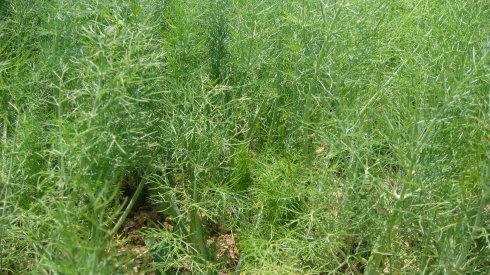
Fennel belongs to the Apiaceae family and is an annual herbaceous crop. The stem is upright, cylindrical and smooth; the leaves are pinnate and multi-compound, with deep lobes that are thread-like; the petioles are light green; the flowers are yellow in compound umbels, without involucral bracts or bracteoles; the fruit (seed) is linear-oblong, smooth and solitary. The plant grows to a height of 30-35 cm, and the growth period is about 90 days. After the fruit matures, it is orange-yellow, bright in color, and aromatic in smell, with a 1000-grain weight of 2-2.3 g.
III. Cultivation Requirements
1. Land Selection
Fennel seeds are small, with about 500,000 seeds per kilogram, and do not emerge easily. Therefore, the requirements for land selection and land preparation are very strict. Choose sandy loam soil with medium-to-high fertility and an organic matter content of 1.5%-1.8% or more. Never plant it on saline-alkali soil or heavy clay plots. Plots with @#@245@#@, oats, or many weeds as the previous crop are not suitable for planting.
2. Land Preparation Standards
Fennel seeds are small and have poor soil-penetrating ability. During land preparation, the six-character standard of fine, loose, clean, level, crumbly, and moist must be met. During land preparation, plowing, harrowing, and cultivating should be combined in one continuous compound operation, achieving a field with no small pits, no clods larger than 3 cm, no residual film, weeds, or stems, and with loose soil, level ground, and sufficient moisture.
3. Sowing Period and Seeding Rate
Fennel should be sown early rather than late, generally completed by mid-March, and at the latest in early April. The seeding rate is 1-1.5 kg per 667 sq m, with a sowing depth of 2.5-3 cm, and 10-15 kg of compound phosphate fertilizer per 667 sq m.
4. Sowing Methods
Fennel is mostly sown in drills or broadcast. Drill sowing uses equal row spacing of 20 cm or wide-narrow row spacing of 15×30 cm. It can also be sown by opening furrows and building ridges, or sown in small beds. After sowing, press the soil to preserve moisture and promote strong, uniform seedlings.
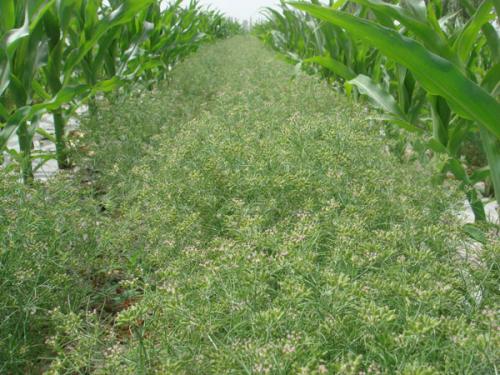
In recent years, intercropping and relay intercropping with cotton, corn, vegetables, and other crops have often been adopted to make full use of light and heat resources, increase the multiple cropping index, and increase economic income.
IV. Field Management
When the seedlings become visible in rows, intertill and loosen the soil in time to preserve moisture, and pull out weeds between plants. If rain occurs, harrow the field laterally in time to benefit seedling growth. Because fennel fields have many kinds of weeds that grow quickly, they must be completely removed before canopy closure. If dodder causes damage in the mid-to-late period, spray with 200-300 times diluted 40% dinitramine emulsifiable concentrate after 5 p.m. for control, and pull them out by hand when necessary.
Fennel has a short growth period and a small amount of growth, and does not need much fertilizer or water. Generally, sufficient base fertilizer and seed fertilizer are applied before sowing, and no irrigation or fertilization is needed. If the soil is poor, before canopy closure (3-4 true leaves), apply 8-10 kg of urea per 667 sq m along with the first irrigation, using water to regulate fertilizer and fertilizer to promote seedlings. In the early flowering stage and the grain-filling stage, spray 200-250 g of monopotassium phosphate per 667 sq m to promote more fruit set, more seed set, and increase grain weight. Irrigate the second time in the late flowering stage and early grain-filling stage, and irrigate the third time at the end of grain filling to promote early maturity. Irrigation should be done in the morning and evening, timely and in appropriate amounts, avoiding irrigation during high temperatures to reduce seedling death. Insisting on irrigating according to the seedlings, the soil, and the weather is the key to a high yield of fennel.
V. Timely Harvest
When the fennel seeds turn yellow and the stems and leaves appear withered, they can be harvested. Fennel easily sheds seeds and breaks branches, so harvesting should be carried out in the morning or evening.
Now, you know how to plant fennel. In fact, planting fennel is neither hard nor easy; it depends on whether you want to grow good fennel.