Detailed Guide to Perennial Peanut Planting Methods and Timing
Cultivation and Utilization of Perennial Peanut: Do you know about perennial peanut? If you want to grow perennial peanut, you first need to understand it and know its growth habits and characteristics, which will be very useful for planting. Let's take a look together below. Along
Cultivation and Utilization of Perennial Peanut: Do you know about perennial peanut? If you want to grow perennial peanut, you first need to understand it and know its growth habits and characteristics, which will be very useful for planting. Let's take a look together below.
Along the highway from Chiayi to Xinying, on both sides of the road, you can see a groundcover plant dotted with yellow flowers that adds beauty to the land - perennial peanut. In addition to serving as a landscape groundcover plant, perennial peanut can also be used for orchard sod culture and green chop fodder, making it a leguminous plant with development potential. These two varieties originated in South America and rarely set seed; they are generally propagated by stem cuttings or stolons. This variety originated in Brazil and can be propagated by seed, stolons, or stem cuttings. Its moisture tolerance and drought tolerance are better than those of A. glabrata. Currently, local cultivation adaptability evaluations are being conducted at the Department of Agronomy of National Taiwan University and at this station. This article will provide a brief introduction to the cultivation and utilization of perennial peanut 'Amarillo.'
Plant Characteristics
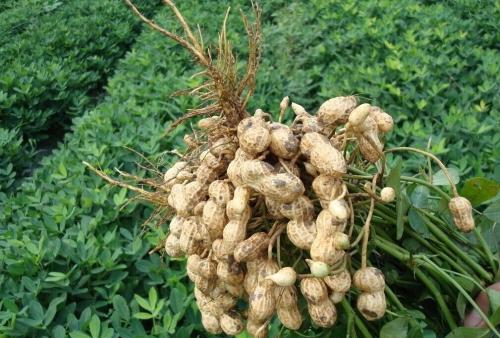
Fresh seeds of perennial peanut 'Amarillo' have dormancy and can be treated at 35-40°C for 10 days to break dormancy. Plants grown for many years have extremely well-developed root systems, with strong taproots and rhizobia symbiosis between the roots. It has stolons and underground stems. Newly planted stems first grow prostrate and then grow upright, forming a dense turf about 20 cm thick. The leaves are pinnately compound, oblong, with 4 leaflets, similar to the edible peanut. The flowers are yellow, 12-17 mm long and 13-18 mm wide, with the pedicel extending above the corolla. It can flower year-round. The gynophore can extend more than 20 cm and develop into pods 5-10 cm below the soil surface. Usually a pod contains only one seed. The pod is 10-14 mm long and 6-8 mm wide. The seed is light brown, 8-11 mm long and 4-6 mm wide, with a 100-seed weight of 11-20 g. Pests and diseases rarely occur during the growth process. Generally, turf can be formed about 6 months after planting. During this period, weed control must be carried out. Once the turf is established, it can effectively control weeds.
Adaptability
Amarillo peanut has wide adaptability. Its place of origin is central Brazil, where the local climate from October to May of the following year is a humid subtropical climate with rainfall as high as 1,800-2,000 mm, while June to September is a dry period with rainfall of only about 200 mm. Adaptability to these two different climate environments is no longer a problem for Amarillo peanut. Based on past introduction experience, this variety can not only grow well with annual rainfall above 1,100 mm, but also has good drought tolerance. Although it sheds leaves and grows slowly during the dry season, it can still survive the dry season of more than 4 months and resume growth when the rainy season arrives. In tropical and subtropical regions, it is usually planted on flat land, but literature records show that it can still grow well in coffee plantations at an altitude of 1,400 m in Colombia. When frost occurs, the aboveground part will die, but the underground part still maintains vitality and will regrow after the frost period. It has strong shade tolerance; growth is better in shaded environments than in full-sun environments, and it still grows well under 70-80% shading. It is not strict in soil selection. Sandy loam with good drainage and more than 3% organic matter is most suitable. Because it has the characteristic of symbiosis with rhizobia, it can fix nitrogen from the air, so it can also grow in poor soil. Amarillo peanut can grow in acidic soil contaminated with the heavy metals aluminum and manganese, but it is sensitive to saline soil, where growth will be inhibited or even impossible.
Uses
1. Groundcover Landscape Plant
Because perennial peanut remains green all year round after planting and flowers in all four seasons, dotted with yellow flowers, it can be used in tourist orchards on leisure farms or in flowerbeds, traffic islands, and highway slopes to add a beautiful scene. In Malaysia, vetiver (Vetiver) is planted on a highway slope to prevent soil collapse. Before the vetiver hedge is formed, perennial peanut 'Amarillo' is intercropped between the vetiver rows. Because of its nitrogen fixation, it can provide nutrients to vetiver and cover small erosion gullies in the soil before the vetiver hedge is formed. Moreover, the small yellow flowers decorate the roadside, making it both practical and beautiful.
2. Orchard Sod Culture
The use of groundcover plants for orchard sod culture is gradually receiving attention. In recent years, perennial peanut 'Amarillo' has been promoted abroad for orchard sod culture as a cover crop with considerable success. For example, in Hawaii, many coffee, banana, and palm plantations grow Amarillo peanut. It has low-growing, prostrate characteristics and does not climb. It has good drought and moisture tolerance, has no commonality or host relationship with the main pests and diseases of fruit trees, and has good shade tolerance. Once the turf is established, it can protect the soil for a long time and effectively control other weeds. In addition, it can symbiotically associate with rhizobia to fix nitrogen from the air, increasing the source of soil nitrogen. It is most suitable for application in soils deficient in nitrogen fertilizer or organic matter. Moreover, perennial peanut 'Amarillo' covering the ground surface can intercept the impact of raindrops, not only inhibiting soil erosion but also controlling weeds and reducing management costs. During metabolism, it increases soil organic matter. After roots die and rot, it increases soil porosity, improves soil aeration and rainwater infiltration rate, improves soil physical and chemical properties, moderates microclimate and ground temperature changes, and benefits fruit tree growth.
3. High-Quality Leguminous Forage
The development of herbivorous animal industries such as cattle, sheep, and horses depends on the supply of excellent forage. Leguminous forage generally contains higher protein, minerals, and total digestible nutrients, which help the growth and development of herbivorous animals. For dairy cattle, it can further increase milk production and milk quality. Therefore, high-quality forage is very important for the development of the livestock industry. In Taiwan, forage is mostly grasses, and leguminous forage relies on imports. If leguminous forage can be effectively developed and grasses and legumes can be mixed and planted, it will greatly improve the yield and quality of herbivorous animals, and the ecology of pastures can also become more balanced. Perennial peanut 'Amarillo' is a high-quality tropical or subtropical perennial leguminous forage. It can be green chopped to make hay or silage, and is also suitable for grazing. It can be planted alone or mixed with perennial grasses. Its in vitro digestibility is as high as 60-76%, nitrogen content is 2.3-3.0%, and phosphorus content is 0.18-0.37%. It has high nutritional value and can supply the growth needs of cattle at any stage.
Cultivation Management
The cultivation management of perennial peanut 'Amarillo' differs according to use and planting method, and also varies with environmental climate and soil conditions. According to research reports from abroad such as Costa Rica and Colombia, the seed yield of perennial peanut is about 200-7,000 kg per hectare. When sowing by seed, 20-25 kg of seed is required per hectare, with a row spacing of 50×30 cm and a planting depth of 2-3 cm. Soil must be covered to ensure germination rate. In China, planting perennial peanut 'Amarillo' can indeed flower, pollinate, and produce seeds smoothly, but experimental data on seed production is not yet complete and must be further studied to facilitate promotion. At present, propagation is still mostly by stolon cuttings. The cultivation management for orchard cover is described as follows:
⟦NL>
1. Planting Season
Planting can be carried out after weeds in the orchard are cleared during the warm season from late spring to early summer. Keep the soil moist during planting. If sufficient water for irrigation is unavailable, plant when the rainy season arrives to facilitate turf establishment.
2. Planting Method
Because the soil is not loosened when planting perennial peanut in orchards, cutting is more suitable than broadcasting. Use stolons 15 to 20 cm long for cuttings. Use dense planting to facilitate rapid turf establishment. It is generally recommended to use a row spacing of 20 cm and a plant spacing of 15 cm, planting by furrowing or hole planting, with about 5 cm of the stolon buried in the soil. Irrigate fully in the early stage after cutting to increase the survival rate of cuttings.
3. Fertilization
Fertilizer application in orchards is often excessive. Whether sod culture needs supplemental nutrients should be determined according to the growth status of the fruit trees. Usually, perennial peanut can fix nitrogen from the air by itself and intercept nutrients lost or leached from the soil, so no additional fertilizer is needed.
4. Weed Control
In the early growth stage, weed removal should be strengthened to reduce competition with weeds and accelerate ground coverage. Broadleaf weeds can be cut with a mower or sickle about 10 cm above the perennial peanut plants. Generally, with dense planting, about 90% coverage can be achieved in about 3 months. Once the perennial peanut turf is established, it will be able to effectively inhibit the growth of other weeds.
5. Precautions
After severe drought, the growth of perennial peanut slows significantly. These poor performers can be cut first, and subsequent regrowth can restore normal vigor. In arid areas where 1-2 year old fruit trees do not have sufficient water for irrigation, perennial peanut should not be planted too close to the trunks of fruit trees to reduce the impact on the fruit trees.
At present, the promotion and utilization of perennial peanut in China is not yet widespread. The main reasons are that propagation by stolons is not so easy or fast, and how to save labor in management and maintenance after groundcover establishment is also a problem. These aspects still need further study and resolution by research institutions. But there is no doubt that it is indeed a leguminous plant with utilization value. If the technical difficulties in seed collection can be overcome in the future and mass propagation by seed can replace propagation by stolon cuttings, it will certainly solve some problems such as high cultivation costs and low survival rates. Correspondingly, the economic cultivation benefits will be improved. It can be expected that perennial peanut will become an important resource for Taiwan's leisure landscape industry.