-

Key Technical Points for Scion Preparation in Conventional Walnut Propagation
1. Source of scions - Select superior varieties as mother trees for scion collection and establish a scion orchard. Cutting scions from a scion orchard ensures variety purity. Scion mother trees should be of pure variety, grow vigorously, and be free of pests and diseases. After collecting scions, they must be labeled to prevent mixing, because
-
Detailed Explanation of Mango Grafting Propagation and Cultivation Techniques
1. Scion selection: Collect scions from a superior mother tree in a certified mother stock orchard or from an excellent individual mature tree. The mother plant must be of pure variety, high-yielding, consistently productive, of high quality, and free of quarantine pests and diseases. Any nursery with the means should establish a scion orchard dedicated solely to supplying scions for collection. Select branches from the outer canopy that face the sun, are vigorous, plump, have full buds, and are free of pests and diseases - either 1-year-old or 2-year-old branches that have already matured. Generally, for autumn grafting use the current year's spring or summer flush; for spring and summer grafting use last year's autumn flush or the current year's spring flush. Branches that are flowering, fruiting, or have just finished fruiting, as well as weak shaded branches, are not suitable for use as scions. Leaves can be removed 10 to 15 days in advance; after the petioles drop off, soak the collected scions in 1000-times carbendazim for 3 minutes, allow to dry, and graft immediately - this can improve the survival rate. Collected scions must be grafted promptly; if kept for more than 3 days, they must be stored under low temperature and moisture-retaining conditions. If collecting scions from other locations, bundle the scions well, wrap them in damp paper or cloth, and place them in a cardboard box lined with plastic film. During transport, take care to prevent sun exposure and heat buildup or dehydration and shrinkage. <p>1. Scion selection: Collect scions from a superior mother tree in a certified mother stock orchard or from an excellent individual mature tree. The mother plant must be of pure variety, high-yielding, consistently productive, of high quality, and free of quarantine pests and diseases. Any nursery with the means should establish a scion orchard dedicated solely to supplying scions for collection. Select branches from the outer canopy that face the sun, are vigorous, plump, have full buds, and are free of pests and diseases - either 1-year-old or 2-year-old branches that have already matured. Generally, for autumn grafting use the current year's spring or summer flush; for spring and summer grafting use last year's autumn flush or the current year's spring flush. Branches that are flowering, fruiting, or have just finished fruiting, as well as weak shaded branches, are not suitable for use as scions. Leaves can be removed 10 to 15 days in advance; after the petioles drop off, soak the collected scions in 1000-times carbendazim for 3 minutes, allow to dry, and graft immediately - this can improve the survival rate. Collected scions must be grafted promptly; if kept for more than 3 days, they must be stored under low temperature and moisture-retaining conditions. If collecting scions from other locations, bundle the scions well, wrap them in damp paper or cloth, and place them in a cardboard box lined with plastic film. During transport, take care to prevent sun exposure and heat buildup or dehydration and shrinkage.</p><p></p><p>2. Grafting time: When the rootstock has been grown to a diameter of 1 cm (measured 15 cm above ground level), grafting can be carried out. The grafting time can be determined according to climate. When the temperature is below 20 degrees Celsius, the grafting survival rate decreases as the temperature drops. Of the whole year, grafting in March to April is best, followed by August to October. If there is drought, irrigate 1 to 2 days before grafting to improve the grafting survival rate. Grafting is not suitable in hot and rainy weather or in low-temperature overcast and rainy weather.</p><p>3. Grafting methods: Patch budding and cut grafting are mostly used.</p><p>(1) Patch budding method:</p><p>① Select rootstock 0.8 cm or more in diameter. At 30 cm above ground, open the bud insertion site by using a knife from top to bottom to make two parallel cuts, 0.8 cm to 1.0 cm wide and 3 to 3.5 cm long. Cut the upper end of the incision into a tongue shape, then lift the bark and tear the cortex downward, removing most of the cortex while leaving a small segment.</p><p>② Select 1 plump bud from the middle-upper part of the scion. With the bud as the center, cut a square block 2.5 to 3.0 cm long and 0.5 to 0.7 cm wide around it, deep to the xylem. Then insert the knife blade flat at the right side of the incision and push to the left; then insert at the left side and push to the right, and remove the bud plate. Alternatively, cut a bud plate 3 to 5 cm long and 1.2 to 1.5 cm wide with xylem, then trim the edges to a width of 0.5 to 0.7 cm, tear off the xylem, and cut it to 2.5 to 3.0 cm.</p><p>③ Place the peeled bud in the center of the incision, insert the lower end into the ventral flap of bark, leave a small gap at the upper end and on both sides with the rootstock incision, press the bud plate tightly, and tie the bud plate with ultra-thin film 0.8 to 1.0 cm wide.</p><p>④ Twenty to 30 days after grafting, once the incision has healed, cut off the part of the rootstock above the bud insertion site. Wait until the grafted bud swells and protrudes before untying.</p><p>(2) Cut grafting method:</p><p>① Select rootstock 0.5 cm or more in diameter. At 30 cm above ground, cut the rootstock diagonally, then cut a straight flat incision about 2 cm long downward on the higher side, with depth suitable for removing part of the xylem, then cut away 1/2 or 2/3 of the cortex.</p><p>② Cut the base of a scion similar in thickness to the rootstock (containing 1 to 3 buds) into a slanted end, and make a smooth cut from top to bottom on one side of the tip, with the same length as the rootstock, and cut away 2/3 of the cortex.</p><p>③ Insert the scion into the rootstock incision so that the cortices match, tie tightly from bottom to top with ultra-thin film, and seal and wrap the scion well.</p><p>4. Management of grafted seedlings:</p><p>(1) Bud removal: After top cutting and grafting, adventitious buds below the graft union on the rootstock often sprout and must be checked once a week and removed promptly so as not to affect the growth of the grafted bud. Of the buds sprouting from the scion, also keep only 1 and remove the rest.</p><p>(2) Replacement grafting: Three weeks after grafting, check whether the scion has survived. If it has not, carry out replacement grafting promptly.</p><p>(3) Fertilizer and water management: The nursery should be kept constantly moist, neither drought-stressed nor waterlogged. During drought, irrigate promptly. One month after grafting, apply dilute fertilizer water, apply urea solution once every other month, apply fertilizer frequently and thinly, and gradually increase the fertilizer concentration month by month.</p><p>(4) Pest and disease control: During the seedling stage, pests and diseases are prone to occur, especially the mango shoot borer and anthracnose, so attention must be paid to control.</p><p>(5) Shaping: For the main branches that sprout after grafting, after they mature, remove the tip at about 20 cm to promote side branches. When side branches grow to 15 to 20 cm, pinch the tips, and successively promote secondary side branches.</p><p>5. Timing and method of lifting seedlings: Bagged seedlings can leave the nursery in all four seasons, but orchards with inconvenient irrigation should not plant in winter (November to February of the following year). When leaving the nursery, the new shoots must be mature. If they are not mature but must leave the nursery, the new shoots should be cut off. At the same time, shorten or thin out excessive and overly long branches and leaves.</p><p>For bagged seedlings, 10 days before leaving the nursery, dig up the whole bag, cut off roots outside the bag, arrange them in place, and provide shade, taking care to keep the seedling bag intact and the soil ball from breaking apart.</p><p>6. Seedling selection: For productive planting, grafted seedlings are always selected. The basic requirements for purchased or self-propagated grafted seedlings leaving the nursery are:</p><p>① Variety purity greater than or equal to 97%.</p><p>② The graft union is no more than 30 cm above ground; the rootstock union diameter is greater than or equal to 0.8 cm; the scion has produced more than 2 flushes of shoots, each flush with more than 3 complete mature leaves, the scion shoots are greater than or equal to 15 cm long, and the diameter 5 cm from the union is greater than or equal to 0.5 cm.</p><p>③ The union has healed well, with no tumors or tying-band constriction.</p><p>④ Growth vigor is good, leaves are sound, complete, and glossy, with no quarantine pests or diseases such as leaf blight and no wilting. Stems and branches have no bark breakage or cracking.</p><p>⑤ For bagged seedlings, the soil column diameter is greater than or equal to 11 cm, height is greater than or equal to 21 cm, and the root system is complete; if large roots were broken due to movement, the seedling may leave the nursery only after new roots have grown and the leaves have returned to normal.</p><p>⑥ When leaving the nursery, bagged seedlings need to stop being watered; when leaving the nursery, the soil column should be firm and the bag should not rot.</p><p>Before lifting seedlings, plant quarantine certificates should be handled in accordance with the provisions of the national “Plant Quarantine Regulations”, and seedlings with quarantine objects are strictly prohibited from being transferred into protected areas.</p><p>Bagged seedlings should keep the plastic bag and soil column intact, and tender shoots still in the growth stage should be cut off. If the scion has produced more than three flushes of shoots, the upper tender part may be cut off, keeping 2 to 3 mature flushes. During transport, take care to keep the seedling bag intact and the soil ball from breaking apart. Strictly prevent heavy pressure, sun exposure, and rain during transfer, and it is advisable to use a covered truck for transport; after arriving at the destination, unload the seedlings immediately, place them under tree shade or in a shade shed, and plant them as early as possible (or heel them in).</p>
-
Detailed Explanation of Key Points of Wax-Sealing Technology for Jujube Scions
I. Benefits of Wax Sealing 1. Wax-sealing the scion forms a thin wax film on the scion surface, sealing the stomata of the scion epidermis and the cuts at both ends of the scion, reducing water evaporation by more than 90% compared with ordinary scions, thus protecting the scion. 2. The grafting period is long; jujube branch grafting is generally
-
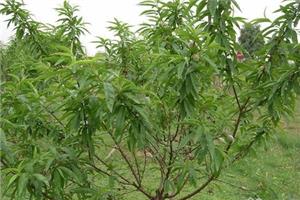
How to make the rootstock and scion when grafting peach saplings
How to make the rootstock and scion for grafting peach saplings
-

Pear scions damaged by low temperatures: Yilan County Magistrate Lin Zi-miao visits Sanxing to inspect
Yilan County suffered severe damage to pear scions due to low temperatures. County Magistrate Lin Zi-miao placed great importance on this and went to the fields yesterday (the 12th) to show concern for farmers in person. She also thanked the central government for its assistance in immediately opening disaster relief reporting, and called on farmers to go as soon as possible after the disaster relief announcement to...
-

Osmanthus Grafting Methods: Rootstock and Scion Selection and Key Post-Grafting Management Points
September is truly the season of osmanthus fragrance, and among ancient Chinese poems praising flowers, the number of works celebrating osmanthus is quite considerable. "Not a plant of the mortal world, transplanted from the moon. A single breath of fragrance from the Guanghan Palace, blown until it blooms across the mountains" - this is about the fragrance of osmanthus. Before you even get close to the osmanthus, you can already smell a refreshing fragrance from afar.
-
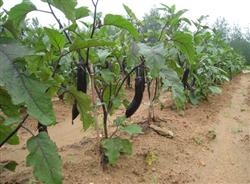
Detailed Explanation of the Multi-Bud Scion Harvesting Technique from a Single Seedling for Eggplant in Protected Cultivation
Grafting cultivation of eggplant has become the most important disease-resistant and yield-increasing cultivation method in current protected eggplant production. When raising grafted eggplant seedlings, the one-seedling-one-bud scion harvesting technique is generally used, but this method involves high seed costs and high production costs. For this reason, based on the principle of apical dominance in plant growth and combined with the characteristic of strong lateral bud sprouting in eggplant seedlings...
-
Taichung City Agriculture Bureau Holds Domestic Pear Scion Achievement Event to Boost Pear Industry Competitiveness
Top-grafted pears are an important economic fruit tree in Taichung City. To promote exchanges among farmers and improve the quality of top-grafted pears, the Taichung City Agriculture Bureau recently held a domestic pear scion exchange and observation event at the pear orchard of farmer Ke Xunyue in Houli District, where farmers shared with one another their...
-
How to collect scions for grafting? Correct methods and key technical points
Collection of scions for grafting
-
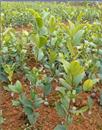
What are the seed-scion grafting methods for potted camellias?
How do you graft potted camellias using seed scions? Here is an introduction. For seed-scion grafting of potted camellias, you can refer to the following methods: 1. Sprout the seeds and cut the scion: first sprout the seeds. When the seed sprouts emerge above the surface of the sand bed, grafting can begin. Take the sprouted seeds, rinse them clean, and use a grafting knife to cut off the root end, keeping a length of 6-9 cm...
条件筛选