-

Jerusalem Artichoke Growing Techniques: Key Points on Site Selection, Sowing and Field Management
Jerusalem artichoke (sunchoke) is drought-tolerant, tolerates poor soil and needs only extensive management. This article introduces Jerusalem artichoke growing techniques, covering practical key points such as site selection and soil preparation, sowing time and density, field management, and harvest and seed saving, to help growers cultivate this root vegetable well and achieve stable yields and higher income.
-

Which plants bloom in summer? Money-saving tips for buying flowers at the flower market
Summer is marked by long days and short nights, with intense sunlight from 12 noon to 4 pm. This is not very friendly to novice flower growers, because this is the season when plants are most likely to die from root rot, sunburn and high temperatures. Below, the editor recommends several tough, easy-to-grow flowers suitable for care in the high summer heat,
-

Greenhouse tunnel cultivation of Jade Girl cherry tomatoes doubles yields while saving labor
Young farmer Chen Mingxiong took over the family business eight years ago. Under the guidance of the farmers' association and the production and marketing group, he adopted the greenhouse tunnel cultivation method to grow Jade Girl tomatoes, which not only doubled the yield but also made harvesting easier. Inside the tunnel, clusters of plump, luscious Jade Girl tomatoes hang all over the trellis, while the unripe green cherry tomatoes dangle in midair.
-
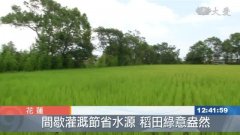
Intermittent Irrigation Method for Rice Saves Water and Increases Yield: Taiwan Agricultural Research Institute Trials Succeed
Agricultural Research Institute's Intermittent Irrigation Method: Success in Saving Water and Boosting Rice Yields. With water conditions severe, the rice farming industry, which relies heavily on water resources, is hit first. An organic smallholder farmer in Hualien uses the intermittent irrigation farming method, an alternating wet-and-dry irrigation model for rice that saves 30% of cultivation water and also increases the rice
-

High temperatures persist and the water situation has yet to improve; Taipower reminds the public that while saving water, don't forget to save electricity
The weather has been hot recently, with temperatures above 30 degrees across Taiwan, China, driving up electricity demand. Taipower said that on the 11th, the instantaneous peak load reached 35.993 million kW, setting a new high for electricity use this year and the 5th highest for May in history, with supply...
-
Saving your own seeds can also produce super-strong seeds
Grow super-strong seeds by saving your own seeds!
-
Luffa Seed Selection and Seed Saving Methods, plus Germination and Seedling Raising Techniques
Luffa is one of the most common vegetable crops. In rural areas, many friends like to grow a few plants in their own courtyards. Luffa is a warmth-loving, heat-tolerant crop with strong adaptability and does not have strict requirements for soil. When farmers grow luffa, the most important
-
A Detailed Guide to Cabbage Seed Selection, Seed Saving and Seedling Raising Methods
Cabbage, also called head cabbage, is a common vegetable of ours, with diverse cooking methods and rich nutrition; eating it regularly brings great benefits to the human body, and it is deeply loved by people. At present, there are many farmers growing cabbage, and cabbage can be planted for several crops a year. When growing cabbage,
-
What are the methods for saving okra seeds and growing okra seedlings?
Okra, also known as yellow okra, originated in China and Japan. It likes warm, humid and sunny environments, is not cold-tolerant, fears waterlogging and wind, and is best grown in loose, fertile, well-drained sandy loam. Okra is nutritious and has broad market prospects, and many farmers grow it
-
What are the harvesting, seed-saving and seedling-raising methods for purslane?
Purslane, also called purslane greens, is distributed throughout both northern and southern parts of our country, mostly growing wild. It is a medicinal and edible plant, rich in nutrients. As the value of purslane continues to be developed, more and more of it is being cultivated artificially, so how do you harvest purslane and save its seeds? What are the seedling-raising methods?
条件筛选