Intermittent Irrigation Method for Rice Saves Water and Increases Yield: Taiwan Agricultural Research Institute Trials Succeed
Agricultural Research Institute's Intermittent Irrigation Method: Success in Saving Water and Boosting Rice Yields. With water conditions severe, the rice farming industry, which relies heavily on water resources, is hit first. An organic smallholder farmer in Hualien uses the intermittent irrigation farming method, an alternating wet-and-dry irrigation model for rice that saves 30% of cultivation water and also increases the rice
Agricultural Research Institute's Intermittent Irrigation Method: Success in Saving Water and Boosting Rice Yields
With water conditions severe, the rice farming industry, which relies heavily on water resources, is hit first. An organic smallholder farmer in Hualien uses the intermittent irrigation farming method, an alternating wet-and-dry irrigation model for rice that saves 30% of cultivation water and also increases the rice harvest.
The lush green farmland is refreshing to the heart, but if drought strikes, this scene becomes hard to see again. Facing extreme climate, an organic smallholder farmer in Hualien adopts intermittent irrigation to save water.
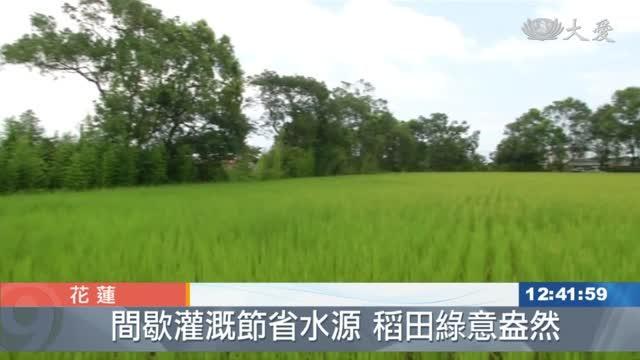
Organic smallholder farmer Xie Jinggui: "This natural farming method lets it go dry and wet, dry and wet. That is, at the boundary between dry and wet, its vitality is actually at its strongest. So if you keep it flooded all the time, on the contrary, the farmers would say, the older generation would say, it gets soft-legged, and on the contrary, the rice will not be that strong."
Intermittent irrigation uses an alternating wet-and-dry method: irrigate the field to a water depth of about 5 cm, then stop irrigation, next let the field water gradually decrease through transpiration from the rice plants or seepage, and the next day irrigate again to a height of 5 cm. The most important thing is to provide sufficient water from the heading and flowering stage to the fully ripe grain stage.
The organic smallholder farmer in Hualien has used this intermittent irrigation for eight years already, and the trial results are quite good.
Organic smallholder farmer Xu Zhengde: "It can save about 30% to 40% of the irrigation water. Then in terms of actual harvest, because its root system develops very well, the harvest volume will also increase, probably by more than 10%."
In recent years, uneven distribution of water resources has occurred from time to time. The Agricultural Research Institute proposes intermittent irrigation for rice, which, besides effectively using water resources and ensuring rice production in Taiwan, China, is also a future trend in agricultural development.