-

What is the flower language and meaning of foxglove? With planting time and methods
Foxglove, with its unique flower form and rich flower language and meanings, has won the favor of many gardening enthusiasts. This herbaceous plant from the genus Digitalis in the family Scrophulariaceae is not only elegant in appearance but also carries profound meanings, making it a rare poetic spirit in the garden. The flowering period of foxglove is mainly concentrated from May to June.
-

Where can I buy foxglove seeds? What are the seedling-raising methods?
Foxglove, also called digitalis, fairy bell, and hanging bell flower, blooms in a variety of colors, including white, pink, and deep red, and is often used to decorate gardens. So if you want to grow foxglove, where can you buy the seeds? What are the seedling-raising methods? Let's take a look below.
-
When exactly is the blooming period of foxglove?
Foxglove, also known as common foxglove, free bell, thimble flower, golden bell, heart's grass, and hanging bell flower, is a biennial or perennial herbaceous plant. Its flower shape is attractive and it is deeply loved by the public. So when is its blooming period? And how do you care for it? The foxglove blooming period is what
-
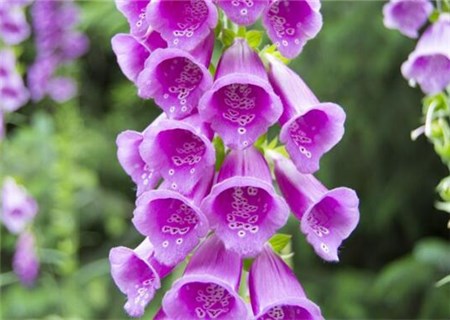
Foxglove (Digitalis) Seed Sowing Time and Planting Methods, and How It Differs from Lupine
Digitalis: also known as foxglove, poison herb, purple foxglove, and bellflower, native to the central and southern mountainous regions of Europe. It is now widely cultivated in places such as Zhejiang, Shanghai, Jiangsu and Shandong in China. So do you know when foxglove seeds should be sown? What are the planting methods? And how does it differ from lupine?
-
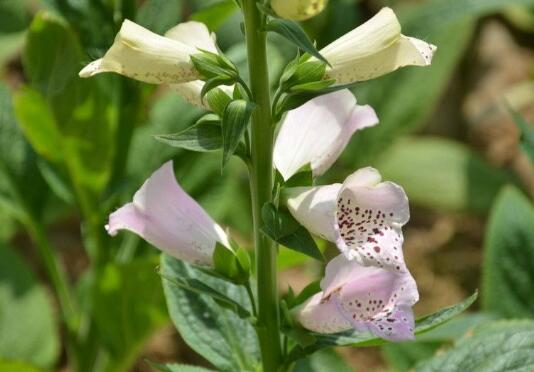
5 major differences between foxglove and lupine: appearance, region, propagation, blooming period
Foxglove and lupine are two completely different plants, but because they look fairly similar, they are often confused by people. In fact, these two plants themselves still have many differences, and as for the specific ways in which foxglove and lupine differ
-
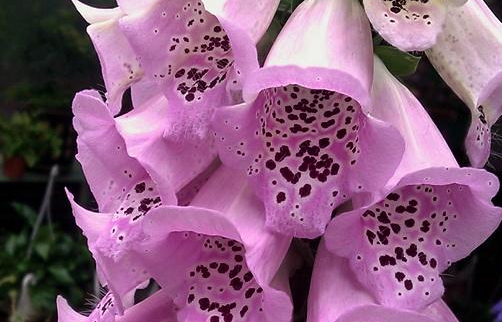
How to grow foxglove and things to note
Light: Foxglove loves sunlight very much, but it is not averse to slightly shady environments, and even likes them somewhat, though be careful the environment cannot be too shady. If it does not get enough light, the plant will grow leggy, affecting its appearance. Pay special attention to strengthening light when the plant is blooming
-
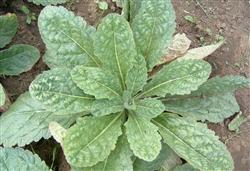
What are the common pests and diseases in Rehmannia (Chinese foxglove) cultivation?
What pests and diseases affect Rehmannia? How do you prevent and control them? We ask friends to help explain: Rehmannia pests and diseases include soybean cyst nematode, red spider mite, Melitaea butterflies, aphids, cutworms, mole crickets and wireworms. For detailed control methods, refer to the following list: 1. Control of soybean cyst nematode: 1. Agricultural measures...
-
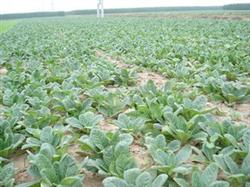
How do you manage the growing period when cultivating Rehmannia (Chinese foxglove)?
How do you manage the growing period of Rehmannia? Please give a detailed description of the methods. For managing the growing period of Rehmannia, you can refer to the following methods: 1. Weeding in the Rehmannia field: After Rehmannia enters the growing period, its root system develops rapidly, so cultivation should be strengthened to promote deep rooting, keep the soil loose, control excessive vegetative growth of the plants, and prevent weeds from growing densely...
-
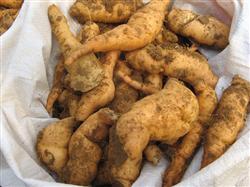
How to harvest and process Rehmannia (Chinese foxglove) during cultivation? A detailed guide to the methods
How is Rehmannia harvested and processed? Please introduce the methods. Rehmannia harvesting and processing can be carried out with reference to the following methods: 1. Harvesting Rehmannia: the leaves, flowers, and rhizomes of Rehmannia can all be used as medicine. For Rehmannia leaves, in the late growth stage of Rehmannia, select robust, disease-free plants, pick some leaves appropriately, and dry them in a cool place...
-
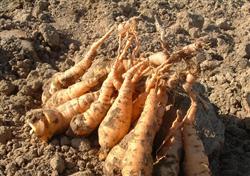
How to harvest Rehmannia (Chinese foxglove)? Detailed guide to the correct method
How to harvest Rehmannia (Chinese foxglove)? Here is the method. Rehmannia planted in spring and summer is harvested in November of the same year, when the plants wither. First remove the above-ground leaves, then start digging at one end of the bed, making a trench 35 cm deep, and carefully dig out the rhizomes one by one. Click to get more Rehmannia cultivation techniques. Click to get more medicinal herb cultivation techniques.
条件筛选