Foxglove (Digitalis) Seed Sowing Time and Planting Methods, and How It Differs from Lupine
Digitalis: also known as foxglove, poison herb, purple foxglove, and bellflower, native to the central and southern mountainous regions of Europe. It is now widely cultivated in places such as Zhejiang, Shanghai, Jiangsu and Shandong in China. So do you know when foxglove seeds should be sown? What are the planting methods? And how does it differ from lupine? According to Uncle Chen, a large-scale foxglove grower, the best time to sow foxglove seeds is from March to May and from August to September each year; seeds sown during this period have the highest germination rate and grow best.
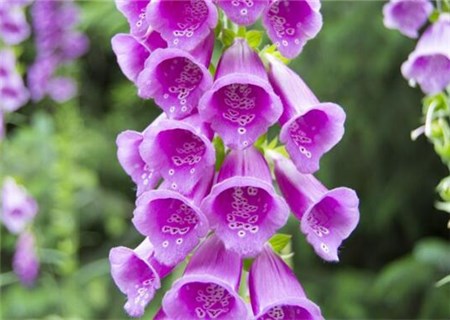
I. Foxglove Planting Methods
1. Soil: Foxglove is suitable for growing in moist but well-drained soil.
2. Watering: Foxglove likes semi-moist conditions, is slightly drought-tolerant, and fears waterlogging. Watering should be moderate; during the growing season, water thoroughly once the soil dries, but do not let water accumulate. In winter, slightly dry and lightly moist conditions are best.
3. Light: Foxglove likes light and also tolerates partial shade. It can be planted in a sunny spot or in a semi-shaded spot with plenty of scattered light. During the flowering season, considering the quality and quantity of flowers, light can be appropriately increased. Day length does not affect flowering.
4. Temperature: The temperature range suitable for foxglove growth is 12°C-19°C, but in the finishing stage the ideal nighttime temperature is 12°C-16°C. If plants are grown with some protection such as a cold frame, high-quality plants and flower spikes can be produced.
5. Fertilizing: It likes fertilizer. During the growing season, apply a full-spectrum organic liquid fertilizer about once every 20 days. A nitrogen-phosphorus-potassium compound fertilizer or a 0.2% potassium dihydrogen phosphate solution can also be used.
6. Pests and diseases: Foxglove commonly suffers from wilt disease, mosaic disease and aphid damage. When diseases occur, promptly remove diseased plants and disinfect with lime. When pests occur, spray with a 2000-fold dilution of 40% omethoate emulsifiable concentrate, which can also reduce the occurrence of mosaic disease.
II. What Is the Difference Between Foxglove and Lupine
1. Digitalis
Also known as foxglove, poison herb, purple foxglove, bellflower, thimble flower, golden bell, heart's grass, poison herb, purple foxglove, and bellflower.
Biennial or perennial herb, the whole plant densely covered with short hairs. Basal leaves ovate to ovate-lanceolate, with blunt teeth on the margins, long-stalked. In the 2nd to 3rd spring, a flower stem is sent up from the center of the leaf rosette, reaching 1-1.5 m tall; stem leaves are long-ovate, with fine teeth on the margins, short-stalked or nearly sessile. Raceme terminal, corolla bell-shaped, drooping, purple-red, with dark purple spots inside. Capsule conical, seeds very small. Flowering period May-June, fruiting period June-July. Native to the central and southern mountainous regions of Europe. It is now widely cultivated in places such as Zhejiang, Shanghai, Jiangsu and Shandong in China.
Legend says that an evil goblin gave foxglove flowers to foxes, letting the foxes put the flowers on their feet to reduce the sound of their footsteps while foraging among the foxgloves, so foxglove has another name——foxglove.
2. Lupine:
Also called “lupin”, it is a plant in the order Rosales, family Fabaceae, genus Lupinus. Stems ascending or erect, branched at the base, the whole plant covered with brown or rusty hard hairs. Raceme terminal, relatively short, the fruiting axis thickened, still not exceeding the compound leaves in length, flowering period March-May, fruiting period April-July. Stems ascending or erect, branched at the base, the whole plant covered with brown or rusty hard hairs.
Palmately compound leaves, with 5-8 leaflets; petiole much longer than the leaflets; stipules subulate, lanceolate to oblanceolate, up to 1 cm long, leaflets 10-17, leaf texture thick, mostly attached at the base, the lower half connate with the petiole; leaflets obovate, oblanceolate to spatulate, 15-70 mm long, 5-15 mm wide, apex obtuse or acute, with a short point, base gradually narrowed, leaf surface smooth, underside with coarse hairs.
Raceme terminal, relatively short, 5-12 cm long, not exceeding the compound leaves in length, the inflorescence axis slender, densely composed of hundreds of small pea-like flowers, the lower flowers alternate, the upper flowers irregularly whorled, flowers 10-14 mm long; bracts subulate, 3-4 mm long, hairy; pedicels very short, 1-2 mm long; calyx two-lipped, covered with hard hairs, lower lip longer than upper lip, lower lip with 3 deep lobes, upper lip shallower, persistent in fruit; corolla blue, standard petal and keel petal with white markings. Besides the common goose-yellow and red, there are also light blue, pink, brick red, white and bicolor colors, giving off a strong, refreshing fragrance.
3. How to Distinguish Them
The difference between digitalis and lupine: the leaves and flowers are both different. Lupine has compound leaves, while foxglove has simple leaves. Lupine has a typical legume flower shape, while foxglove looks like little bells.
Simple identification:
Digitalis: petals face downward, with spots inside;
Lupine: petals face upward, with no spots inside.