How to grow foxglove and things to note
Light
Foxglove loves sunlight very much, but it is not averse to slightly shady environments, and even likes them somewhat, though be careful the environment cannot be too shady. If it does not get enough light, the plant will grow leggy, affecting its appearance. Pay special attention to strengthening light when the plant is blooming, which will make the foxglove's flowers bloom more vividly and beautifully.
Temperature
Foxglove prefers a warm environment, and its most suitable growing temperature is 12°C-19°C, but during germination, growth and care, the temperature requirements will change, so we should observe at each stage and promptly adjust the temperature the plant needs. During the vigorous growth period of foxglove, a temperature of around 20°C is best, which is very beneficial to the plant's growth; otherwise the plant will grow leggy and the number of flowers will also decrease.
Soil
Foxglove has some requirements for soil: the soil must be loose, breathable and well-draining, and you can also add some raw base fertilizer to the soil to make the nutrients in the soil more plentiful. However, foxglove can also tolerate a certain degree of poor soil.
Water and fertilizer management
Foxglove has relatively high requirements for water and fertilizer, so during cultivation, good water and fertilizer management must be done. After planting foxglove, it needs timely watering and fertilizing to keep the potting soil moist, and air humidity should also be kept at a relatively high level. During the growing period of foxglove, it needs fertilizing once every half month, and various elements must be replenished frequently. Note that fertilizer must not stick to the leaves.
Today we have covered how to grow foxglove; we hope it will be of some help to friends interested in foxglove and let everyone grow very good foxglove.
Antiaris toxicaria Lesch. Antiaris toxicaria profile: how to grow Antiaris toxicaria / how to propagate Antiaris toxicaria
Antiaris toxicaria cardAntiaris toxicaria Lesch.
Alias: Arrow poison wood
Category: Herbaceous flowering plant
Family and genus: Plantae, Angiosperms, Dicotyledons, Rosales, Moraceae, Antiaris
Full bloom period: Spring
Antiaris toxicaria (scientific name: Antiaris toxicaria Lesch.), also known as arrow poison wood, mostly grows in rainforests below 1500 m in altitude. It is a tree, 25-40 m tall, with a DBH of 30-40 cm; it has milky white sap, gray bark, and blooms in spring. It is a national third-class protected plant and is a highly toxic plant and medicinal plant. The milky white sap of arrow poison wood contains potent toxins; once it contacts a wound on a human or animal, it can cause the poisoned person's heart to become paralyzed (caused by arrhythmia), blood vessels to close, blood to coagulate, and even death by suffocation, so people call it "see blood seal throat". It is distributed in Guangdong (Leizhou...
How to grow Antiaris toxicaria and things to note: introduction to Antiaris toxicaria
Antiaris toxicaria (scientific name: Antiaris toxicaria Lesch.), also known as arrow poison wood, mostly grows in rainforests below 1500 m in altitude. It is a tree, 25-40 m tall, with a DBH of 30-40 cm; it has milky white sap, gray bark, and blooms in spring. It is a national third-class protected plant and is a highly toxic plant and medicinal plant. The milky white sap of arrow poison wood contains potent toxins; once it contacts a wound on a human or animal, it can cause the poisoned person's heart to become paralyzed (caused by arrhythmia), blood vessels to close, blood to coagulate, and even death by suffocation, so people call it "see blood seal throat". It is distributed in Guangdong (Leizhou Peninsula), Hainan, Guangxi, southern Yunnan; Sri Lanka, India (including the Andaman Islands), Myanmar, Thailand, Indochina, Malaysia, Indonesia.
Morphological characteristics and appearance of Antiaris toxicaria
Antiaris toxicaria is a tree, 25-40 m tall, with a DBH of 30-40 cm; large trees occasionally have buttress roots; the bark is gray, slightly rough; young branchlets are covered with brown soft hairs and become wrinkled after drying.
Leaves
The leaves of Antiaris toxicaria are elliptical to obovate, densely covered with long coarse hairs when young, with serrate margins; mature leaves are long-elliptical, 7-19 cm long and 3-6 cm wide, with an acuminate apex and a rounded to shallowly cordate base, asymmetrical on both sides, dark green on the surface with scattered long coarse hairs, light green on the underside and densely covered with long coarse hairs, denser along the midrib, turning tea-brown after drying, with 10-13 pairs of lateral veins; the petiole is short, about 5-8 mm long, covered with long coarse hairs; the stipules are lanceolate and fall early.
Flowers
The male inflorescence of Antiaris toxicaria is tray-shaped, about 1.5 cm wide, surrounded by boat-shaped triangular bracts whose tops curl inward and are hairy on the outside; the male flowers have 4 perianth lobes, rarely 3, with stamens equal in number to and opposite the lobes, the anthers elliptical with scattered purple spots, and the filaments extremely short; the female flower is solitary, hidden inside a pear-shaped receptacle and surrounded by numerous bracts, without a perianth, with a 1-locular ovary, the ovule hanging from the top of the locule, the style 2-cleft, and the stigma awl-shaped and hairy.
The flowering period of Antiaris toxicaria is March-April.
Fruit
The drupe of Antiaris toxicaria is pear-shaped, with persistent bracts; the mature drupe is 2 cm in diameter, bright red to purplish red; the seeds have no endosperm, the outer seed coat is hard, the cotyledons are fleshy, and the radicle is small.
The fruiting period of Antiaris toxicaria is May-June.
Ecological habits of Antiaris toxicaria
Antiaris toxicaria mostly grows in tropical monsoon forest and rainforest regions, with abundant heat, long summers and no winter, and weak influence from winter cold waves. The annual average temperature is mostly 21-24°C, the average temperature of the coldest month is above 13-17°C, and the extreme minimum temperature is above 0-5°C. In years when a major cold wave moves southward, brief low temperatures below 0°C may occur from southwestern Guangxi to western Guangdong. The annual rainfall is 1200-2000 mm, with a distinct or not very distinct dry and wet season, and relatively high air humidity; the annual average relative humidity is above 80%. On acidic bedrock such as granite, shale and sandstone and on Quaternary red earth, the soil is latosol or red soil, with a pH of 6.8-7.7. Antiaris toxicaria can form giant trees in the upper layer of seasonal rainforest, often standing erect above the main canopy. It has a well-developed root system and strong wind resistance; on coastal platforms with frequent wind disasters, even isolated trees are not easily blown down, but they tend to grow shorter.
Cultivation techniques for Antiaris toxicaria
Because Antiaris toxicaria is highly toxic, during cultivation one should try to avoid cutting the branches, and corresponding protection should be taken before pruning. When displaying it in greenhouse cultivation, signs should also be used to explain it, and it should be planted in places not easily accessible to visitors.
Seed collection and treatment
In early May each year, collect seeds when the fruit skin turns red to purplish black and a large number of fruits fall to the ground. Fruiting Antiaris toxicaria trees are mostly 100 years old, with tall trunks, making it difficult to climb up to collect the fruit, so they must be collected on the ground when they fall. Manually wash the collected fruits, remove the peel to obtain nearly oval seeds, then use water to float out the plump seeds, and then dry the plump seeds in the shade until sowing.
Sowing and seedling management
According to the germination characteristics of Antiaris toxicaria seeds, in order to increase the germination rate, it is best to sow them as soon as they are collected, either by dibbling or by drilling in furrows. Sow at a spacing of 3-4 cm x 10 cm, about 250 seeds per square meter, then cover with 2 cm of soil, cover with dry rice straw, and water to keep the soil moist. The seeds begin to germinate in 25-30 days, reach the germination peak at 40 days, and finish germinating at 55 days.
One month after the seedlings emerge, they can be given a light application of decomposed human and animal manure and urine (ratio of decomposed human and animal manure and urine to water of 1:20) or 0.1% compound fertilizer water. When they have 4-5 leaves they can be transplanted into nutrient bags; the nutrient bags generally use a specification of 16 cm x 16 cm, and the substrate is 20% burnt soil plus 80% sandy loam. It is best to transplant the seedlings on rainy days or in the afternoon, water thoroughly to settle the roots after planting, then build a frame and shade with 70% shade netting, and remove the shade netting after the seedlings resume growth. About 1 month after transplanting, fertilizer can be applied, generally compound fertilizer or urea, or the two applied alternately, once every 15 days, first dilute then concentrated, with a concentration generally of 0.1%-0.3%. In August-September, appropriately increase the application of potassium fertilizer at a concentration of 0.3% to promote lignification, which helps the seedlings overwinter.
Field planting
Generally, 2-year-old nutrient bag seedlings have a high survival rate when planted out. One month before planting, first move the nutrient bag seedlings and sort the seedlings, and plant them out after the seedlings have stabilized again. When removing the nutrient bags at planting, do not damage the roots; after planting, shade must be provided for 1 month; remove surrounding weeds and keep the soil loose and moist. The planting site requires sufficient sunlight, deep soil and good drainage; clay soil must be avoided. Antiaris toxicaria is not tolerant of flooding, so attention should be paid to drainage and waterlogging prevention.
Distribution area of Antiaris toxicaria
Antiaris toxicaria is mainly distributed in Guangdong (Leizhou Peninsula), Hainan, Guangxi, southern Yunnan, Sri Lanka, India (including the Andaman Islands), Myanmar, Thailand, Indochina, Malaysia, Indonesia (Sumatra, Java, Kalimantan, Sulawesi).
Varieties of Antiaris toxicaria are distributed in Oceania and Africa.
Toxicological chemical constituents of Antiaris toxicaria
The latex contains α-antiarin, β-antiarin, malayoside, 19-deoxy-α-antiaroside (α-an-ticoide), 19-deoxy-β-antiaroside (β-antioside), convalloside, digitoxigenin-α-rhamnoside, convallatoxin.
The seeds contain cymarin, cymarol, strophalloside, peripalloside, periplorhamnoside, convallatoxin, antiaris rhamnoside, strophantojavoside, antiogoside, antialloside, antiarojavoside, strophanthidin, periplogenin, antiarigenin.
Toxicology
The sap of Antiaris toxicaria is highly toxic. It is often mixed with strychnine and used as an arrow poison medicine. The sap entering the body through a wound causes poisoning, with main symptoms of muscle relaxation and slowed heartbeat, and finally the heartbeat stops and death occurs. The poisoning symptoms in animals are similar to those in humans, with death occurring 20 minutes to 2 hours after poisoning. Antiaris toxicaria is the most poisonous tree in the world, distributed in Xishuangbanna, Yunnan, China and Danzhou, Hainan. That is, the Antiaris toxicaria tree, whose sap is pure white yet incomparably toxic. Only the red-backed bamboo-pole grass can neutralize this poison.
The milky white sap of Antiaris toxicaria contains potent toxins; once it contacts a wound on a human or animal, it can cause the poisoned person's heart to become paralyzed, blood vessels to close, blood to coagulate, and even death by suffocation. Regarding this, there is a folk saying in Xishuangbanna called "seven up, eight down, nine falls to the ground"
The median lethal dose of the ethanol extract of Antiaris toxicaria latex injected into the frog lymph sac is 0.8 mg/kg; a medium dose can cause nausea and vomiting in dogs, while a large dose accelerates their heart rate and produces ventricular fibrillation.
Dietary or medicinal value of Antiaris toxicaria
The medical information and healthy dietary information on Huhua Web is for reference only and cannot be used as a basis for diagnosis or medical treatment. Any health problems should be consulted with professional medical personnel, and the treatment of any disease should follow a doctor's advice.
Ultimate flower-protecting mission: Love yourself, start from reality, and strictly follow a doctor's advice. For illness, do not be careless, do not delay, do not give up hope; face it bravely, warm the silent world with love, and care for the flower field in your heart with care.
Medicinal material related
Source of medicinal material: the latex and seeds of the Moraceae plant Antiaris toxicaria.
Harvesting and storage: collect the fruit in summer, peel off the seeds and dry them in the sun; or cut the latex and dry it.
Discussion of medicinal properties
Nature and flavor: bitter; warm in nature; highly toxic
Functions and indications: fresh tree sap; strengthens the heart; induces vomiting; purges; anesthesia; external use treats lymph node tuberculosis. Seeds: reduce fever. Mainly treats dysentery
Precautions: Antiaris toxicaria is highly toxic and should be used with caution. In places such as Yunnan and Hainan, the tree sap is used as arrow poison to shoot and kill wild animals; if a person or animal is wounded, the venom enters the wound and quickly causes poisoning and death.
Dai medicine
Mai Guang: tree sap used as arrow poison medicine, from "Banna Dai Medicine". Mai Guang, Ge Diu (Xishuang Dai): tree sap used as an anesthetic, from "Dian Medicine Record". Ge Guan, Mai Guang, Guo Diu (Xishuang Dai): tree sap used as arrow poison medicine, from "Dian Provincial Record" and "Dai Medicine". Mai Guang, poison arrow wood, Antiaris toxicaria, poison arrow tree: tree sap as arrow poison medicine, from "Dai Medicine Record".
Pharmacological effects
Cardiotonic effect: the ethanol extract of Antiaris toxicaria latex has effects such as strengthening the heart, raising blood pressure and increasing cardiac output. Among the glycosides contained in this product, many have digitalis-like cardiotonic effects; for example, injection of 0.05 mg into the frog lymph sac can make its heart stop in systole; it can cause sequential changes in the cat electrocardiogram similar to those of thevetin, with slowed heartbeat, prolonged P-R interval, ectopic rhythm, tachycardia, and finally ventricular fibrillation leading to death; the cardiotonic potency in cats, i.e. the minimum lethal dose (mg/kg) in cats, is: α-antiarin 0.116, β-antiarin 0.102, α-antiaroguloside 0.142, antiaris rhamnoside 0.125, malayoside 0.107, antialloside 0.122, strophalloside 0.118, peripalloside 0.138, antiarigenin 0.359.
Uses and purposes of Antiaris toxicaria
The bark of Antiaris toxicaria is especially thick and rich in slender, flexible fibers. Ethnic minorities in Xishuangbanna, Yunnan Province often cleverly use it to make mattresses, clothes or tube skirts. Take a section of trunk of suitable length, beat it evenly back and forth with a small wooden stick, and when the bark separates from the woody layer, remove the entire section of bark like a snake shedding its skin, or split it open with a knife and peel it off in one whole piece, then soak it in water for about one month, then put it in clean water and wash it while beating it; after removing the venom and the gelatinous substance in this way, and then drying it in the sun, you get a white, thick and soft fiber layer. The bed mattresses made from it are both comfortable and durable, and even after sleeping on them for decades they still have good elasticity; the clothes or tube skirts made from it are both light and warm, and are deeply loved by the local residents.
Cultural background of Antiaris toxicaria: the Dai people
According to legend, the first person in Xishuangbanna, Yunnan Province to discover that the sap of arrow poison wood contains potent toxins was a Dai hunter. Once, while hunting, this hunter was closely pursued by a huge black bear and was forced to climb a large tree, but the black bear still would not let him go and kept chasing him. At the critical moment when he had nowhere to turn and was facing life or death, the hunter, in desperation, broke off a branch and thrust it at the black bear climbing up the tree, and a miracle suddenly happened: the black bear immediately fell to the ground and died. From then on, the hunters of Xishuangbanna learned to coat arrowheads with the sap of arrow poison wood for hunting. Regarding the Antiaris toxicaria tree, there is also a beautiful legend among the Dai people. It is said that thousands of years ago, a great flood once occurred on the land of Xishuangbanna. After the flood, the people preparing to rebuild their homeland went up the mountain to cut wood and encountered 77 fierce tigers in the forest. The fierce tigers in the forest injured countless people, and the hunters could not kill them. A man named Bo Hongsha, in order to eliminate the tiger scourge, had no choice but to take a lot of poison, and after his blood soaked into the ground, a tree grew. Because that tree absorbed Bo Hongsha's poisonous blood, its branches contained potent toxins. This kind of highly toxic branch uses a vivid legend to tell later generations that Antiaris toxicaria is a poisonous tree, and its branches can kill fierce beasts.
Indigenous peoples of the Americas
It is said that when the ancient Indigenous peoples of the Americas encountered enemy invasion, the women and children in the rear coated arrowheads with the sap of Antiaris toxicaria and transported them to the front for the men to kill the enemy on the battlefield. Because of this, the Indigenous peoples won repeated victories, killing the invading enemies so that corpses lay everywhere and their souls fled in terror, tenaciously preserving the homeland where they had lived for generations. According to historical records, in 1859, when the indigenous peoples of the East Indies fought against the British army, they shot arrows coated with Antiaris toxicaria sap at the invaders. At first the British soldiers did not know how formidable these arrows were, and those hit by the arrows still charged bravely forward, but soon fell to the ground and died. The lethality of this poison arrow terrified the British army.
Antiaris toxicaria pictures
Digitalis purpurea L. Digitalis profile: how to grow Digitalis / how to propagate Digitalis
Digitalis cardDigitalis purpurea L.
How to grow foxglove and things to note: introduction to foxglove
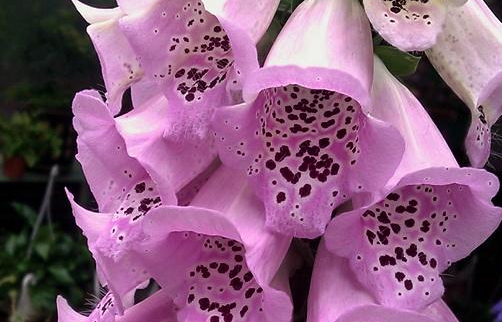
Foxglove is a biennial or perennial herbaceous plant. The stem is erect, sparsely branched, and the whole plant is covered with grayish white short soft hairs and glandular hairs. The plant height is 60~12Ocm. The leaves are ovate or ovate-lanceolate, rough and wrinkled, with basal leaves in a rosette, the leaf margins have rounded serrations, the petioles have narrow wings, and the leaf shape gradually becomes smaller from bottom to top. The terminal raceme is 50~8Ocm long, the corolla is bell-shaped about 7.5cm long, the corolla is waxy purplish red with pale white spots inside. The capsule is ovate, the flowering period is June~August, the fruit ripening period is August~October, and the seeds are extremely small. There are about 25 species in the same genus. Artificially cultivated varieties include white, pink and deep red, etc., generally divided into white-flowered Digitalis, large-flowered Digitalis, and double-flowered Digitalis.
Ecological habits of foxglove
Relatively cold-tolerant, relatively drought-tolerant, and tolerant of poor soil. Likes sun and tolerates shade, suitable for growing in moist but well-drained soil.
Morphological characteristics of foxglove
Foxglove is a biennial or perennial herbaceous plant, distributed in mountainous areas at an altitude of 1200-1800 meters. The stem is erect, sparsely branched, and the whole plant is covered with grayish white short soft hairs and glandular hairs. In sunny places, the leaves include basal leaves and stem leaves, which are ovate-oblong, and the whole plant is densely hairy. The flowers are pink and white, terminal, in racemes, with bell-shaped corollas containing small pink dots, four stamens, and the fruit is a capsule. The plant height is 60~12Ocm. The leaves are ovate or ovate-lanceolate, rough and wrinkled, with basal leaves in a rosette, the leaf margins have rounded serrations, the petioles have narrow wings, and the leaf shape gradually becomes smaller from bottom to top. The terminal raceme is 50~8Ocm long, the corolla is bell-shaped about 7.5cm long, the corolla is waxy purplish red with pale white spots inside. The capsule is ovate, the flowering period is June~August, the fruit ripening period is August~October, and the seeds are extremely small. There are about 25 species in the same genus. Artificially cultivated varieties include white, pink and deep red, etc., generally divided into white-flowered Digitalis, large-flowered Digitalis, and double-flowered Digitalis.
Distribution area of foxglove
Native to Europe; sporadically cultivated throughout Taiwan, China, with large numbers naturalized in places such as Alishan, Taipingshan, Qingjing Farm, and Nantianchi.
Origin of the name foxglove
Foxglove is a typical naturalized plant, whose hometown is far away in the temperate regions of Western Europe. Why is it called foxglove? Because it has stems and leaves covered with fine hairs and leaves resembling those of Rehmannia glutinosa, hence the name foxglove; and because it comes from distant Europe, it is also called "foreign foxglove".
Legend says that an evil goblin gave foxglove flowers to foxes, letting the foxes put the flowers on their feet to reduce the sound of their footsteps when foraging among the foxgloves, so foxglove has another name - fox gloves. In addition, foxglove also has other aliases such as witch's gloves, fairy's gloves, and dead men's bells.
Toxicity of foxglove
Foxglove is an important cardiotonic medicine; it can excite the myocardium, strengthen the contractility of the myocardium, improve blood circulation, or directly inhibit the intracardiac conduction system to slow the heart rate. It mainly treats chronic congestive heart failure and has a significant diuretic and swelling-reducing effect on cardiac edema, but it has a cumulative effect and must be used with caution. Because the gap between the therapeutic dose and the toxic dose of digitalis drugs is very small (it is generally believed that the therapeutic dose is about 60% of the toxic dose and 10-20% of the lethal dose), poisoning is very easy. The whole plant is toxic and is used medicinally, with a cardiotonic effect.
Poisoning manifestationsFirst, in the gastrointestinal tract it causes loss of appetite, nausea and vomiting (the stomach contents are grass-green), anorexia, salivation, abdominal pain and diarrhea, and occasionally hemorrhagic gastritis and substernal pain. It is more commonly seen in adults. Another early sign is reduced urine output. The cardiac symptoms are the coexistence or sequential appearance of various types of arrhythmias, such as tachycardia or bradycardia, rhythm changes such as premature beats, bigeminy, paroxysmal tachycardia, ventricular fibrillation, and atrioventricular block at various levels. Ventricular fibrillation and ventricular standstill are the most serious arrhythmias and can directly endanger life. Finally, convulsions, collapse, coma, etc. occur.
Poisoning treatmentBecause overdose of foxglove endangers heart rhythm, immediately use an antidote or tannalbin 2~5 g. Intravenous drip, etc., according to supportive therapy for arrhythmia.
Cultivation techniques for foxglove
Sow in spring and summer in loose, fertile soil, and transplant the seedlings to open ground when they grow to about 10cm. For summer seedling raising, try to create a ventilated, moist and cool environment. If sown after sowing, they will bloom the next year, but if sown after July, they often cannot bloom the next year. After autumn cools, growth is fast; provide appropriate warmth in winter, and they bloom from June to August, and by summer and autumn many die from damp heat. If the environment is suitable, it has a perennial habit, and after cold protection for overwintering it can bloom again. Old plants can be propagated by division, and division is best done in early spring for easy survival.
Propagation method: sowing propagation is commonly used. Mainly autumn sowing in September; after sowing do not cover with soil, just press lightly; the suitable germination temperature is 15-18°C. It germinates in about 10 days. The humidity of the substrate must reach a certain standard. Light is required during germination. Spring sowing is also possible.
Cultivation management: likes a warm, humid and sunny environment, is cold-tolerant, and the suitable growth temperature is 13-15°C. Afraid of excessive rain, waterlogging and high temperature; tolerant of partial shade and drought. In winter, pay attention to protecting the seedlings for overwintering. In early spring, when there are 5-6 true leaves, they can be transplanted and planted out or potted. When planting, damage the fibrous roots as little as possible and bring a little soil. In the plum rain season, pay attention to drainage and prevent root rot from waterlogging. During the growing period, fertilize once every half month, and be careful that the fertilizer solution does not stain the leaves; when bolting, apply an additional application of phosphorus and potassium fertilizer.
It has a relatively high fertilizer requirement and likes continuous 100ppm-150ppm liquid nitrogen fertilizer (15:5:15 or 15:10:15), with humidity kept between level 2 and level 4 of the standard (humidity standard 4 means the substrate humidity is kept at a level that feels moist to the touch but is not soaked). During the flowering season, considering the quality and quantity of flowers, light can be appropriately increased. Day length will not affect flowering. Although foxglove is a slightly shade-loving plant, it can grow under a certain light intensity when there is sufficient humidity and appropriate low temperature. Before flowering, the plant will produce 8-12 leaves. Although the adaptable temperature range for plant growth is 12°C-19°C, the ideal nighttime temperature at the finishing stage is 12°C-16°C. Planting the plants under the condition of a protected cold frame can produce high-quality plants and flower spikes. On the contrary, if the plants are grown in a greenhouse with relatively strong light and nighttime temperatures exceeding 19°C, the plants will still bloom, but will show leggy growth and sparse flowering. Growers can use foxglove as a variety choice for supplementing greenhouse space in early spring, and the investment is small. Wilt disease, mosaic disease and aphid damage often occur. When disease occurs, promptly remove diseased plants and use lime for disinfection. When insect pests occur, spray with 40% omethoate emulsifiable concentrate at 2000 times dilution, which can also reduce the occurrence of mosaic disease.
Symptoms of disease control in foxgloveThe affected plant first produces dark spots at the base of the stem near the soil surface, which after enlargement become brown, shrink and rot. The pathogen infecting the leaves causes dark green water-soaked round spots; infecting the petioles causes brown rot. When moist, white filamentous material can be seen at the lesions, and severely diseased plants collapse. Disease pattern: the pathogen does not produce spores and spreads by hyphal invasion. The hyphae are colorless at first and light brown later. It has strong saprophytic ability. It habitually lives in soil or diseased residual tissues to overwinter. Suitable temperature (20-24 degrees) and relatively high humidity are favorable for the pathogen's growth and reproduction. When begonia is propagated by division or cuttings, wounds are created, or in rainy weather, when watering too much and the soil becomes waterlogged, it is easily invaded by the pathogen, causing severe disease and plant rot and death.
Control methods1. Choose new soil rich in organic matter, or pond mud and river mud that have been dried in the sun and are darker in color, firm in texture, and produce less mud powder when crushed, as the cultivation soil. It is best not to use old potting soil. The base fertilizer applied must be fully decomposed.
2. Strengthen field management. When air humidity is high, water less or not at all, just enough to keep the soil in the pot moist. Apply less nitrogen fertilizer and more phosphorus and potassium fertilizer, and promptly remove and destroy diseased and old leaves in the lower part that touch the soil.
Disease namesStem rot; pathogen: Aspergillus niger van Teigh, belonging to the Deuteromycetes; damage symptoms: the leaves of the diseased plant are light green. Mostly on the leaf stubble left from cutting hemp, it shows water-soaked wet rot, producing yellow-brown or red-brown disease marks, and juice flows out when pressed by hand. The rot gradually spreads to the base of adjacent uncut leaves; the infected tissue becomes wet rot and the hemp leaves wilt and droop. The wet-rotted leaf base and stem tissue have a foul odor. When the trunk of the diseased plant is cut longitudinally, yellow-brown necrotic disease marks extending inward from the infected leaf base can be seen, with a red halo at the junction of diseased and healthy tissue. Many black mold-like substances can be seen at the leaf stubble cuts and in the axis of the heart leaf.
Control methods:
① Apply lime. Applying lime can prevent disease, increase growth, and also raise the hemp output rate. Generally apply at 0.5 kg/plant for diseased fields and 0.25 kg/plant for non-diseased fields, for 2-3 consecutive years;
② Adjust the leaf-cutting period. The leaf-cutting period for susceptible fields and easily susceptible fields can be adjusted to the low-humidity period. Those originally cut before June should be cut earlier, before early March; those originally cut after July should be postponed to after early November. Be careful not to cut leaves with a reversed blade;
③ Chemical control. Susceptible fields and easily susceptible fields should, within 3 days after leaf cutting, spray the cut openings with 40% Miebingwei at 200 times or 25% carbendazim at 400 times; the amount of solution used is 20-25 kg/666.7 sq m;
④ Breed and plant disease-resistant varieties.
Landscape uses of foxglove
Suitable for potting; if forced in a greenhouse, it can bloom in early spring. Because it is tall and its inflorescence and flower shape are beautiful, it can be used in flower borders, flower beds and rock gardens. It can be used for naturalistic flower arrangements. Foxglove is an important medicinal material.
Dietary or medicinal value of foxglove
The medical information and healthy dietary information on Huhua Web is for reference only and cannot be used as a basis for diagnosis or medical treatment. Any health problems should be consulted with professional medical personnel, and the treatment of any disease should follow a doctor's advice.
Ultimate flower-protecting mission: Love yourself, start from reality, and strictly follow a doctor's advice. For illness, do not be careless, do not delay, do not give up hope; face it bravely, warm the silent world with love, and care for the flower field in your heart with care.
When using digitalis drugs, the following points should be noted:
1. Digitalis is excreted slowly and is prone to cumulative poisoning, so before medication a detailed medical history should be asked. In principle, only those who have not used slow-acting digitalis within two weeks can be given digitalis at the conventional dosage; otherwise the dosage should be adjusted according to the specific situation.
2. If there is renal insufficiency and reduced urine output, digitalis is excreted less and poisoning is likely; the elderly have reduced tolerance to drugs (especially digitalis drugs) and are prone to poisoning. Therefore, the dosage should be 12-13 of the usual amount.
3. The difference between the therapeutic dose and the toxic dose of cardiac glycosides is very small, and each patient's tolerance to them and elimination speed vary greatly, while the listed digitalis dosages are mostly average doses, so the best dosage for different patients needs to be explored according to the condition, preparation, efficacy and other factors.
4. For heart failure caused by paroxysmal ventricular tachycardia, atrioventricular block, aortic aneurysm and acute rheumatic fever in children, cardiac glycosides are contraindicated or should be used with caution. Patients with myocarditis and cor pulmonale are sensitive to cardiac glycosides, and the dosage should be noted.
5. Digitalis glycoside poisoning: see the adverse reactions and management of Class V antiarrhythmic drugs.
The benefits and effects of foxglove
Digitonin, a glycoside obtained from the leaves and seeds of purple foxglove (Digitalis purpurea). It is a type of steroidal saponin; upon hydrolysis, it yields one molecule of digitogenin as the aglycone portion, while the sugar portion consists of 2 molecules of D-glucose, 2 molecules of galactose, and 1 molecule of xylose. These sugar portions are bound to the hydroxyl group at the third carbon atom of digitogenin. Because it can form water-insoluble molecular compounds called digitonides with steroids possessing a free 3beta-OH group (such as cholesterol) in an equimolar ratio, this property is utilized for the qualitative analysis and separation of sterols.
The flower language of foxglove
Deceit
Foxglove pictures