-

Qing'an's 700,000 mu of rice adopts cold-region dry seedling cultivation and controlled irrigation technology for water saving and high yield
The controlled irrigation, water-saving and high-yield technology for cold-region dry seedling rice has been successfully tested in Qing'an. This year, 700,000 mu of rice in this county are using this technology. According to expert calculations, it saves about 450 cubic meters of water per mu, saves 11.2 yuan in pumping costs, and increases yield by an average of 22 kg per mu. In recent years, through the trinity approach of "engineering water saving, mechanism water saving, and technical water saving," Qing'an has reduced irrigation water per mu from nearly 1,000 cubic meters to 500 cubic meters. Over 10 years, it has expanded the paddy field area from 640,000 mu to 1.17 million mu, accounting for half of the cultivated land area. Last year
-
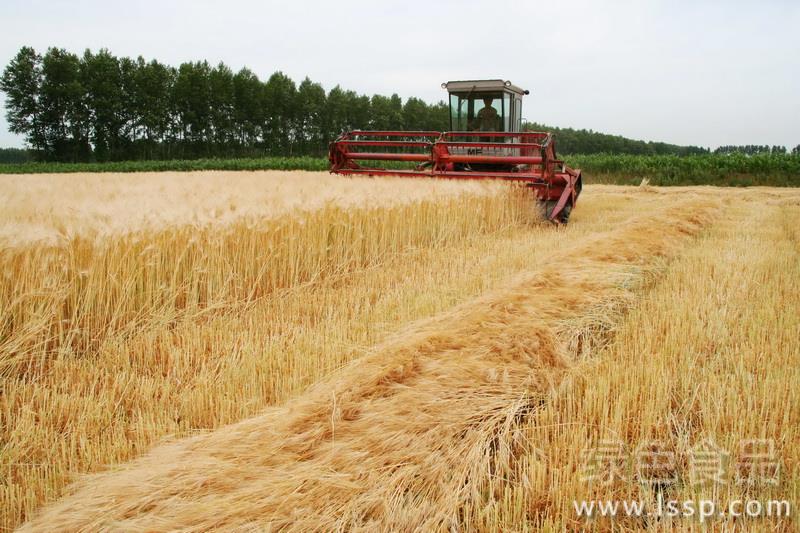
High-yield cultivation techniques for barley with drought resistance, cold tolerance and wide adaptability
High-yield cultivation techniques for barley with drought resistance, cold tolerance and wide adaptability
-
Comprehensive High-Yield Cultivation Techniques for Soybean in High-Cold Regions
Soybean is the main crop in the Jiamusi region of Heilongjiang Province, with an annual sown area of more than 900,000 mu, accounting for more than 75% of the total sown area. For a long time, due to the cold climate, short frost-free period, insufficient accumulated temperature, and lack of suitable varieties, soybean yields have remained stagnant at only about 150 kg, and in disaster years even less than 100 kg. In view of this, based on the climatic characteristics of Heilongjiang Province, we have developed several techniques suitable for soybean
-
Analysis of the Key Points of Integrated High-Yield Technology for Rainfed Soybean
I. Basic Information: 1. Project source: One of the projects under the "Comprehensive Technical Research on Increasing Production in the Sanjiang Plain Agricultural Region" issued by the National Science and Technology Commission during the "Sixth Five-Year Plan" period. A national key research project. 2. This project was reviewed in December 1985 by an appraisal committee composed of 20 experts and scholars including famous professors Wang Jinling and Zhang Zijin from China's soybean science community. The appraisal concluded that the research direction was correct, the approach was right, the measures were appropriate, and the results were remarkable, with an obvious yield-increasing effect on subsequent crops as well. Breakthrough progress had been made in integrated research and supporting technologies,
-
How does the large-seeded, high-yielding Huayou No. 5 soybean perform?
On September 30, right in the harvest season for field crops, the reporter saw in the contiguous fields of Huayou No. 5 soybean planted in Gongjiazhuang Village, Qiaoxi District, Shijiazhuang City: the golden leaves could no longer hide the pods covering the plants, the pods hanging on the stems were as densely packed as harvested corn wrapped around tree trunks, the plump beans seemed about to burst the pods, and the 3 seeds in each pod refused to be outdone, each growing perfectly round. Wang Yuling, the breeder of this variety and director of the Soybean Office of the Shijiazhuang Academy of Agriculture and Forestry Sciences, who was conducting a survey in the field, introduced that Gongjiazhuang Village has 1
-
Detailed Explanation of the Technical Regulations for High-Yield Cultivation of Soybean with Sparse Planting
Technical Regulations for High-Yield Cultivation of Soybean with Sparse Planting: 1. Selection of dedicated varieties: Choose branching-type varieties with tall and luxuriant plants, strong stalks that do not lodge, a long flowering period, large flower clusters, a high pod-setting rate, tolerance to high fertilizer and water levels, and medium or medium-late maturity. 2. Land selection, tillage and fertilization: Choose flatland plots with high soil organic matter content and good moisture conditions, plots with a previous crop, and plots of equal fertility; the best previous crop is corn stubble, and organic fertilizer should be applied in increased amounts. 3. Sowing: Carefully select seeds. Seeds should be free of pests and diseases, uniform in size and plump. The sowing period is generally when the 5 cm soil temperature steadily
-
Detailed Explanation of Key Points for High-Quality and High-Yield Soybean Cultivation Techniques
I. Selection of Improved Varieties The selection of superior varieties is the core to achieving high quality and high yield. With Qindou No. 8 as the main cultivar, demonstrate and promote Zhonghuang 13, Jindou 23, and Yubian 30. II. Reasonable Crop Rotation and Formula Fertilization Soybean is most averse to continuous cropping and back-to-back cropping. For fields with severe disease incidence, switch to other crops, actively promote a reasonable crop rotation system, and reduce the number of years of continuous cropping and back-to-back cropping. According to last year's soil testing survey, the N:P:K ratio in soybean planting fields in our town was 12:1:5, while the N:P:K required by soybean is 14:3
-
Detailed Explanation of New Techniques for High-Quality, High-Yield Soybean Cultivation
Soybean is one of the crops with a relatively short growth period. Unfavorable conditions such as drought, waterlogging, lodging, and excessive vegetative growth during the growth period can all cause significant reductions in soybean yield. To develop soybean production, it is essential to take the promotion of new high-yield, high-quality, disease-resistant varieties as the foundation, and to center on assembling advanced scientific new technologies, following the path of increasing per-unit yield and benefits. In recent years, various regions have carried out a series of innovative studies on how to increase per-unit yield and benefits, achieving good results. The relevant high-quality and high-efficiency cultivation technical measures are now compiled and excerpted here and recommended to the broad community of farmers. 1
-
How to make mushroom top-dressing liquid? Four methods to help achieve high yields
For mushrooms to achieve high yields, proper top-dressing is key. Here are several methods for preparing mushroom top-dressing liquid: 1. Mushroom root soup. Collect the mushroom stems and broken mushrooms cut off during harvesting and processing, wash them thoroughly, cut them into thin slices, add 1-1.5 kg of water per kg of material, boil for 15 minutes, take the filtered liquid and dilute with water to 10-15 kg, which can be sprayed on 30-40 sq m of mushroom beds. Used during the peak fruiting period, it can make the mushroom fruiting bodies thick and plump and extend the peak fruiting period. 2. Cow urine. Take fresh cow urine, boil until the foam disappears, dilute with 7-8 times clean water
-
Detailed Explanation of Key Techniques for High-Yield Open-Field Mushroom Cultivation
Many factors affect the yield and quality of open-field mushroom cultivation. From years of production practice, we have found that in the path to achieving high-yield and high-quality open-field mushroom cultivation, spawn selection, compost heap building, bed preparation and spawning, field management, and integrated pest and disease control are five key links. We hereby summarize our research on the key techniques of these five links as follows, in the hope of being of some benefit to cultivators. I. Spawn Selection Strains obtained through tissue isolation or other means must undergo fruiting tests before they can be used on a large scale.
条件筛选