-

What are the comprehensive utilization methods for fish processing by-products?
The fish heads, tails, minced meat, scales, skin, viscera, bones, and gall bladders left over from fish processing contain large amounts of protein, amino acids, trace elements, and vitamins. Using these protein resources, various deeply processed products can be made, including soluble edible fish protein powder, liquid fish protein feed, fish scale glue, fish skin glue, bone paste, fish protein calcium candy, bile pigment calcium salt, and bile salts. Comprehensive utilization of fish processing by-products can lower the cost of main products and increase the added value of aquatic products; it can also protect the environment, reduce wastewater and waste emissions, and achieve higher economic, ecological, and social benefits.
-
Overview of Research Progress and Current Utilization of Propolis
Propolis is a resinous substance collected by honeybees from tree buds, bark and other parts of plants, mixed with secretions from the bees' hypopharyngeal glands, wax glands and other glands, and processed and transformed by the bees. Propolis is an opaque solid, brown, reddish-brown or grayish-brown in color, sometimes with a greenish tinge, and in a few cases nearly black. Natural fresh propolis has a resinous fragrance and is sticky and malleable. It begins to soften at 36°C, becomes hard and brittle and can be pulverized at 15°C, and melts into a viscous liquid at 60-70°C. Propolis is a resinous substance, highly soluble in ether, chloroform, acetone,
-
Detailed Explanation of Snake Processing and Utilization Methods and Techniques
The snake is almost entirely a treasure, and its comprehensive utilization offers high economic benefits. Its comprehensive utilization mainly includes the following methods. Processing snake skin: To process snake skin, you must first skin the snake. There are mainly two methods for skinning a snake: one is the hanging skinning method, in which the removed skin is cylindrical, and is then cut vertically along the belly to become a flat sheet; the other is the ground skinning method, in which the removed skin is already a flat sheet, that is, the head and tail are cut off and the middle portion is taken. However, no matter which skinning method is used, the skin must be spread flat, nailed onto a wooden board, air-dried, and then removed for later use.
-
Utilization Methods and Techniques of the Three Wheat Feeds
Wheat bran, wheat chaff and wheat straw are collectively called the three wheat feeds, and they are important feeds in the main wheat-producing areas. Rational utilization of the three wheat feeds can promote the development of animal husbandry. If used improperly, not only will they fail to produce the desired effect, but they can also cause livestock and poultry to contract certain diseases, resulting in economic losses. Wheat bran belongs to the high-phosphorus, low-calcium feed category, and the ratio of phosphorus to calcium it contains is 4:1, which is exactly the opposite of the physiological calcium-to-phosphorus ratio required by livestock and poultry of 1.5:1 to 2:1. Feeding too much wheat bran can cause calcium deficiency disease due to an imbalanced calcium-to-phosphorus ratio. Such as rickets in young animals, and in adult animals
-
Detailed Explanation of Processing and Utilization Techniques for Medicinal Scorpions
There are two methods for processing medicinal finished scorpions: light whole scorpion and salted whole scorpion. 1. Processing of light whole scorpion. Light whole scorpion is also called clear water scorpion. Before processing, soak the scorpions to be processed in clean water for about one hour, while gently stirring to wash off the dirt on the scorpions' bodies and allow them to excrete feces. After removing them, put them into boiling water and cook over high heat for about 30 minutes. The water in the pot should be sufficient to submerge the scorpions. After removing from the pot, spread them on mats and place them in basins to air-dry. 2. Processing of salted whole scorpion. Salted whole scorpion is also called salt water scorpion. Processing of salted whole scorpion
-
A Detailed Guide to Sichuan Pepper Harvesting Techniques and Processing and Utilization Methods
Sichuan pepper has a fragrant aroma and is a spice unique to China, also known as dajiao, shujiao, and dianjiao. When ripe, the pericarp of Sichuan pepper turns red to purplish-red, densely covered with warty protruding oil glands. The flowering period is from March to May, and the fruiting period is from July to October. It is mainly produced in Sichuan, Shaanxi, Henan, Hebei, Shanxi, Yunnan and other provinces, among which the quality produced in Sichuan is better, and the yield produced in Hebei and Shanxi is higher. 1. The effects of Sichuan pepper. According to measurements, every 100g of dried Sichuan pepper contains 6.7g of protein, 8.9g of fat, 66 of carbohydrates
-
Discovery of a Wild Self-Seeding Fertile Pinellia Plant and Analysis of Its Utilization Prospects
Since 1988, we have conducted surveys of wild Pinellia ternata variety resources in the Yimeng Mountain area and research on artificial cultivation techniques. During many years of investigation and study, we discovered a single Pinellia ternata plant that can self-pollinate and set seed under wild conditions. After artificial domestication and cultivation, one 1.5 g Pinellia tuber can produce 40 to 50 seeds in one year, thereby solving the problems of low natural seed-setting rate and the lack of five usable [varieties] in production, and opening a path for improving the propagation rate of Pinellia ternata. 1 Botanical characteristics: the plant is 10 cm tall
-
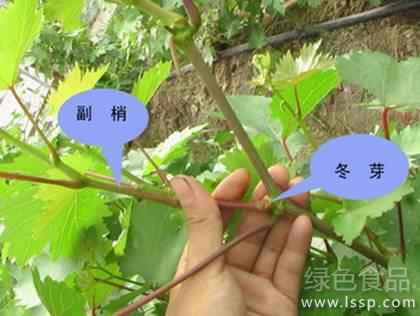
Overview of the Utilization and Handling Techniques for Grape Secondary Shoots
A Brief Overview of the Utilization and Handling Techniques for Grape Secondary Shoots
-
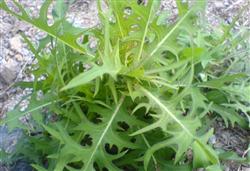
Detailed Explanation of Cultivation Techniques and Comprehensive Utilization Methods of Wild Lettuce
Wild lettuce, also known as mountain lettuce, bitter chicory, and duck feed, is a herbaceous plant of the Asteraceae family, growing by roadsides, in wilderness, and on hillsides. Its seedlings and tender stems and leaves are suitable for eating, and it is a wild vegetable with development value. 1 Botanical characteristics and biological traits: A biennial herbaceous plant, with white milky sap, 80-150 cm tall. Stem erect,...
-
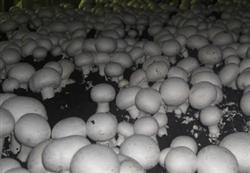
Utilization of Wheat Straw and Cattle and Horse Manure in Button Mushroom Cultivation
The overwintering period of button mushrooms in greenhouses generally refers to the period from the Winter Solstice of that year to the Awakening of Insects in the following year. During this period, the time is long and the temperature is low, and the mycelium is in a stage of extremely slow or stopped growth. Although a small amount of fruiting bodies may sometimes be produced, it is of little significance in production. Depending on the degree of dryness or wetness of the mycelium layer, either dry overwintering or wet overwintering methods can be used for management...
条件筛选