-
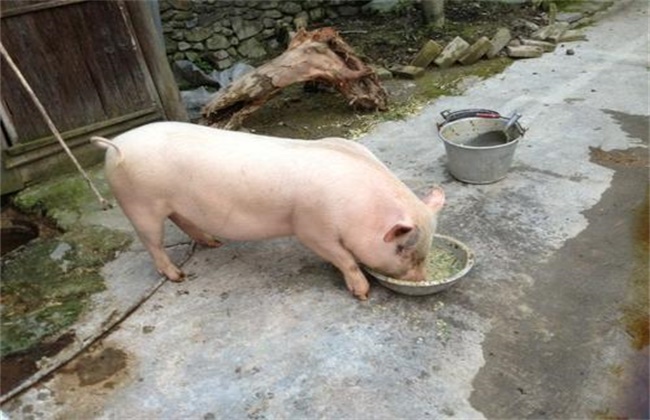
What are some practical measures to improve pig feed utilization?
Measures to improve pig feed utilization
-
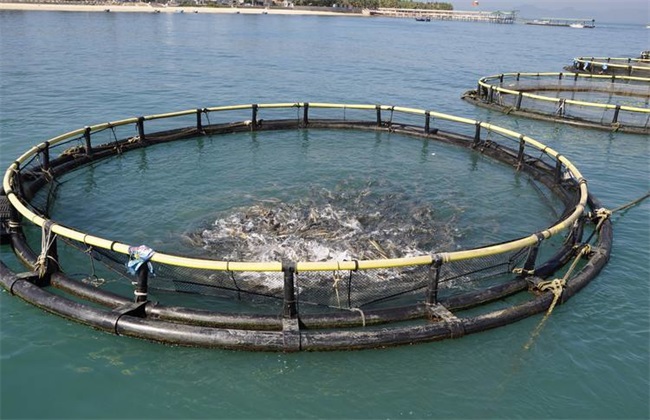
What methods are there to improve feed utilization in fish farming?
How to improve feed utilization in fish farming
-

What are the factors affecting beef cattle feed utilization?
Factors affecting beef cattle feed utilization
-

Comprehensive Utilization Techniques for Fish Fingerling Ponds During the Winter Fallow Period
Using Winter-Fallow Fingerling Ponds to Raise Marketable Fish Raising a crop of marketable fish in winter-fallow fingerling ponds can both increase production and help regulate the "summer shortage" in the aquatic product market. Because the rearing period is relatively short and temperatures are low, the following techniques should be adopted: 1. Stock early, that is, stock immediately after the fingerlings are concentrated in ponds, so as to make full use of the growing period. Based on a maximum water depth of 2 m, the usual stocking rate is 125-150 kg per mu. The usual stocking ratio is about 40% silver carp, about 10% bighead carp, about 30% grass carp and bream, and about 20% black carp and common carp. Stocked fish
-
Characteristics, properties, cultivation and utilization of bermudagrass
A species of the genus Cynodon in the grass family (Poaceae), scientific name Cynodon dactylon (L.) Pars., an overwintering annual herb. Also known as wiregrass and "xingyizhi". It is an excellent forage grass, turfgrass and soil-and-water conservation crop. It is distributed throughout the warm regions of the world; in China it is found south of the Yellow River basin. Fibrous roots are fine and tough; it has rhizomes or stolons, with internodes of varying length; the part of the stem lying flat on the ground reaches more than 1 m in length and roots and branches at the nodes, while the upright part is 10-30 cm tall; leaves
-
Comprehensive Utilization Methods of Fish Fingerling Ponds During the Winter Fallow Period
Raising market-size fish: Using winter-fallow fingerling ponds to raise one season of market-size fish can both increase production and help ease the "summer shortage" in the aquatic product market. Because the rearing period is relatively short and temperatures are relatively low, the following techniques should be adopted: 1. Stock early, that is, stock immediately after the fingerlings are combined into ponds, so as to make full use of the growing period. Stocking rate is calculated at a maximum water depth of 2 m, generally 125-150 kg per mu. The stocking ratio is generally about 40% silver carp, about 10% bighead carp, about 30% grass carp and bream, and about 20% black carp and common carp.
-
How to Improve the Utilization Rate of Winter-Idle Fish Fry Ponds
After the winter pond consolidation until the release of summer fry the following year, most fish fry ponds have an idle period of about half a year. If they are comprehensively utilized, the utilization rate and economic benefits of the fish fry ponds can be greatly improved. Four methods of utilizing winter-idle fish fry ponds are introduced below. Raising market-size fish: Using winter-idle fish fry ponds to raise one season of market-size fish can both increase output and help regulate the "summer shortage" aquatic product market. Because the rearing period is relatively short and the temperature is relatively low, the following techniques should be adopted: 1. Stock early, that is, stock immediately after the fish fry are consolidated into ponds, so as to make full use of the growing period. The stocking amount is calculated at a maximum water depth of about 2 m, generally 125 kg to 150 kg per mu. For the stocking ratio, generally silver carp account for about 40%, bighead carp about 10%, grass carp and bream about 30%, and black carp and common carp about 20%. Release @#@233@#@ large-size fingerlings, generally silver carp and bighead carp above 250 g, grass carp above 500 g, bream above 100 g, black carp above 1000 g, and common carp above 250 g. 2. Strengthen management. Fertilize promptly after the fish are stocked. Fertilization should mainly use organic fertilizer to ensure that the pond water has a certain fertility. In winter, choose clear and warm weather and feed once every 2 to 3 days, with the feeding amount at about 20% of the usual amount. In spring, as the water temperature rises, increase the feeding amount and maintain good water quality, so that the fish school maintains a relatively high growth rate and reaches the market size on schedule.
-
A Detailed Explanation of Processing Techniques and Utilization Methods for Dog By-products
The processed dog skin has good cold-resistant and moisture-proof performance and an attractive fur color, and can be made into vests, mattresses, and so on, and is very effective for the waist soreness and cold legs of elderly people and rheumatism patients. 1. Processing: During processing, first clean the meat, greasy matter, feces, dirt, and blood off the dog skin, lay it flat on a wooden board, and rub it with coarse sandcloth or a brick until the coarse hair roots are slightly visible. Then use 500 g of alum, add 5000 ml of water, boil, pour into a basin, and after it cools, fully immerse the dog skin, take it out after about 24 hours, place it hair-side down on
-
What are the comprehensive utilization methods for fish processing by-products?
The fish heads, tails, minced meat, scales, skin, viscera, bones, and gall bladders left over from fish processing contain large amounts of protein, amino acids, trace elements, and vitamins. Using these protein resources, various deeply processed products can be made, including soluble edible fish protein powder, liquid fish protein feed, fish scale glue, fish skin glue, bone paste, fish protein calcium candy, bile pigment calcium salt, and bile salts. Comprehensive utilization of fish processing by-products can lower the cost of main products and increase the added value of aquatic products; it can also protect the environment, reduce wastewater and waste emissions, and achieve higher economic, ecological, and social benefits.
-
Overview of Research Progress and Current Utilization of Propolis
Propolis is a resinous substance collected by honeybees from tree buds, bark and other parts of plants, mixed with secretions from the bees' hypopharyngeal glands, wax glands and other glands, and processed and transformed by the bees. Propolis is an opaque solid, brown, reddish-brown or grayish-brown in color, sometimes with a greenish tinge, and in a few cases nearly black. Natural fresh propolis has a resinous fragrance and is sticky and malleable. It begins to soften at 36°C, becomes hard and brittle and can be pulverized at 15°C, and melts into a viscous liquid at 60-70°C. Propolis is a resinous substance, highly soluble in ether, chloroform, acetone,
条件筛选