-

Processing and Utilization of Potatoes
I. As Feed Both the tubers and the starch residue of potatoes can be fed to livestock and poultry. According to experiments, feeding 50 kg of potatoes to pigs can increase meat by 2.5 kg; feeding dairy cows can produce 40 kg of milk or 3.5 kg of butter. Feeding each chicken an average of 71 g each of chopped, cooked potatoes and mixed feed per day can increase annual egg production by 30 to 50 eggs and save 20 kg of concentrated feed. II. Extracting Starch Every 100 kg of potatoes generally yields 12.15 kg of starch. The extraction process is relatively simple: first wash the potatoes, then mechanically crush, grind,
-
Breeding and Utilization of the Japonica Hybrid Rice Hanyou 1027
Hanyou 1027 is a new japonica hybrid rice combination bred by the institute in 1985 by crossing the Hanfeng male-sterile line with the T1027 restorer line. In 1986, at the institute's experimental farm, on 1.62 mu the yield was 581.7 kg per mu, an increase of 11.8% over Hanfeng. In 1988, on 1.2 mu at the institute, the yield was 604.6 kg per mu, an increase of 22.0% over Xiushui 04. As a single-season rice in Shanghai, the combination takes 153-156 days; as a double-season rice in Changsha and Hangzhou, 122-142 days.
-
Methods and Techniques for Rational Utilization of the Three Wheat Feeds
Wheat bran, wheat chaff and wheat straw are collectively known as the three wheat feeds, and they are important feeds in the main wheat-producing areas. Rational utilization of the three wheat feeds can promote the development of the livestock industry. If used improperly, they will not only fail to produce the desired effect, but will also cause livestock and poultry to contract certain diseases, resulting in economic losses. Wheat bran belongs to the high-phosphorus, low-calcium feed category, and the ratio of phosphorus to calcium it contains is 4:1, which is the opposite of the physiological calcium-to-phosphorus ratio required by livestock and poultry, which is 1.5:1 to 2:1. Feeding too much wheat bran can cause calcium deficiency disease due to an imbalanced calcium-to-phosphorus ratio, such as rickets in young animals, osteomalacia in adult animals
-
Yangdao 6: Breeding and Utilization of a New Medium Indica Rice Variety with High Quality, High Yield and Disease Resistance
Yangdao 6 is a new medium indica variety bred by the Institute of Agricultural Sciences of the Lixiahe Region of Jiangsu, using Yangdao 4 as the female parent, crossed with "Yan 3021", with the F1 seeds subjected to 60CO-gamma ray irradiation mutagenesis, and then developed through continuous directional selection. This variety combines high quality, high yield, disease resistance and wide adaptability, and is an ideal seed source for developing high-quality rice; it has already been demonstrated and promoted on a large scale in Jiangsu, Anhui, Hubei, Shanghai and other provinces and municipalities. Yangdao 6 is also a high-quality restorer line for two-line hybrid rice and three-line Honglian-type hybrid rice, and the formulated "Liangyou Peijiu" and "Yueyou 9
-
Utilization Methods and Techniques of the Three Wheat Feeds
Wheat bran, wheat chaff and wheat straw are collectively called the three wheat feeds, and they are important feeds in the main wheat-producing areas. Rational utilization of the three wheat feeds can promote the development of animal husbandry. If used improperly, not only will they fail to produce the desired effect, but they can also cause livestock and poultry to contract certain diseases, resulting in economic losses. Wheat bran belongs to the high-phosphorus, low-calcium feed category, and the ratio of phosphorus to calcium it contains is 4:1, which is exactly the opposite of the physiological calcium-to-phosphorus ratio required by livestock and poultry of 1.5:1 to 2:1. Feeding too much wheat bran can cause calcium deficiency disease due to an imbalanced calcium-to-phosphorus ratio. Such as rickets in young animals, and in adult animals
-
A Detailed Guide to Sichuan Pepper Harvesting Techniques and Processing and Utilization Methods
Sichuan pepper has a fragrant aroma and is a spice unique to China, also known as dajiao, shujiao, and dianjiao. When ripe, the pericarp of Sichuan pepper turns red to purplish-red, densely covered with warty protruding oil glands. The flowering period is from March to May, and the fruiting period is from July to October. It is mainly produced in Sichuan, Shaanxi, Henan, Hebei, Shanxi, Yunnan and other provinces, among which the quality produced in Sichuan is better, and the yield produced in Hebei and Shanxi is higher. 1. The effects of Sichuan pepper. According to measurements, every 100g of dried Sichuan pepper contains 6.7g of protein, 8.9g of fat, 66 of carbohydrates
-
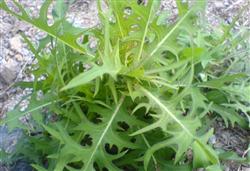
Detailed Explanation of Cultivation Techniques and Comprehensive Utilization Methods of Wild Lettuce
Wild lettuce, also known as mountain lettuce, bitter chicory, and duck feed, is a herbaceous plant of the Asteraceae family, growing by roadsides, in wilderness, and on hillsides. Its seedlings and tender stems and leaves are suitable for eating, and it is a wild vegetable with development value. 1 Botanical characteristics and biological traits: A biennial herbaceous plant, with white milky sap, 80-150 cm tall. Stem erect,...
-

How can potassium fertilizer utilization be improved in sunflower cultivation?
How can potassium fertilizer utilization be improved when growing sunflowers? Please explain the methods. Sunflower is a crop with a high potassium requirement. Sunflower roots can reach 2 m deep, and most of the nitrogen, phosphorus and potassium it needs is supplied by the soil, with any shortfall adjusted through fertilization. If too much nitrogen fertilizer is applied in a one-sided way, it increases the risk of lodging and disease...
条件筛选