-
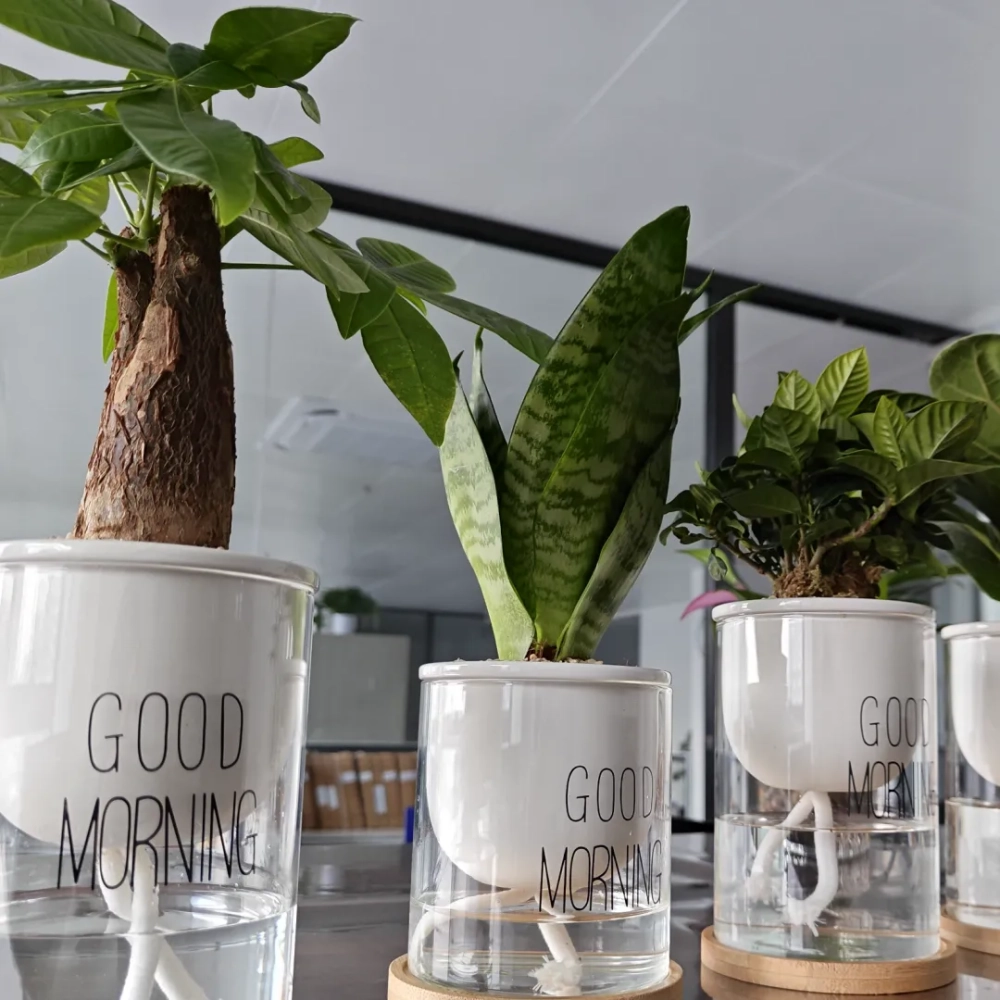
Methods to Keep Hydroponic Green Plants Upright and Stable
Hydroponic plants are highly favored for their high aesthetic appeal and ease of maintenance. However, during the maintenance process, how to fix the plants is
-

What to Do When Clivia Leaves Droop? Teach You How to Make the Leaves Stand Upright
When many people hear "Clivia" (junzilan), do they get the feeling that it must belong to the orchid family? In fact, Clivia is not part of the orchid group at all and has no relation to the orchid family. It belongs to the Amaryllidaceae family and is considered one of the easier flowers to grow in everyday life. But easy as it is to grow, growing it well still requires a lot of attention to detail.
-

How to Grow White Jade Orchid (Michelia alba)? A Detailed Guide to the Latest Growing Methods
The white jade orchid (Michelia alba) has an upright, branching form and an elegant, poised appearance. In the south it can be grown outdoors in courtyards and is a backbone tree species in southern gardens. Grown in pots, it can be placed in courtyards, halls and meeting rooms, while small to medium-sized plants can be displayed in living rooms and studies. It has high cultivation value. Below
-
How much does a tall, upright poplar sapling cost per tree, and how to plant good varieties
Poplar is a plant of the genus Populus, with about 100 or more species in the entire genus, also called hemp willow (Hubei) and centipede willow (Anhui). It is mainly distributed in Liaoning, Jilin, Xinjiang, northern Shaanxi, and Shandong. So how much does a poplar sapling cost per tree? What are its characteristics? Which variety is good? How
-
What are the control methods for perilla rust disease?
Perilla is an annual upright herbaceous plant. The stem is 0.3-2 m tall, green or purple, obtusely quadrangular, with four grooves, densely covered with long soft hairs. The leaves are broadly ovate or round, 7-13 cm long, 4.5-10 cm wide, with a short-pointed or abruptly pointed tip, a rounded or broadly wedge-shaped base, and coarse serrations along the margin above the base, membranous or herbaceous, green or purple on both surfaces, or purple only on the lower surface, sparsely covered with soft hairs on the upper surface and appressed soft hairs on the lower surface, with 7-8 pairs of lateral veins, those in the lower part slightly closer together, rising obliquely, slightly prominent on the upper surface and distinctly prominent on the lower surface, slightly lighter in color; the petiole is 3-5 cm long, dorsiventrally flattened, densely covered with long soft hairs.
-
How to shape a clivia? Six methods to make the plant upright and beautiful
How to shape a clivia: six methods to make it upright and beautiful
-
-
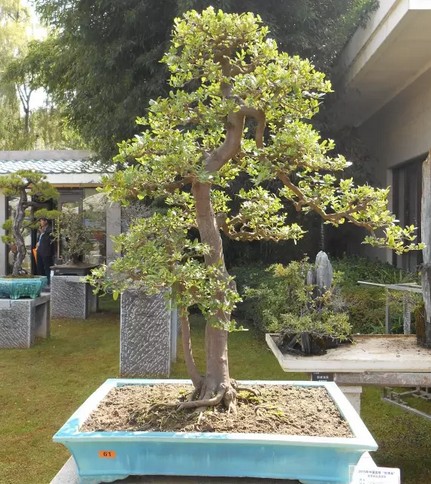
Detailed Explanation of the Key Technical Points for Formal Upright Bonsai Styling
The styling characteristic of the formal upright style is a trunk that is upright or basically upright, belonging to the tall and vigorous tree type, and is also the basic tree form of arbor species. (1) Selecting the planting material. An excellent planting material should have the following characteristics: (1) A perfect root spread. (2) A rugged, upright trunk base. (3) A trunk of moderate thickness, becoming progressively thinner toward the top.
-
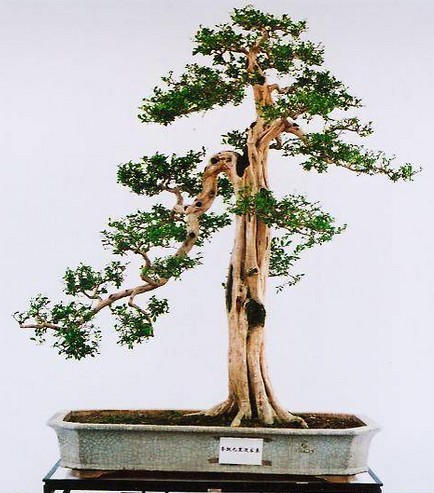
How to shape a formal upright bonsai? Detailed methods and techniques
The formal upright style is the most common form in bonsai creation, because the vast majority of bonsai materials can be made into the formal upright style, especially collected tree material, which is found everywhere. However, creating an excellent formal upright bonsai is truly not easy, since it is hard to find material of superior quality when collecting from the wild.
-
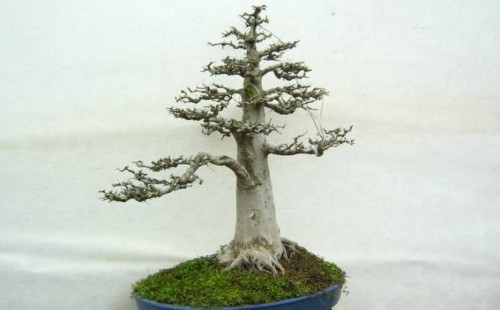
Detailed explanation of the steps for making a formal upright (Chokkan) bonsai
The formal upright style is also a relatively common design in the bonsai-making process. It requires the trunk to be straight and upright, thicker at the bottom and thinner at the top, with the side branches on both sides of the trunk kept flat and extended, while the root system is often exposed around the base yet appears strong and powerful. Viewed as a whole, the lowest branches are the longest and slant downward.
条件筛选