-
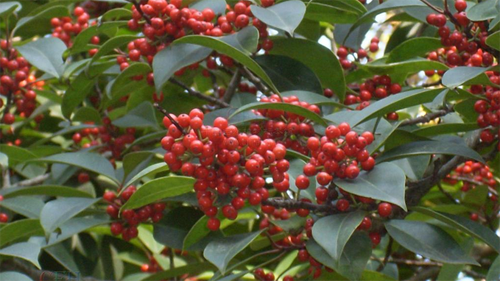
What types of holly planting techniques are there?
When it comes to holly, it is relatively common and can be found in many places, having made many contributions to our country's landscaping. What are the planting methods for holly? What classifications are there? Introduction to holly: Holly is also called northern mistletoe, mistletoe, frozen holly, parasitic seed, etc.! It can be seen all over our country
-
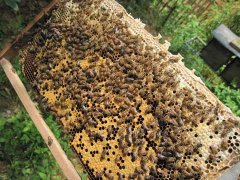
Introduction to Bee Keeping Techniques and Common Types of Pests
Bee keeping also requires attention to the harm caused by pests. Bee pests include bee species, bee lice flies, and wax moths that damage the wax of brood combs. Bee enemies include toads, spiders, and hornets. Let's take a look below. Toads: Toads mostly appear in summer
-
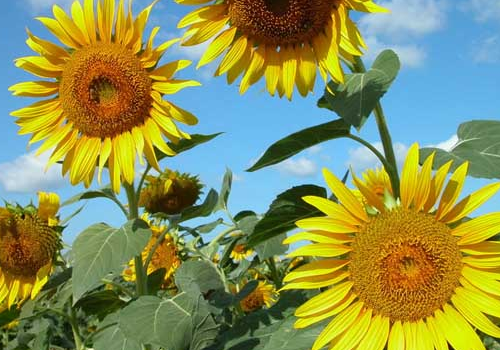
What type of plant is the sunflower? Detailed guide to growing methods
The sunflower has tremendous uses; the seeds we eat and the cooking oil we use all come from sunflowers, so what type of plant is the sunflower? What are the sunflower growing methods? What type of plant is the sunflower: the sunflower is an angiosperm. Taxonomically, the sunflower belongs to the angiosperms, and its fruit is an achene, commonly known as the sunflower seed.
-

What are microecological preparations, what types are there, and what are their application scopes?
Applications of microecological preparations
-
What varieties and types of Polygonatum are there? Let us introduce you to the common ones
According to their different characteristics, commercial Polygonatum is divided into three categories: "chicken-head Polygonatum," "ginger-shaped Polygonatum," and "large Polygonatum." Chicken-head Polygonatum is irregularly conical, with a large head and a thin tail, resembling a chicken's head. It is 3-10 cm long and 0.5-1.5 cm in diameter. The surface is yellowish-white to yellowish-brown, semi-transparent, with fine wrinkles over the whole body and slightly raised, wavy rings. The scar of the aboveground stem is disc-shaped, often with a concave center, and the root scars are mostly dot-like protrusions. The cut surface is light brown, slightly horny, and has numerous yellowish-white dot-like veins (vascular bundles). The odor is slight, the taste is sweet, and it is sticky,
-
Force-feeding methods and technical key points for meat-type squab
Meat-type squab at 18 to 25 days of age can reach a body weight of 350 to 500 g, and depending on the situation can be considered ready for market. However, at this time the squab meat has a relatively high water content and little subcutaneous fat. To improve the quality of the pigeon meat, force-fattening can be carried out for 5 to 7 days before sale. After force-fattening, the squab is crisp-skinned, tender-boned and flavorful after cooking. 1 Squab selection: Squab from 10 to 25 days of age can all be force-fattened. Most often, squab at 15 to 20 days of age with a body weight of 350 to 500 g are used for fattening
-
How do the immunization methods differ for different types of pigs?
Immunization of replacement gilts. Replacement gilts should be vaccinated with the following vaccines 1 month before mating, and sows after weaning should be vaccinated as follows: (1) Swine fever vaccine, 4 doses per head. (2) Swine erysipelas and swine pasteurellosis combined vaccine, 1 dose per head. (3) Swine Japanese encephalitis vaccine, 1 dose per head. (4) Porcine parvovirus vaccine, 1 dose per head (the inactivated vaccine can be given twice, with an interval of 15 days). (5) Swine pseudorabies vaccine, used according to the instructions. Immunization of farrowing pigs. Farrowing sows should be vaccinated with the following vaccines 15-40 days before farrowing: (1) Piglet Escherichia coli quadruple vaccine (K88, K99, 9
-
What types of mushroom compost are there for straw mushrooms? How to prepare them
The raw materials needed for cultivating straw mushrooms come from a wide range of sources. Currently, the most commonly used are rice straw, wheat straw, waste cotton, and cottonseed hulls. Some spent substrate left over from cultivating other edible fungi can also be used to grow straw mushrooms. 1. Rice straw Choose golden-yellow, mold-free dry rice straw, and sun-dry it for 1-2 days before use to prevent the appearance of coprinus or other contaminating fungi during cultivation. There are generally two ways to treat rice straw. One is to cut the rice straw into pieces about 5 cm long, then soak them in 3% limewater for 1-2 days, then add dry pig manure or dry cow manure equal to 20%-25% of the straw weight and compost the mixture
-
What types of snakes are there? Learn about their medicinal and economic value in one article
Snake Farming Techniques Snakes belong to the animal kingdom, phylum Chordata, subphylum Vertebrata, class Reptilia, order Squamata, suborder Serpentes. The distribution of snakes is greatest in tropical and subtropical regions, followed by temperate zones, and least in cold zones. There are more than 2,500 species of snakes in the world, of which about 650 are venomous. China has more than 200 species of snakes, of which about 51 are venomous, mainly distributed in the southern and southwestern provinces, especially in Guangdong, Guangxi, Hainan and other provinces and autonomous regions. Medicinal and Economic Value The medicinal use of snakes is not limited to snake venom, snake meat, snake gall and snake slough
-
What varieties and types of Asarum are there? A detailed guide in one article
Commercial Asarum is mostly divided into two types: Liaoxixin (northeastern Asarum) and Huaxixin (Chinese Asarum). Liaoxixin refers to Asarum heterotropoides var. mandshuricum and Asarum sieboldii var. seoulense produced in Northeast China. The two are similar in characteristics, but there are distinctions between wild and cultivated products. Wild Liaoxixin is usually gathered in small bundles of a dozen or so plants, often rolled into clumps. The rhizome is irregularly cylindrical, 1-10 cm long, with short branches, grayish-brown on the surface, rough with ring-shaped nodes, and the internode spacing is about 2-3 mm. The branch tips have bowl-shaped stem scars. The roots are slender, densely growing on the nodes, about 1 mm in diameter and 10-20 cm long, grayish-yellow on the surface, smooth or with fine longitudinal
条件筛选