-
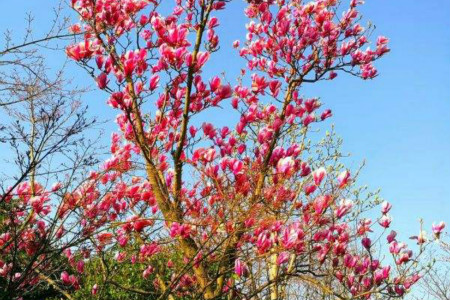
What are the medicinal effects and types of the kapok tree?
What medicinal effects does the kapok tree have, and how many types are there?
-

What varieties of cherry blossoms are there? An introduction to common types and their characteristics
1. Mountain cherry is a variety of cherry blossom. A wild species, with small flowers, white or tinged with pink, single-petaled flowers. 2. Double red cherry is a cultivated variety of cherry blossom. Double-petaled flowers, pink. 3. Weeping cherry is a cultivated variety of cherry blossom. Branches droop, flowers pink. 4. Japanese dawn cherry is a variety of cherry blossom with drooping branches and new leaves of a bronze color. Double-petaled flowers, large blooms, pink, fragrant. The flowering period is relatively late. 5. Magnificent cherry is a cultivated variety of cherry blossom. Double-petaled flowers, large blooms, light red, with relatively long
-
Characteristics of the groundcover-type Dianthus variety and its planting and care methods
Groundcover Dianthus is a perennial herbaceous plant in the genus Dianthus of the family Caryophyllaceae, native to the United States and Japan. It was introduced to China in the early 1990s, and after more than ten years of cultivation, more dwarfed superior varieties have been bred. This variety blooms around May Day, with a flowering period of more than 50 days, and is both a flowering plant and a replacement variety for lawns. Groundcover Dianthus is a cold-hardy variety; in cultivation trials in Shandong, Shanxi, Hebei and other places, it can endure short-term low temperatures of minus 25°C to 30°C in the depths of winter. Under heavy snow cover, the leaves show no signs of freeze damage. Groundcover Dianthus is suit
-
What classifications of cut-flower lilies are there? A detailed introduction to the main types
Lilies used for cut-flower cultivation can be broadly divided into three categories. Namely, Asiatic lily hybrids, Oriental lily hybrids, and Trumpet lily hybrids. The growth cycle of Asiatic lily hybrids (referring to the number of weeks from planting to harvest) is 9-21 weeks, with varieties of 12-16 weeks being the majority, and about 30-40 varieties suitable for four-season cultivation. The growth cycle of Oriental hybrid lilies is mostly 12-20 weeks, with most varieties at 14-18 weeks. More than 20 varieties are suitable for four-season cultivation. The growth weeks of Trumpet lily hybrids
-
Polyploid black locust is a new type of tree species suitable for growing on poor soil
A sapling less than 10 cm long, looking like nothing more than a pea sprout, planted on barren land where nothing will grow, can shoot up to more than 3 m tall in a single year. This is a new type of tree species suitable for planting in China's western regions - polyploid black locust (Robinia pseudoacacia) - successfully cultivated by the Lvyuan Seedling Research and Promotion Center of Changyi City, Shandong Province, together with experts from Beijing Forestry University, using plant tissue culture technology on the basis of introduced foreign tree species. With its excellent drought resistance, salt-alkali tolerance and tolerance of poor soil, it has become a highly favored "golden sapling"
-
Characteristics and Types of African Violets Explained
African violets prefer a warm, humid, well-ventilated, semi-shaded environment; they dislike high temperatures and fear strong light. The suitable growing temperature is 18-24°C; in winter the temperature must not drop below 10°C, and in summer it must not exceed 30°C, with relative humidity of 40%-79%. The plant is short and forms a rosette shape; the leaves are thick and fleshy like velvet; the flowering period is long, and the flower color is mainly blue-purple, which is how the common name "violet" came about. They are easy to propagate and are a popular indoor potted ornamental plant worldwide. Through hybridization, their horticultural varieties have continued to increase, now numbering more than 2,000
-
Ligustrum: Arbor-type Market Looks Promising, Shrub-type Prices Fall
Ligustrum is an evergreen tree or shrub of the genus Ligustrum in the family Oleaceae, and is one of the major products in China's landscaping nursery stock market. The common nursery varieties on the market are mainly small-leaf ligustrum, golden-leaf ligustrum, red-leaf ligustrum, etc. The main producing areas for ligustrum nursery stock are the 5 provinces of Hunan, Hubei, Jiangxi, Jiangsu and Zhejiang, among which Hunan and Jiangxi export relatively large quantities of large-specification arbor-type stock with a diameter at breast height of over 8 cm, and out-of-stock situations have appeared in quite a few areas. In 2004, the prices of Hunan stock with a diameter at breast height of 8, 12, 16, 20 and 30 cm were 200, 300, 500, 1
-
Detailed Explanation of the Forcing Cultivation Techniques for Chicory (Softening Type)
After the root plants are harvested, it is best to subject them to a certain period of low-temperature treatment before forcing cultivation. The duration of low-temperature treatment varies by variety: early-maturing varieties can be treated for a shorter time, while late-maturing varieties should be treated for a longer time, so that tighter chicons can be formed. The methods of forcing cultivation are quite flexible and can be broadly divided into soil culture and water culture. Soil culture is a relatively traditional cultivation method and can be carried out by digging trenches in the ground inside a plastic tunnel or greenhouse. Its characteristics are low cost and simple operation, but the biggest drawback is that the chicons formed are not clean. Water
-
Unique and Colorful: A Brief Discussion of Butterfly-Type Floral Art in Chinese Cymbidiums
The "butterflies" among Chinese orchids, in all their myriad forms, have formed one of the most captivating groups in Chinese cymbidiums, collectively known as "Chinese Cymbidium Butterfly-Type Floral Art." Concept: In the flowers of Chinese cymbidiums, if 2 sepals (lateral sepals) or 2 petals (petals) undergo partial or complete mutation into a lip, then the flower colors of this type of orchid become richer and more varied. Usually the lip-transformed perianth segments bear colors such as green, white, red, and pale yellow. These mutated perianth segments curl backward or outward at the tip just like a lip (labellum), and their shape and color resemble butterfly
-
Detailed Explanation of the Forcing Cultivation Techniques for Softening-Type Chicory
After the roots are harvested, it is best to subject them to a period of low-temperature treatment before carrying out forcing cultivation. The duration of the low-temperature treatment varies by variety; early-maturing varieties can be treated for a shorter time, while late-maturing varieties should be treated for a longer time, so that tighter chicons can be formed. The methods of forcing cultivation are quite flexible and can be broadly divided into the soil culture method and the water culture method. The soil culture method is a relatively traditional cultivation method and can be carried out by digging trenches in the ground inside plastic tunnels or greenhouses. Its characteristics are low cost and simple operation, but the fact that the chicons formed are not clean is its greatest drawback. The water culture method requires specialized
条件筛选