-
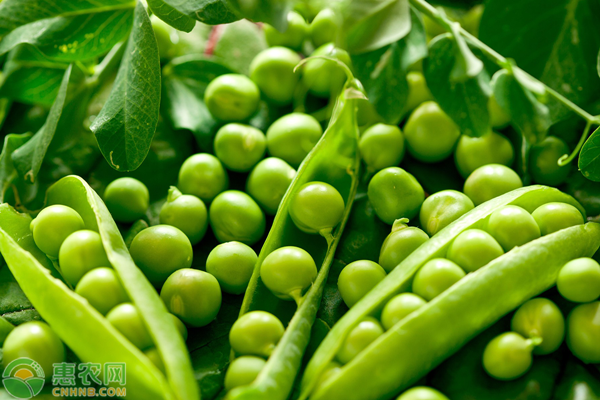
Detailed Explanation of Pea Pest and Disease Types and Control Methods
What are the pests and diseases of peas? How to control them?
-
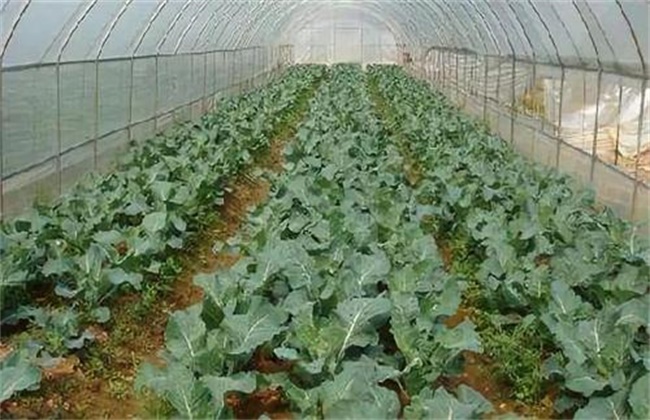
What are the common types of gas damage in greenhouses? Detailed explanation of prevention and control methods
Common types of gas damage in greenhouses and their prevention and control methods
-
Which types of vegetables are rich in protein?
Want to know if you are getting enough protein? Protein needs vary depending on your age, sex, physical activity level, and specific health conditions. Meat...
-

Detailed Explanation of Rice Paddy Soil Types and Nutrient Status in Sanming City
Our city has relatively abundant land resources, with a total land area of 34.44 million mu, of which cultivated land area is 2,563,100 mu, accounting for 7.4% of the total land area (of which paddy field area is 2,441,900 mu, accounting for 7.1% of the total land area, and agricultural land is 121,200 mu, accounting for 0.3% of the total land area). Due to differences in distribution terrain, paddy soils can be divided into four types: plain fields, sloping terraced fields, mountain valley fields, and streamside fields, with a ratio of 4.6:5:6.2:1 among them. Plain fields are dominated by hydromorphic
-
Several Types of Potato Seeding and Planting Machinery
1. 2BMF-2 potato planter. This machine is matched with an 8.8 kW-12 kW (12 hp-16 hp) small four-wheel tractor and can complete multiple operations in one pass, including furrowing, fertilizing, seeding and soil covering. It features labor saving, effort saving and convenient adjustment and use. Main technical parameters: seed breakage rate <=1%, double-seed rate <=8%, empty-hole rate <=2%, productivity 4 mu/hour. 2. 2BXSM-1B potato fertilizing and seeding machine. This machine is an ideal potato planter for dryland flat-cultivation areas.
-
What types of potato planters and planting machinery are there?
1. 2BMF-2 potato planter: This machine is matched with an 8.8 kW to 12 kW (12 hp to 16 hp) small four-wheel tractor, and can complete multiple operations such as furrowing, fertilizing, sowing and soil covering in one pass. It has the features of saving labor and effort and being convenient to adjust and use. Main technical parameters: seed breakage rate <= 1%, double-seed rate <= 8%, empty-hole rate <= 2%, productivity 4 mu/hour. 2. 2BXSM-1B potato fertilizing planter: This machine is an ideal potato planter for dryland flat-cultivation areas.
-
Rice paddy field conditioner is a new type of fertilizer
Nong brand rice paddy field conditioner is a new type of fertilizer developed by the Soil and Fertilizer Institute of the Liaoning Academy of Agricultural Sciences. It is rich in more than 10 major, secondary and trace elements required for rice growth, seedling strengthening, seedling revival and tillering, and is also rich in free acids, with a strong function of adjusting the acidity of rice paddy soil, and can prevent the occurrence of old seedlings, yellow seedlings and stiff seedlings in rice. It can strengthen seedlings, provide rice with sufficient major, secondary and trace elements, organic nutrition, etc., make the plants grow robustly, promote high yield, loosen the soil, improve the soil microenvironment, and make the root system grow vigorously,
-
2CM-2 Type Fully Automatic Potato Planter Introduction
The 2CM-2 type fully automatic potato planter is used in conjunction with a small tractor, integrating ditching, fertilizing, sowing and soil covering into one unit, and can complete fertilizing and sowing operations in a single pass. It features soil moisture conservation, labor saving, fertilizer saving and consistent sowing. Main technical parameters: dimensions mm 1170, 900, 900; total machine weight kg 120; matched power kW 11-18; number of rows 2; row spacing mm 300 (adjustable); working width mm 1500; sowing depth mm 100-120.
-
For garlic to yield high, applying four types of fertilizer well is key
Seedling fertilizer: For garlic, after all seedlings have emerged, at the 2-3 leaf stage, apply 40-50 dan of decomposed dilute liquid manure per mu, or 20-25 kg of ammonium bicarbonate. Winter fertilizer: mainly organic fertilizer, applied in shallow furrows 10-15 cm deep between the rows, with 1500-2000 kg of pig and sheep manure and 15-20 kg of ammonium bicarbonate per mu, then cover with soil to prevent fertilizer volatilization; this fertilizer should generally be fully applied before "Winter Solstice." Green-up fertilizer: after Start of Spring, when the rain season begins, apply about 10 kg of urea per mu
-
Detailed Explanation of Garlic Disease Types, Causes, and Prevention and Control Methods
I. Types of Garlic Diseases 1. Round leaf (also called barrel) This disease mainly manifests during the period before the garlic scape emerges; the leaves at the top of the garlic form a barrel shape that tightly wraps the garlic scape inside the barrel, causing the scape to become enclosed or broken. 2. Garlic branching That is, multiple branches on one plant, like grandfather and grandson, with nutrients dispersed; the main garlic scape lacks sufficient nutrients and is thin and short. 3. Spots This disease mainly manifests before the garlic scape bolts; spots appear on the surface of the garlic scape, including white spots, yellow spots, and red spots, causing the garlic scape to rot or become moldy. 4. Garlic glume turning red or flowering
条件筛选