-
-

What types of microbial strains are used in aquaculture?
Why use microbial strains? 1. Reduce pathogenic microorganisms and harmful algae; significantly enhance the immunity and disease resistance of cultured organisms, and increase the survival rate. Users report...
-
Large-scale meat duck farming offers high profits, but three types of poisoning must be guarded against
I. Aflatoxin poisoning 1. Causes of the disease This condition is a toxic disease caused by toxins produced by Aspergillus flavus. Aflatoxins are produced because...
-

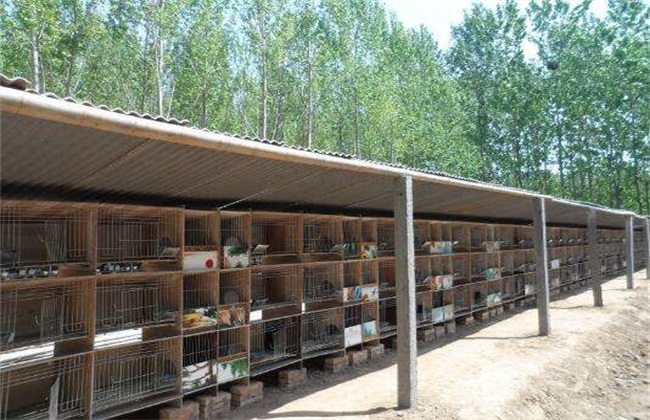
Introduction to special poultry farming methods - do you know all these types of special poultry?
As people's living standards gradually improve, and the catering industry's demand for game food continues to increase, developing the special breeding industry to fill market gaps is a...
-

Force-feeding methods and technical key points for meat-type squab
Meat-type squab at 18 to 25 days of age can reach a body weight of 350 to 500 g, and depending on the situation can be considered ready for market. However, at this time the squab meat has a relatively high water content and little subcutaneous fat. To improve the quality of the pigeon meat, force-fattening can be carried out for 5 to 7 days before sale. After force-fattening, the squab is crisp-skinned, tender-boned and flavorful after cooking. 1 Squab selection: Squab from 10 to 25 days of age can all be force-fattened. Most often, squab at 15 to 20 days of age with a body weight of 350 to 500 g are used for fattening
-
How do the immunization methods differ for different types of pigs?
Immunization of replacement gilts. Replacement gilts should be vaccinated with the following vaccines 1 month before mating, and sows after weaning should be vaccinated as follows: (1) Swine fever vaccine, 4 doses per head. (2) Swine erysipelas and swine pasteurellosis combined vaccine, 1 dose per head. (3) Swine Japanese encephalitis vaccine, 1 dose per head. (4) Porcine parvovirus vaccine, 1 dose per head (the inactivated vaccine can be given twice, with an interval of 15 days). (5) Swine pseudorabies vaccine, used according to the instructions. Immunization of farrowing pigs. Farrowing sows should be vaccinated with the following vaccines 15-40 days before farrowing: (1) Piglet Escherichia coli quadruple vaccine (K88, K99, 9
-
What types of snakes are there? Learn about their medicinal and economic value in one article
Snake Farming Techniques Snakes belong to the animal kingdom, phylum Chordata, subphylum Vertebrata, class Reptilia, order Squamata, suborder Serpentes. The distribution of snakes is greatest in tropical and subtropical regions, followed by temperate zones, and least in cold zones. There are more than 2,500 species of snakes in the world, of which about 650 are venomous. China has more than 200 species of snakes, of which about 51 are venomous, mainly distributed in the southern and southwestern provinces, especially in Guangdong, Guangxi, Hainan and other provinces and autonomous regions. Medicinal and Economic Value The medicinal use of snakes is not limited to snake venom, snake meat, snake gall and snake slough
-
What types of silkworm diseases are there? A full analysis of common types
Silkworm diseases can be divided into two categories: one is infectious diseases, and the other is non-infectious diseases. Any disease caused by pathogenic microorganisms such as viruses, bacteria, and fungi invading the silkworm body and then multiplying is an infectious disease. It can be transmitted from diseased silkworms to healthy silkworms and is an important factor affecting sericulture production. Any disease of silkworms caused by attacks by arthropods (fly maggots, lice mites), pesticide poisoning, and mechanical trauma is called a non-infectious disease. It cannot cause healthy silkworms to become ill through silkworms as a medium, and it is also an important factor affecting sericulture production.
-
Common Treatment Methods for Several Types of Fever in Pigs
In traditional Chinese veterinary medicine, the understanding of fever is relatively broad: sometimes a body temperature higher than normal is considered fever, and sometimes even when the body temperature is not elevated, as long as heat signs appear, it is also classified as a heat syndrome. Because there are many causes of fever and the syndrome types are relatively complex, in clinical practice fever must be treated based on syndrome differentiation, grasping its essence. In many years of teaching and clinical work in traditional Chinese veterinary medicine, the author has used traditional Chinese veterinary medicine for treatment and achieved relatively satisfactory results. It is briefly introduced as follows for the reference of peers. 1. Excess heat in the qi aspect. One white pig from Group 3, Yihe Village, Jingzhou District.
-
Swine rheumatism is a type of surgical disease in pigs.
[Cause] Swine rheumatism occurs in cold and damp weather. Because the pigsty is dark and damp, with poor warmth retention and no clean bedding straw, the pig is exposed to attack by wind and cold, or stimulated by ice and snow, rain, and dampness, or triggers such as insufficient exercise and sudden feed changes cause the disease. [Symptoms] This disease often affects the muscles and joints, and usually comes on suddenly. It first appears in the hind limbs, then soon spreads to the front limbs, or the affected area often shifts, with alternating lameness. The muscles or joints of the affected area are painful. On palpation, the surface of the affected muscles is hard and not smooth. The joints
条件筛选