-

Soybean meal market faces pullback pressure after weather-driven speculation
Over the past two months, soybean meal futures contracts have seen a sharp decline followed by a rapid rebound, and the current price is already close to the high at the start of the decline. Does this mean the soybean meal market has already reversed? First, let us analyze the reasons for the earlier decline in soybean meal: First, sluggish domestic demand for soybean meal led to price declines. Weak demand in the livestock and aquaculture industry constrained soybean meal consumption. China's hog inventory and breeding sow inventory fell sharply year on year; prices of meat, eggs and poultry were sluggish, and farming losses were severe; demand in aquaculture slowed, constraining demand for protein meal. Second, soybean meal supply increased substantially, spot prices fell sharply, some basis contracts faced default risk, and selling off occurred.</P><P> Now let us look at the reasons for the rapid rise in soybean meal. The author believes that the rise in soybean meal came partly from a return of prices after the earlier excessive decline; on the other hand, it came from speculation driven by heavy rain in the main U.S. soybean producing areas, which caused market concern about U.S. soybean planted area and good-to-excellent ratings. The planted area data and weekly soybean good-to-excellent ratings data released by the U.S. Department of Agriculture on June 30 both confirmed the market's concerns about U.S. soybean planting. These data will, in the short term, still support U.S. soybean futures in maintaining high-level oscillation, which will substantially raise the cost of China's imported soybeans, forcing crushing plants to passively raise the prices of soybean meal and soybean oil.</P><P> But in the short term, speculation over the impact of severe weather on planting may cool somewhat, and the loose fundamentals will bring great pressure on soybean meal prices.</P><P> From the perspective of soybean meal supply, global soybean supply is ample. After U.S. soybeans hit a record high last year, soybean output in Argentina and Brazil also hit record highs, which will suppress legume prices over the medium and long term. Domestically, China's soybean imports in June may reach 8.53 million tons and in July reach 8 million tons, so soybean sources are very abundant; at present, the operating rate of domestic crushing plants remains at an extremely high level of about 54%, and soybean meal supply has recently remained high. The volume of domestic rapeseed meal and imported DDGS remains high, suppressing plant protein prices.</P><P> On the demand side, although the hog farming industry currently shows restocking demand, truly driving soybean meal consumption may still require waiting for hog inventory data to stop falling and rebound before it can be confirmed. The meat, egg and poultry farming industry remains sluggish. Due to oversupply, prices of meat poultry and eggs fell sharply earlier, severely dampening the enthusiasm of farming enterprises to restock. In aquaculture, because oversupply last year led to sharp price declines, pond stock levels in the south are relatively high this year, constraining the release of fry. Recently, rainfall has been excessive, feed placement in ponds has decreased, which is bearish for meal consumption. Later, as large quantities of stocked fish are sold, demand for protein meal from newly released fry may decline substantially, so demand for protein meal from aquaculture later is also worrying.</P><P> Based on the information on both supply and demand, the author believes that soybean meal supply and demand will remain loose, and after the bullish U.S. heavy rain weather factor is fully priced in, soybean meal prices will return to fundamentals in the short term, with the possibility of oscillating pullbacks.</P></p>
-
How to prevent and treat silent abortion in dairy cows within the first two months of pregnancy
Silent abortion in dairy cows within the first 2 months of pregnancy occurs frequently and is a loss to the cattle industry, and it should draw great attention from cattle farmers. If a dairy cow is confirmed pregnant 1-2 months after breeding, then later shows signs of estrus, and upon re-examination the original signs of pregnancy have disappeared, this is silent abortion.
-
How to raise a two-month-old French Bulldog
The French Bulldog is a lively, intelligent, muscular dog. They are loyal, devoted and brave toward their owners. They are very well suited to being kept as a pet dog, so how do you raise a two-month-old French Bulldog? 1. How to raise a two-month-old French Bulldog. A two-month-old Bulldog, every day
-
How to Raise a Two-Month-Old Bichon Frise? Feeding Methods and Precautions
If friends have newly acquired a two-month-old Bichon Frise puppy, then you must be especially careful when raising it, and there will be many precautions to keep in mind during the process. Below is an introduction to how to raise a two-month-old Bichon Frise. 1. Vaccines When friends are rai
-

Don't Throw Away a Clivia with a Rotten Heart - One Trick Brings It Back to Life and It Blooms in Two Months
Gardening Encyclopedia Subscription Account Click to follow, Huahua teaches you to grow flowers! Clivia (Clivia miniata) has deep green, thick, fleshy leaves and an elegant appearance. In Chinese culture, it is also a symbol of nobility and the character of a gentleman. Therefore, it is deeply loved by people and widely planted...
-

A gardening expert performed major surgery on an amaryllis bulb and propagated dozens of them in two months. Amazing!
Amaryllis, also known as duihong, has many varieties. Its appearance is very similar to a lily, but it is in no way inferior to a lily. Its colors are very bright and beautiful, making it an ideal potted plant for decorating the home! Look at the amaryllis grown by a gardening expert. Because the amaryllis...
-

Succulents not growing for a long time? Let me teach you how to clean up the roots, and they will fill the pot in two months.
This lack of growth is also often called "stunted seedling," and the main factor still lies in the root system of the succulent. In this state, the roots must either be completely dead or barely hanging on. As time goes on, the plant will eventually slowly...
-

A few lonely leaves of pennywort (Centella asiatica) picked up at the flower shop entrance and casually tossed into the soil grew into a full pot in two months
Since I fell in love with growing flowers, I really enjoy going to the flower shop in my spare time. Seeing beautiful flowers lifts my mood so much. Passing by the flower shop entrance, I picked up a few lonely pennywort leaves, took them home and tossed them into the soil, with rough and casual care, two...
-
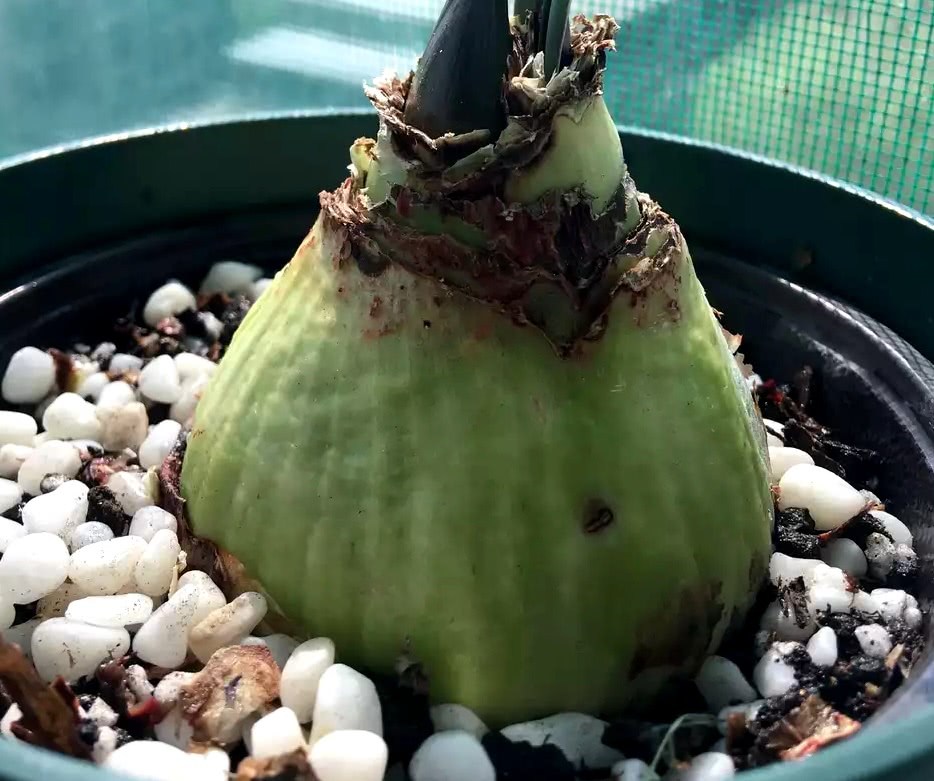
A few large onions Grandma bought and tossed into the soil bloomed after two months, with flowers both red and big, truly beautiful
Fellow flower lovers, do you like Hippeastrum? It is what people commonly call "dui hong," and I never expected it to have such a fancy name, and the flowers it blooms look like lilies, with even more vivid and beautiful colors. A while ago, Grandma went to the country market and bought back...
-

Geraniums are beloved: cut a few stems, stick them in soil, they root in ten days and bloom in two months
If you ask which flower is both large and beautiful, geraniums rank right up there. They have many varieties, their colors are brilliant and gorgeous, and they are quite easy to propagate. So if you like geraniums, what's so hard about that? Cut a few stems and stick them in soil, they root in 10 days,...
条件筛选