A few large onions Grandma bought and tossed into the soil bloomed after two months, with flowers both red and big, truly beautiful
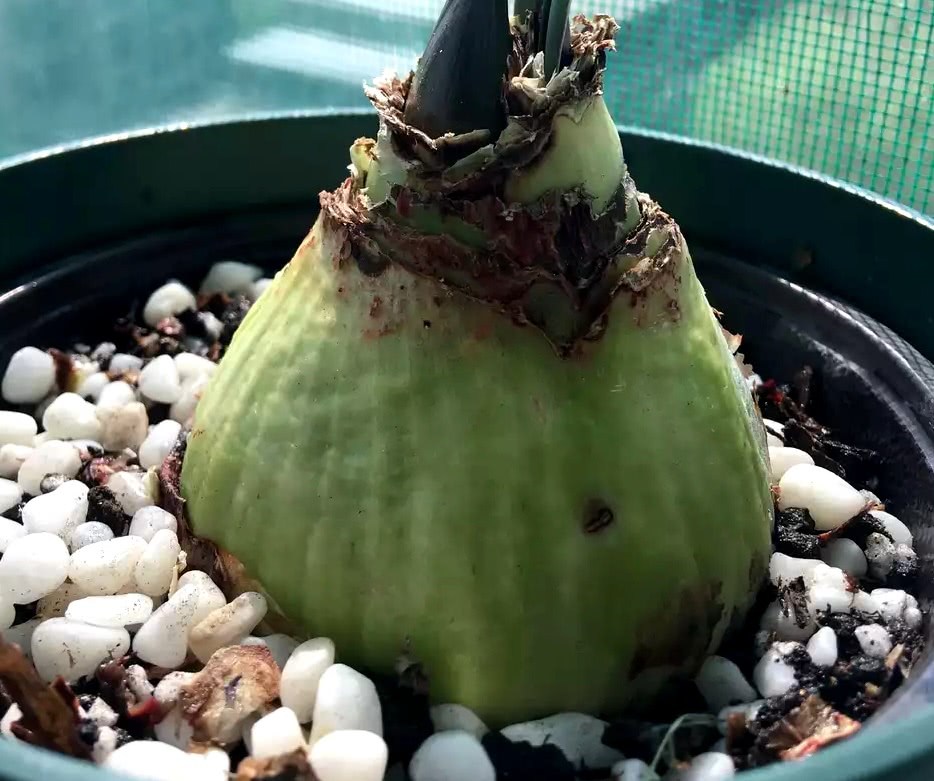
Fellow flower lovers, do you like Hippeastrum? It is what people commonly call "dui hong," and I never expected it to have such a fancy name, and the flowers it blooms look like lilies, with even more vivid and beautiful colors.
A while ago, Grandma went to the country market and bought back a few large onions, and I almost stir-fried them as a dish! Grandma said these can't be eaten, these are "dui hong," and the flowers they bloom are red and beautiful. At first I didn't believe it, but 2 months later, sure enough, the flowers bloomed red and big, so beautiful!
Later I learned that this "dui hong" also has a very elegant name, called Hippeastrum. The flowers it blooms are very bright red and beautiful, and placing it at home is both festive and attractive, making people love it so much they can't put it down!
And the Hippeastrum Grandma grows has emerald green leaves, with bright red flowers bigger than a palm, growing extremely vigorously. Below I'll share Grandma's care methods with everyone!
Hippeastrum likes light, so just place it on the windowsill, where the light is especially good and the ventilation is especially good too, which is what makes it grow very fast, with even more emerald green leaves, like they've been painted with green lacquer.
And to promote its growth, when potting it up, organic base fertilizer was added to the potting soil. Grandma raised some free-range chickens at home, and there was plenty of decomposed chicken manure, so some was added to the potting soil. The fertilizer effect is especially strong, and this is also the reason the Hippeastrum grows so well.
In addition, not only was the base fertilizer sufficient, but nutrients were also occasionally supplemented through the leaves. When it was shooting up its flower stalk, a monopotassium phosphate solution was sprayed 2 times (once every 10 days), so the flowers were red and big, and the blooming period was also long.
Grandma would also often collect some rainwater to water the Hippeastrum. Grandma said the crops grow so well because they are nourished by rainwater. So collecting some rainwater to care for the Hippeastrum will certainly also make it grow vigorously, because rainwater is acidic, and when it falls into the soil, it forms the nitrogen fertilizer that flowers need to grow, which can make the Hippeastrum's roots strong and its leaves emerald green.
Caring for Hippeastrum starts from 3 points: light, fertilizer, and water, and as a result it grows so vigorously and blooms so beautifully!
That's all for today's sharing!
Welcome to leave a message and share your experience caring for Hippeastrum!