Succulents not growing for a long time? Let me teach you how to clean up the roots, and they will fill the pot in two months.
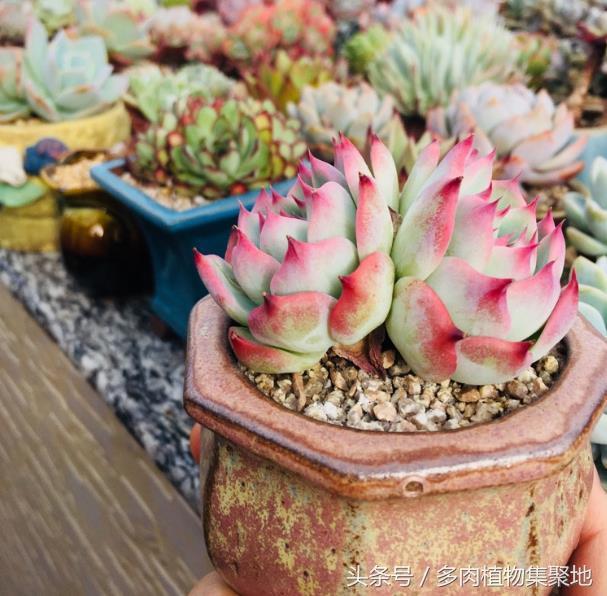
This lack of growth is also often called "stunted seedling," and the main factor still lies in the root system of the succulent. In this state, the roots must either be completely dead or barely hanging on. As time goes on, the plant will eventually be used up and die.
Stunted seedling means a young plant has not grown for a long time, has no shine on its surface, and has somewhat wilted leaves but has not yet died. Experienced growers naturally know how to solve this, but beginners are at a loss. Below, the editor will explain the treatment methods for stunted succulent seedlings, hoping it will help everyone.
Succulent stunting is usually caused by a problem with the root system of the succulent, causing it to be unable to absorb water and nutrients for a long time. In the short term, the succulent relies on its own stored nutrients to sustain life; after a long time, once these are used up, it dies. You can take it out of the soil, trim off all the blackened and rotten roots, clean up the dried leaves at the bottom, soak the roots in carbendazim solution for 1 minute, take it out and let it dry in scattered light, then plant it in new soil after 2 days. You can spray a little water on the soil surface to keep a somewhat moist environment, which helps new roots grow.
When caring for them, if you encounter a plant that shows no growth at all for three months and is not in very good condition, with phenomena such as wrinkled leaves but no major change in color, pull it out and check it. There are ways to deal with it. First, trim off all the dead roots (black roots), and also clean up the dead leaves and rotten leaves at the bottom. After cleaning everything thoroughly, rinse the roots with clean water or carbendazim solution, then place it in scattered light to dry for 2-3 days, and then plant it again.
Because succulent varieties differ, the maximum size they can reach also differs. Take Sempervivum tectorum (houseleek); before it reaches its final form, with a sufficiently large pot it will grow very large, while with a small pot it will only grow to the size of the pot. There is also Lithops, which, if not cared for properly, will get smaller and smaller the longer you keep it. Every succulent has a dormancy period, and many have a summer dormancy period. You need to figure out which ones are summer-dormant and which are winter-dormant. Summer-dormant ones will not grow, or grow very slowly, in summer and grow fast in autumn; winter-dormant ones will grow very fast in summer.
Succulents lacking sunlight and becoming leggy is actually a phenomenon of plants adapting to nature. When there is insufficient sunlight, plants grow toward higher places with more sunlight, so they stretch taller. Similarly, if the sunlight in their native habitat is especially strong, succulent leaves will also curl up to reduce the area of leaf surface exposed to sunlight. These are all changes plants make according to the natural environment, so we must understand the essence of the plant before adopting a natural way to plant it.
This is a gathering place for succulent lovers, sharing succulent care tips. Welcome to follow and exchange ideas.