-
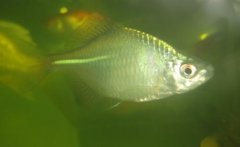
Is aromatic hydrocarbon toxic? Effects on fish and whether contaminated fish can be eaten
The explosion at the No. 3 aromatic hydrocarbon plant of the Sixth Naphtha Cracker Complex in Mailiao Township has caused anxiety among residents near aquaculture fish ponds, who worry that their catch may be contaminated. On the 15th, scholars from the College of Public Health at National Taiwan University, who have long studied pollution issues related to the Sixth Naphtha Cracker Complex, together with the Institute of Toxicology, and the Changhua and Taixi experimental stations of the Fisheries Research Institute, went to 18 fish ponds in Changhua and Yunlin to take samples, hoping to understand the scope and extent of the explosion's impact.
-
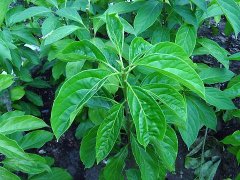
Introduction to the Effects and Fruit Toxicity of Nothapodytes nimmoniana, a Plant Endemic to Taiwan, China
Plants endemic to Taiwan, China are very likely a treasure bestowed by nature; it is just that we do not know it. On Lanyu, there is an endemic plant called "Nothapodytes nimmoniana" that has long been contracted by Japan, given to farmers for contract cultivation, then shipped back to Japan to be developed into anticancer drugs, earning Japanese companies billions of
-

How do you care for glass balsam? Is it toxic? Can it be placed in the bedroom?
Glass balsam is a rather beautiful ornamental flower, especially suitable for potted cultivation. The main stem of glass balsam is semi-transparent and looks like glass, hence the name. If cared for properly, glass balsam can generally bloom all year round, and as a potted plant at home
-
Is Cuban oregano (touch-me-not scented plant) toxic? Explaining the causes of yellowing leaves in potted cultivation
also be used to make tea, brew soup and so on, so it has quite a few uses. Let us take a look below at <strong>Is Cuban oregano toxic? Why do potted plants show yellowing leaves?</strong></span></p> <p style="text-align: center;"></p> <p style="text-indent:2em;"><strong>1. Is Cuban oregano toxic?</strong></p> <p style="text-indent:2em;">Cuban oregano is not toxic and can emit an inviting fragrance, as fresh as mint and carrying a faint apple scent. Cuban oregano is a small potted plant that can be both viewed and enjoyed for its scent, with an aroma like mint yet slightly appley. It refreshes the mind, clears heat and relieves summer heat, and repels mosquitoes. Cuban oregano can be kept indoors. Except for some friends who are allergic to the scent, everyone else can safely grow Cuban oregano at home; it can freshen the air and give off a faint fragrance.</p> <p style="text-indent:2em;"><strong>2. Why do potted Cuban oregano plants show yellowing leaves?</strong></p> <p style="text-indent:2em;">1. Too much watering</p> <p style="text-indent:2em;">Overwatering is a mistake many flower lovers make; too much water easily causes root rot. So first you need to check whether you have watered too much. Cuban oregano does not tolerate water; too much water causes root rot, and rotten roots make the leaves turn yellow.</p> <p style="text-indent:2em;">Cuban oregano likes to grow in dry soil, so when cultivating it the soil needs to be kept alternately dry and moist; on rainy days reduce or stop watering as much as possible, because soil that is too dry or too wet can both easily cause the plant's roots to rot.</p> <p style="text-indent:2em;">In late autumn, when the temperature gradually drops, gradually reduce the frequency of watering Cuban oregano, and water appropriately when the soil surface looks dry. You can also let it get a little rain. At ordinary times it still needs to be kept in sunlight. Moreover, plants placed in the open air clearly grow better than those indoors.</p> <p style="text-indent:2em;">When the temperature is below zero, do not water. When the temperature is too low, at this time both day and night it must be covered well with plastic sheeting or plastic bags, and watering is forbidden. If it is placed in the open air, let it get some sun during the day, and at night something must cover it, otherwise it will freeze to death overnight.</p> <p style="text-indent:2em;">2. Improper fertilizing</p> <p style="text-indent:2em;">Potted Cuban oregano has limited soil, and the fertility of the soil alone is certainly not enough, so it needs fertilizing. However, too much fertilizer or a lack of fertilizer can both cause the leaves to turn yellow. Too much fertilizer causes fertilizer burn; too little fertilizer means insufficient nutrients.</p> <p style="text-indent:2em;">During its growing stages Cuban oregano does not need much fertilizer; we do not need to fertilize it deliberately, and we should keep the fertilizing frequency at about once a month. By all means avoid too much fertilizer, which causes root burn.</p> <p style="text-indent:2em;">3. Natural causes</p> <p style="text-indent:2em;">As time goes on, the stems of Cuban oregano gradually become woody, and the surrounding leaves also turn yellow and gradually wither; this is normal, and after withering new branches gradually grow.</p> <p style="text-indent:2em;">4. Insufficient light</p> <p style="text-indent:2em;">Cuban oregano loves sunlight and is slightly shade-tolerant; its suitable growing temperature is about 5°C to 10°C. We need to place it in an environment with abundant sunlight for care, so only under strong light will the fleshy leaves of Cuban oregano be thick.</p>
-
What season is cucumber a vegetable of? Solutions for pesticide phytotoxicity
Cucumbers are crisp and tasty, and can be eaten raw or stir-fried, both ways taste very good, and they are deeply loved by consumers. Cucumber is also one of the foods favored by people who are losing weight, low in fat and highly satiating. Cucumbers are planted in all parts of our country. Let us take a look below at whether cucumbers are
-
How to remedy phytotoxicity after fosthiazate application
Fosthiazate is an insecticide that can inhibit the synthesis of acetylcholinesterase in root-knot nematodes, thereby achieving the effect of controlling aphids, root-knot nematodes and other pests. If used improperly during spraying, phytotoxicity can occur, so what should be done about fosthiazate phytotoxicity? 1. What should be done about fosthiazate phytotoxicity
-
What to Do About Herbicide Injury to Cucumber Seedlings? Remedies and Preventive Measures
Pesticides are one of the products commonly used during crop cultivation and have greatly promoted agricultural development. However, during use, problems with phytotoxicity always arise for various reasons. So, what should be done about phytotoxicity in cucumber seedlings? 1.
-
What to Do When Crops Suffer Herbicide Damage? A Full Guide to Remedies
Phytotoxicity refers to abnormal crop growth or physiological disorders after pesticide application. Phytotoxicity comes in two types: acute and chronic. So what should you do if crops suffer phytotoxicity? 1. Symptoms of phytotoxicity Acute phytotoxicity generally shows obvious symptoms a few hours to 3-4 days after spraying, such as burning, wilting, leaf drop, flower drop, and fruit drop; chronic phytotoxicity, on the other hand, produces obvious reactions only after a relatively long period following spraying, such as poor growth, deformed leaves, and delayed maturity. Common symptoms include spots of varying size, shape, and color on the leaf surface, localized tissue scorching, perforation or leaf drop, or leaf yellowing, chlorosis, or thickening.
-
What are the hazards of eucalyptus? Is the water nearby toxic?
When it comes to eucalyptus, everyone is probably familiar with it. Some people use it specifically for burning oil, and some use it specifically for timber, but because of its strong harmful effects, it can no longer be seen in many places now. So what are the hazards of eucalyptus? Is the water nearby toxic? 1. Introduction to eucalyptus:
-
Is Aikaman highly toxic to humans? Pesticide safety use guidelines
Aikaman is somewhat toxic to humans, and it is best to wear a mask when using it. Its toxicity to humans depends on the dose; if the concentration is too high, the effect on humans is relatively great. I. Introduction to Aikaman Aikaman is a new-generation acaricide, whose active ingredient is bifenazate
条件筛选