-

Which edible mushroom varieties are good to cultivate in summer?
Which edible mushrooms are good to cultivate in summer?
-

Which edible mushroom varieties are currently the most profitable to grow?
Which edible mushrooms are currently the most profitable to grow?
-
Recommended edible mushroom varieties suitable for summer cultivation
Edible mushrooms suitable for summer cultivation
-
Fertilization Methods for Edible Mushrooms and Varieties Suitable for High-Temperature Cultivation in Summer
Edible Mushroom Varieties Suitable for High-Temperature Cultivation in Summer
-
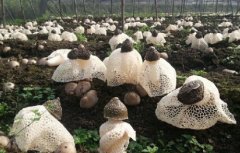
What Varieties of Bamboo Fungus Are There? Growth Environment and Premium Producing Areas Explained
There are many varieties of bamboo fungus, such as yellow-skirt, variegated, spiny-backed, long-skirt, short-skirt, red-skirt bamboo fungus, etc. Among them, the yellow-skirt bamboo fungus is toxic and cannot be eaten, otherwise food poisoning will occur. The biggest characteristic of the yellow-skirt bamboo fungus is that both the skirt and the stipe are yellow.
-

What basic facilities are needed for making edible mushroom spawn?
Spawn Production of Edible Mushrooms Section 1 Basic Facilities for Spawn Production The site for producing edible mushroom spawn should be chosen in a place with a clean environment, convenient transportation, and adequate water and electricity supply...
-

What Types of Edible Mushrooms Are There? An Introduction to Common Varieties and Their Classification
Edible mushrooms refer to macrofungi with large fruiting bodies that can be eaten, commonly known as mushrooms. More than 350 species of edible mushrooms are known in China, and common ones include shiitake, straw mushroom, button mushroom...
-
What mushroom production strains are used in China? Introduction to the main varieties
Since China began developing mushroom production, about several dozen strains have been used for cultivation, among which some were introduced from abroad and some were bred domestically. In the past, more strains were introduced, but as China's mushroom breeding work has deepened, the number of introduced strains has gradually decreased. At present, the most widely used strain in China is Ag2796, bred by the Fujian Provincial Institute of Light Industry, as well as As3003; introduced strains include S130, F56, and others.
-
How can mushrooms improve wood properties? Swiss research has the answer
Switzerland's Federal Laboratories for Materials Science and Technology said on the 27th that they are experimenting with mushrooms to improve certain properties of fir and spruce, in order to expand the uses of these woods. Fir and spruce make up 60% of Switzerland's trees and have the advantages of strong mechanical endurance and being easy to process, but they also have weaknesses such as being difficult to process finely and difficult to use for a long time. In addition, protective coatings such as fireproof, anti-corrosion or UV-resistant coatings are difficult to penetrate into these woods, which limits their development and use, for example, they cannot be used as exterior building materials. Researchers are experimenting with wood-eating mushrooms to change
-
What Types of Physiological Deformities Occur in Mushrooms? A Full Analysis of Common Types
Mushroom deformities are mostly triggered by temperature differences or unfavorable environmental conditions; they may also be related to the strain used. The common deformed mushrooms mainly include the following types: 1. Hollow stipe. From the outside the mushroom looks normal, but when the base is cut off, part of the stipe is found to be hollow, usually with a ring-shaped cavity around a hard core. Afterwards, the cut surface of the stipe may split and curl backward, making the mushroom poor in appearance and reducing its marketability. Cause: This is mainly caused by low air humidity during the fruiting period, rapid evaporation of water from the mushroom body, and overly dry casing soil,
条件筛选