-
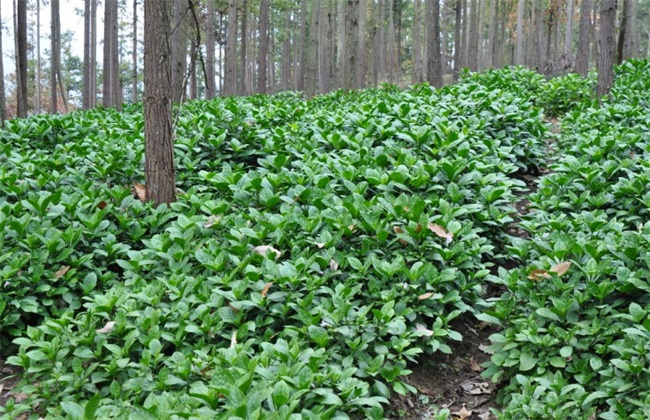
What medicinal herbs are good to plant in autumn? Recommended varieties suitable for autumn sowing
What medicinal herbs are good to plant in autumn
-
How much do you know about medicinal herbs in the field? A grand review of common varieties
Spring has arrived, and the various wild vegetables in the fields seem especially precious today. With no pesticides and few pests and diseases, and some even offering both medicinal and culinary value, many people...
-

What varieties and types of Polygonatum are there? Let us introduce you to the common ones
According to their different characteristics, commercial Polygonatum is divided into three categories: "chicken-head Polygonatum," "ginger-shaped Polygonatum," and "large Polygonatum." Chicken-head Polygonatum is irregularly conical, with a large head and a thin tail, resembling a chicken's head. It is 3-10 cm long and 0.5-1.5 cm in diameter. The surface is yellowish-white to yellowish-brown, semi-transparent, with fine wrinkles over the whole body and slightly raised, wavy rings. The scar of the aboveground stem is disc-shaped, often with a concave center, and the root scars are mostly dot-like protrusions. The cut surface is light brown, slightly horny, and has numerous yellowish-white dot-like veins (vascular bundles). The odor is slight, the taste is sweet, and it is sticky,
-
What varieties and types of Asarum are there? A detailed guide in one article
Commercial Asarum is mostly divided into two types: Liaoxixin (northeastern Asarum) and Huaxixin (Chinese Asarum). Liaoxixin refers to Asarum heterotropoides var. mandshuricum and Asarum sieboldii var. seoulense produced in Northeast China. The two are similar in characteristics, but there are distinctions between wild and cultivated products. Wild Liaoxixin is usually gathered in small bundles of a dozen or so plants, often rolled into clumps. The rhizome is irregularly cylindrical, 1-10 cm long, with short branches, grayish-brown on the surface, rough with ring-shaped nodes, and the internode spacing is about 2-3 mm. The branch tips have bowl-shaped stem scars. The roots are slender, densely growing on the nodes, about 1 mm in diameter and 10-20 cm long, grayish-yellow on the surface, smooth or with fine longitudinal
-
What varieties and types of Angelica sinensis are there? This article explains in detail
The whole Angelica sinensis root is roughly cylindrical. The upper end of the root is called the "gui tou" (head), the main root is called the "gui shen" (body) or "cun shen," the branch roots are called the "gui wei" (tail) or "gui tui" (leg), and the whole is called "quan gui" (whole root). The whole root is 15-25 cm long, with a fine, dense outer skin, yellow-brown to dark brown, with longitudinal wrinkles and transversely elongated lenticels; the upper end of the root is swollen, 1.5-4 cm in diameter, bluntly rounded, with residual leaf sheaths and stem bases; the main root is thick and short, l-3 cm long, l.5-3 cm in diameter, with 3-5 or more branch roots below, thick at the top and thin at the bottom, mostly twisted, with a few fibrous root scars. The texture is flexible and tough, and the cut surface is yellow-white
-
What varieties and types of Panax notoginseng are there? A detailed introduction to common varieties
Panax notoginseng: slightly spindle-shaped or subconical, 1-6 cm long, l-4 cm in diameter. The surface is grayish yellow (commonly known as "iron skin") or grayish brown (commonly known as "copper skin"), with intermittent longitudinal wrinkles and a few lenticels, a stem scar at the apex, and nodular protrusions around it (commonly known as "lion's head"). There are broken rootlet scars on the sides. The texture is firm, and after being crushed, the bark and wood often separate. The cross-section is grayish green, yellow-green, or grayish white (commonly known as "iron bone"), and the bark has small brown resin canal spots. The odor is slight, and the taste is bitter followed by slightly sweet. Spring
-
What are the difficulties in cultivating Schisandra chinensis? A complete analysis of practical countermeasures
Cultivating Schisandra chinensis artificially to replace wild resources has already become an inevitable trend in the development of the Schisandra chinensis industry. Many difficulties have also emerged in the production process of artificially planting Schisandra chinensis, and these difficulties have seriously hindered the path of Schisandra chinensis production toward intensive, large-scale, and industrialized development, and are also the fundamental reason for the current lack of large-scale successful experience in artificially cultivating Schisandra chinensis. Regarding the harm caused by pests and diseases, pesticide residues, and drift. The overall countermeasure is: adhere to the three principles of prevention, mitigation, and treatment. Prevention: in the process of Schisandra chinensis cultivation, consistently implement the policy of placing greater emphasis on prevention than on treatment, act early to seize the initiative. Take preventive measures before trouble arises and avoid being passive. In recent years, due to consecutive warm winters, the development of Schisandra chinensis has advanced, so all agronomic measures must also be carried out earlier. Among the 24 solar terms, after Awakening of Insects, Schisandra chinensis should be protected according to local phenological conditions. To prevent certain fungi in the atmosphere from attaching to the stems and vines of Schisandra chinensis, the specific measure is to spray Bordeaux mixture, prepared with equal amounts of quicklime and copper sulfate, one part each, and 200 parts water. After Schisandra chinensis leafs out, promptly spray broad-spectrum fungicides and foliar fertilizers, Bihu + polyoxins + fulvic acid. Mitigation: if nearby farmland is sprayed with butyl ester pesticides, we must take targeted measures and spray mitigating agents, or spray foliar fertilizers to improve immunity. At this stage, prevention should focus mainly on leaf blight. Spray pesticides against Deuteromycota fungi. Treatment: if diseases still occur when protective and mitigating measures are ineffective, apply the right remedy for the condition. Carry out timely treatment. Strictly prevent the loss of the optimal prevention and treatment timing, which causes losses. For the treatment of several common diseases, please follow the methods in the Schisandra chinensis pest and disease section below. Keep firmly in mind the lesson of the large-scale damage to Schisandra chinensis in Heilongjiang in 2007, and never allow the tragic situation to repeat itself.
-
How to Choose Honeysuckle Varieties? A Full Analysis of Seed Selection Techniques
The scientific name of honeysuckle is Lonicera japonica, a semi-evergreen perennial twining vine shrub. It is a commonly used traditional Chinese medicinal herb, known as a natural broad-spectrum antibiotic. At the same time, honeysuckle can also be made into a precious beverage. In recent years, with the expansion of honeysuckle's application fields, its cultivation has moved from extensive management to concentrated operation, from a prostrate growth habit to an upright growth habit, and from one flower harvest per year to four flower harvests per year, greatly increasing yield and significantly improving cultivation benefits. At present, many places are introducing or expanding cultivation, but if variety selection is not taken seriously, the results will be contrary to expectations.
-
Introduction to New Dual-Purpose (Medicinal and Tea) Honeysuckle Varieties 'Jincuilei', 'Yincuilei' and 'Baiyun'
The Hunan Academy of Forestry and the Longhui County Forestry Bureau jointly carried out the breeding of new honeysuckle varieties, and for the first time discovered in Lonicera macranthoides an excellent variant type of honeysuckle whose corolla never opens during the flowering period. After 8 years of breeding, two new bud-type varieties, 'Jincuilei' and 'Yincuilei', were developed with excellent flower quality, high yield, high chlorogenic acid content (the component in honeysuckle responsible for antibacterial and anti-inflammatory effects), and strong resistance. At the same time, a new semi-open-flower-type variety 'Baiyun' with high yield and resistance to powdery mildew was bred. The notable characteristics of these varieties are: the flower tube surface is smooth and hairless, and each
-
What are the excellent varieties of honeysuckle? This article introduces them in detail
Currently, Pingyi County has 21 varieties of honeysuckle, planted throughout the county. Due to the long history of cultivation and long-term propagation by cuttings and sexual reproduction, many varieties or strains have naturally formed, with the good and the poor mixed together and difficult to distinguish. The currently common varieties include the Mao Hua (hairy flower) series: Da Mao Hua, Xiao Mao Hua; the Ji Zhua (chicken claw) series: Da Ji Zhua Hua, Xiao Ji Zhua Hua, Shan Yin Hua, Xian Hua Zi, Zi Jing Zi, Da Ma Ye, Xiao Ma Ye, E Ling Tong, Hong Hua Zi, Ye Li Cang, Ye Li Qi, etc. In recent years, the center has, through multiple rounds of purification and rejuvenation and seed verification of the Mao Hua series and Ji Zhua Hua series, bred excellent varieties and named them "Menghua No. 1 and No. 2". Their main advantages are: 1. Many branches when seedlings 2. Where there are branches, there are flowers 3. Fewer seedlings needed for planting 4. Fast development of branches and leaves 5. Large flower buds, high yield 6. 1-2 years earlier entry into the high-yield period. The excellent varieties are mainly developed as economic forests, and the mixed varieties are mainly developed as ecological forests.
条件筛选