What Types of Edible Mushrooms Are There? An Introduction to Common Varieties and Their Classification
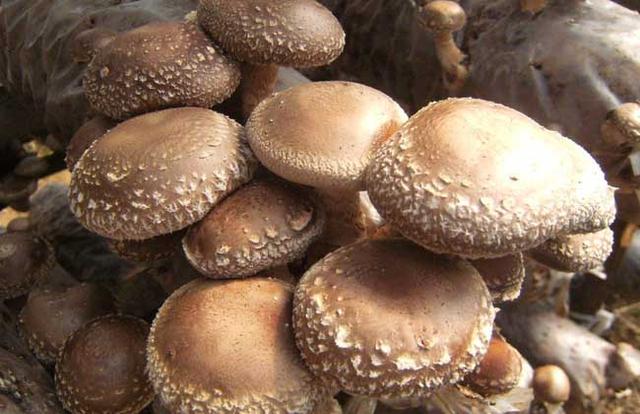
Edible mushrooms refer to macrofungi with large fruiting bodies that can be eaten, commonly known as mushrooms. More than 350 species of edible mushrooms are known in China, and common ones include shiitake, straw mushroom, button mushroom, wood ear, silver ear, lion's mane, bamboo fungus, matsutake, Tricholoma mongolicum, Russula, reishi, cordyceps, truffle, porcini, morel, saddle fungus, truffle, and so on
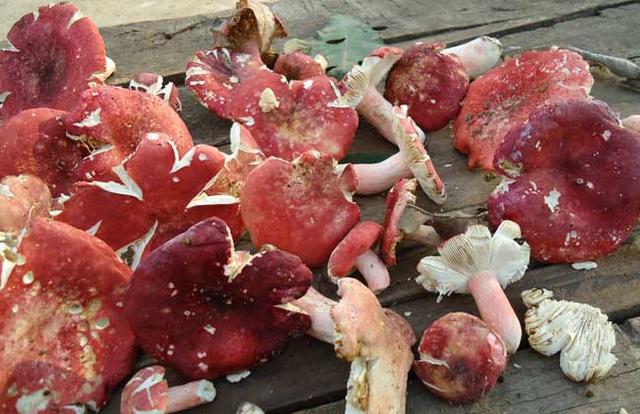
The fruiting body of Russula is generally medium-sized, with a cap diameter of 5-12 cm. It is initially flatly hemispherical and later flat and spread out. When young it is sticky, lusterless or velvety, with the center dark red to dark (black) red, while the margin is lighter and deep red, and fine transverse lines are often seen along the cap edge. The flesh is white and thick, often eaten by insects. The taste and smell are good. The gills are white, turning creamy yellow when old, and may be tinged with red near the cap margin; they are somewhat close to somewhat sparse, often forked, with transverse veins between the gills
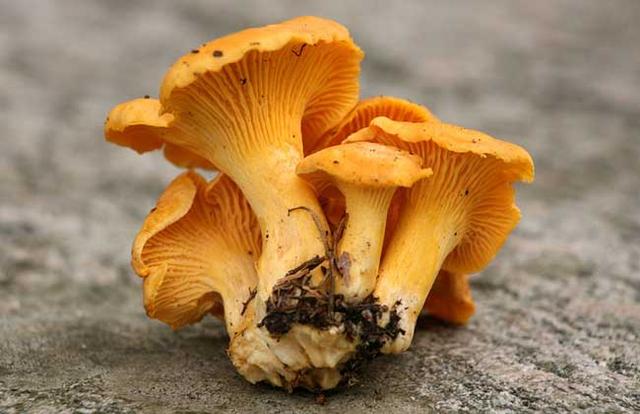
The chanterelle is one of the world's four famous famous mushrooms. It is the fruiting body of the order Cantharellales in the fungal kingdom. The fruiting body is fleshy and trumpet-shaped, apricot yellow to egg yellow, with a cap 3-9 cm wide, at first flat and later sunken
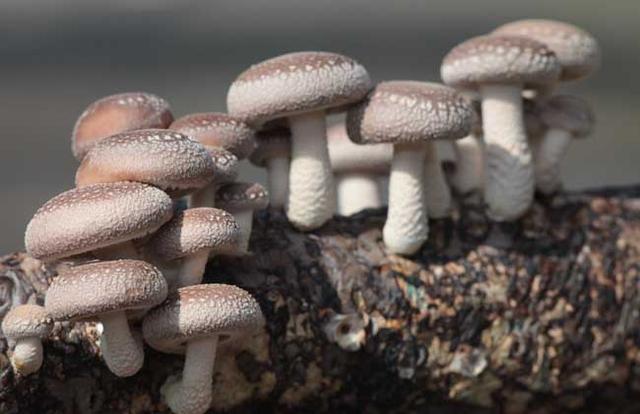
Shiitake is the fruiting body of the plant Xiangxun in the family Pleurotaceae. It is the world's second most cultivated edible mushroom and one of China's specialty products, long known among the people as a "mountain delicacy"
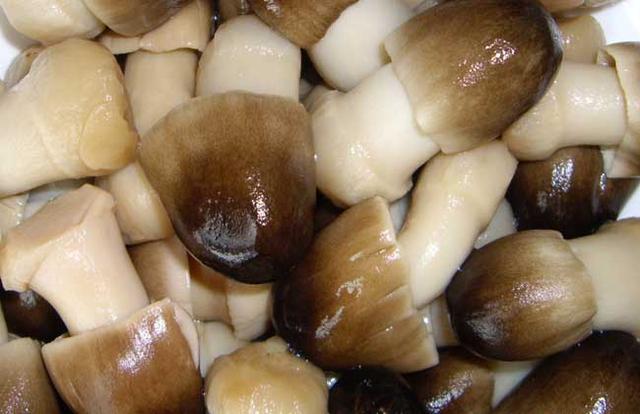
The straw mushroom, also called orchid mushroom or baojiao mushroom, originated in Nanhua Temple in Shaoguan, Guangdong. China began artificial cultivation 300 years ago, and in about the 1930s of the 20th century it was introduced to countries around the world by overseas Chinese. It is an important tropical and subtropical mushroom and the world's third most cultivated edible mushroom. China's straw mushroom output ranks first in the world, mainly distributed in South China. It is named because it often grows in moist, rotting rice straw, and is mostly produced in Guangdong and Guangxi, Fujian, Jiangxi, and Taiwan, China. It is plump, thick-fleshed, short-stemmed, smooth, and extremely delicious
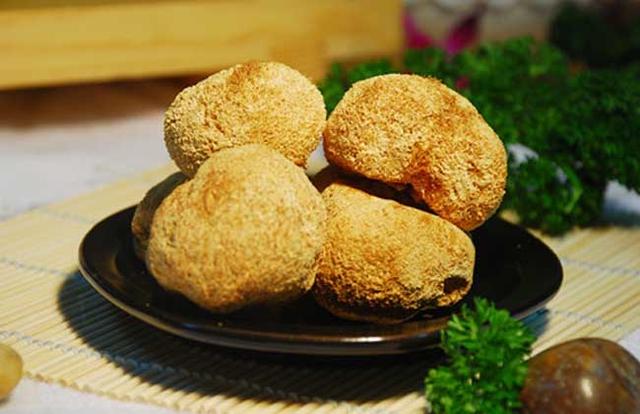
Lion's mane mushroom is named for its shape, which closely resembles a monkey's head. It is a traditionally precious Chinese dish, with tender flesh, fragrant aroma, and a delicious taste. It is one of the four famous dishes (lion's mane, bear paw, bird's nest, shark fin), and has the saying "mountain delicacy lion's mane, sea delicacy shark fin"
The commonly seen and edible bamboo fungi include four kinds: long-skirted bamboo fungus, short-skirted bamboo fungus, spiny-spored bamboo fungus, and red-volva bamboo fungus. It is a cryptogamic fungus parasitic at the base of dead bamboo, somewhat resembling a netted dried white snake skin, with a dark green cap, a snow-white cylindrical stipe, and a pink egg-shaped volva. At the top of the stipe, a delicate pure white netted skirt spreads downward from the cap, and people call it "snow-skirted fairy," "flower of mountain delicacies," "flower of fungi," and "queen of mushrooms"
The king oyster mushroom is named for its almond aroma and the abalone-like texture of its thick flesh. It is a rare new edible mushroom variety successfully developed and cultivated in recent years that combines food, medicinal, and dietary therapeutic uses
The button mushroom is one of the most common edible mushroom species, with thick flesh. The mycelium is silvery white, and the growth rate is medium to fast. It does not easily form mycelial mats. The fruiting bodies are mostly solitary, round and regular, white, and without scales. The cap is thick and not easy to open, the stipe is moderately thick, relatively straight and short, the flesh is white, and the tissue is firm. There is a semi-membranous ring on the stipe, and the spores are silvery brown
Reishi
Cordyceps
Truffle is a general term for a type of fungus, classified in the phylum Ascomycota, family Tuberaceae, genus Tuber. There are about 10 different varieties, usually annual fungi, mostly growing with hyphae attached to the roots of broadleaf trees, generally under pine, oak, and oak trees.
Matsutake is an ectomycorrhizal fungus associated with trees such as pine and oak. It has a unique, rich fragrance and is a rare and precious natural medicinal fungus in the world. It is a second-class endangered protected species in China. It grows well in relatively dry woodland with few nutrients, generally appears in autumn, and usually parasitizes the roots of red pine, dwarf pine, hemlock, and Japanese hemlock
Porcini is a general term for fungi in the family Boletaceae and the family Strobilomycetaceae. Apart from a few varieties that are poisonous or bitter and inedible, most varieties are edible. Yunnan Province is rich in porcini resources, mainly white, yellow, black, and red porcini
Truffle is a type of underground fungus. The main edible species are the black truffle, summer truffle, and white truffle, three kinds
Tea tree mushroom was originally a wild fungus growing on the roots of tea trees in the high mountain dense forests of Guangchang, Jiangxi. It is a pure natural, pollution-free health edible mushroom that combines high protein, low fat, low sugar, and health-care dietary therapy
Puffball, commonly known as cow dung mushroom, horse hoof package, medicine package, horse fart bubble, and so on, is a fungus of the family Lycoperdaceae in the basidiomycetes. When young it is white, round like a mushroom, relatively large, delicious and edible, and tender like tofu. When old it becomes grayish brown and spongy-soft, with a somewhat tough outer skin, small pores appearing at the top, and dust flying out when tapped, while the interior is like a sponge and yellow-brown. It mostly grows on open grassland