What are the three common diseases of chrysanthemums?
Chrysanthemum, also known as ganjuhua, is a perennial herbaceous medicinal plant of the Asteraceae family. Its traditional Chinese medicine names are white chrysanthemum and yellow chrysanthemum. The flowers are used as medicine and have the effects of dispersing wind and dissipating heat, and clearing the liver and brightening the eyes. It is mainly produced in Anhui, Zhejiang, Henan, Hebei and Sichuan, and is cultivated in other parts of the country. The main diseases of cultivated chrysanthemums include chrysanthemum powdery mildew, ...
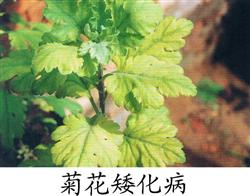 The three chrysanthemum diseases refer to chrysanthemum gray mold, rust and leaf spot. According to observations, these three diseases often occur together during the chrysanthemum growing season, especially commonly after autumn. In severe cases, they can cause a large amount of leaf drop, affect the plant's flowering and reduce its ornamental value. Measures should be taken early for prevention and control.
Gray mold mainly damages the leaves, stems, flowers and other parts of chrysanthemums. When leaves are affected, brown lesions appear at the leaf margins, and the surface is slightly wavy and wrinkled in a concentric ring pattern. The petioles and flower stalks soften first, and then the outer skin rots. When flowers are affected, seed maturation is impacted. High temperature and abundant rain, excessive application of nitrogen fertilizer, overly dense planting and heavy clay soil texture all favor the occurrence of the disease.
Control methods: First, use replacement soil for planting. The pathogen mainly overwinters in the soil, so whether garden planting or pot planting, the soil must be disease-free new soil. Second, promptly remove diseased leaves and diseased plants, and bury them deeply or burn them in a centralized way to prevent the spread of the disease. Third, before planting, roots can be soaked for 10-15 minutes in a 300-fold dilution of 65% zineb. Fourth, attach importance to cultivation, pay attention to improving ventilation and light conditions, do not apply nitrogen fertilizer alone, and strictly prevent waterlogging in the soil. Fifth, in the early stage of disease, spray 0.3-0.5 degree Baume lime sulfur mixture, or zineb or carbendazim fungicides.
Rust mainly damages the leaves and stems of chrysanthemums, with leaves being more severely affected. At first, small light yellow spots appear on the leaves, and small brownish-green spots also appear at the corresponding places on the underside of the diseased leaves. Later, slightly raised blister-like structures form. After the blister-like structures rupture, a large amount of yellow-brown powdery material is released. The color gradually changes from pale brown to yellow-brown. In severe cases, it often causes the leaves of the whole plant to die. Poor cultivation management, poor ventilation and light transmission, soil lacking fertilizer or with excessive nitrogen fertilizer, waterlogging in the soil and excessively high air humidity all favor a major outbreak of this disease. The disease can spread and cause damage from April to October.
Control methods: First, rational fertilization. On the basis of balanced fertilization, appropriately increase the application of phosphorus and potassium fertilizers to improve the plant's disease resistance. Second, for potted chrysanthemums, regularly clear the drainage holes and strictly prevent waterlogging in the pot. Third, ecological disease prevention. When cultivating chrysanthemums in protected conditions, pay attention to ventilation and light transmission, raise the temperature and reduce humidity, and delay the time of leaf condensation. Fourth, chemical control. During the disease season, spray a 500-fold dilution of 65% zineb, or 0.3-0.5 degree Baume lime sulfur mixture, which can effectively control the spread of the disease.
Leaf spot also known as black spot, mainly damages the leaves of chrysanthemums. At first, small brown spots appear on the lower leaves, then gradually expand, with dark brown edges, and later develop into dark brown circular or nearly circular irregular spots, about 5-10 mm in size, with an inconspicuous yellow halo outside. In the later stage, the edges of the lesions are dark brown, the center is slightly faded, and under high humidity rather inconspicuous small black spots appear. When the disease is severe, several lesions join together, causing the whole leaf to scorch and fall off, and continuous cropping leads to severe disease occurrence.
Control methods: First, rationally rotate crops and select disease-free plants for grafting. Second, pay attention to ditching and drainage to reduce soil moisture. Third, regularly prune, remove diseased residues and improve ventilation and light conditions. Implement chemical control techniques to promote robust plant growth and enhance disease resistance and tolerance. Fourth, chemical control. In the early stage of disease, use a 400-fold dilution of 30% basic copper sulfate suspension, or a 500-fold dilution of 80% captafol wettable powder, or a 800-fold dilution of 50% thiophanate-methyl suspension or a 1500-fold dilution of 75% benomyl for control.