Key Technical Points for Three-Dimensional Cultivation of Ginkgo and Wood Ear Mushroom
When planting ginkgo, one must master the eight-character planting essentials, namely "strong, large, sufficient, dry, firm, shallow, thorough, high." For easy memory, the mnemonic goes: "Strong seedlings, large holes, sufficient base fertilizer; dry soil filled into the hole and firmed layer by layer; plant shallowly and water thoroughly; mound soil high to prevent lodging. With good air circulation and high ground temperature, the eight-character essentials are easy to master, and by following this...
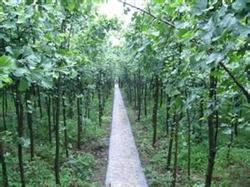 In recent years, ginkgo cultivation has developed from traditional scattered planting toward production-oriented, intensive, large-scale development, with the area of leaf-producing ginkgo plantations and high-yield plantations increasing year by year. In ginkgo leaf-harvesting plantations intercropped with wood ear mushroom, the carbon dioxide released by the respiration of the wood ear fruiting bodies supplements what ginkgo needs for photosynthesis, while ginkgo photosynthesis provides ample oxygen for wood ear growth. The spent wood ear mushroom substrate is returned to the field, enriching the soil fertility and promoting ginkgo growth, while ginkgo provides a cool climate for wood ear growth. The two complement each other and both achieve a bumper harvest.
I. Ginkgo Cultivation
1. Establishing the ginkgo plantation The purpose of a ginkgo leaf-harvesting plantation is to obtain leaves of excellent quality and high yield. When establishing the plantation, one should choose a plot that is sheltered from the wind and faces the sun, with fertile soil and convenient irrigation and drainage, then deep-plow and improve the soil and apply sufficient organic fertilizer.
2. Seedling selection For ginkgo seedlings used to build a ginkgo leaf-harvesting plantation, one should select ginkgo cultivars with a low canopy, many branches, short internodes on the branches, dark leaf color, thick and large leaves, abundant leaf production, and high content of medicinal components such as ginkgo biflavones and ginkgolides, and that are suitable for close planting. Ginkgo leaves have high commercial value and can achieve the goal of increasing both yield and income.
3. Planting After the site for the leaf-producing ginkgo plantation (leaf-harvesting plantation) is selected, cultivate it carefully and plant in rows running north-south, which is conducive to light exposure and ventilation. The ginkgo planting method uses hole planting or trench planting, with a plant-to-row spacing of 50 x 100 cm or 40 x 120 cm. The survival rate of ginkgo planting is highest when planted around "Qingming" when the leaf buds show white, and after planting, water thoroughly to the bottom, preserving soil moisture to promote seedling survival.
4. Management A ginkgo leaf-harvesting plantation is mainly for harvesting leaves. Strengthening below-ground management, preventing and controlling pests and diseases, timely topdressing, foliar spraying of fertilizer, and applying quick-acting nitrogen fertilizer are the key measures for increasing ginkgo leaf yield.
II. Wood Ear Mushroom Cultivation
1. Spawn preparation: The wood ear mushroom spawn production technique is the same as for conventional edible fungi.
2. Spawn-running management: The culture medium for cultivating wood ear mushroom can be adapted to local conditions and sourced locally, using cottonseed hulls or mixed wood sawdust as the culture medium. From April to May, mix the materials according to the culture medium formula, fill low-pressure polyethylene mushroom bags with the material, about 150 grams per bag, sterilize at room temperature for 10 hours, and after cooling, inoculate with wood ear mushroom production spawn under sterile conditions. After inoculation, stack the mushroom bags into piles and place them indoors under sterile and ventilated conditions for spawn running; the bags will be fully colonized in 30-40 days.
3. Wood ear mushroom entering the plantation: In June, the ginkgo leaf-harvesting plantation provides good shading and is suitable for the growth and development of wood ear fruiting bodies. When the wood ear mushroom bags are fully colonized, arrange for them to enter the plantation for fruiting. (1) Wood ear mushroom entering the plantation: The ginkgo leaf-harvesting plantation has a row spacing of 100 cm or 120 cm, and two rows of wood ear mushroom are interplanted between each row. In conjunction with watering the ginkgo plantation, first water the planting trench thoroughly to the bottom; after the water seeps in, remove the bags from the fully colonized wood ear mushroom blocks and place them horizontally flat in the planting trench, or place two bags parallel lengthwise. After the mushroom blocks are placed in the trench, cover with 1-2 cm of fine soil to cover the mushroom blocks completely, then spray once with a heavy watering, requiring thorough spraying. (2) Fruiting management: From June to July, the temperature is high and the humidity is great, suitable for wood ear mushroom growth and fruiting. During this period, insist on spraying water to ensure humidity and prevent and control pests and diseases. Do not flood-irrigate; spray finely and frequently. After the wood ear mushroom blocks enter the field, it takes about 7-8 days for fruiting to begin, and 15-20 days after fruiting the ear pieces soften and can be harvested. After harvesting the wood ear mushroom, promptly clean the mushroom yard (spent substrate, debris), spray water again to produce a second flush, for a total of 3-4 flushes. From September to October, before ginkgo leaf harvesting, wood ear mushroom growth stops, and in conjunction with autumn intertillage, the spent mushroom substrate is returned to the field to enrich soil fertility.
Comprehensive benefits Intercropping wood ear mushroom in a ginkgo leaf-harvesting nursery yields a bumper harvest of both. According to experimental statistics, the income from ginkgo leaves is 8,600 yuan per mu, and the total income from wood ear mushroom is 6,000 yuan, for a total annual income of more than 14,600 yuan. At the same time, through returning the spent wood ear mushroom substrate to the field, the content of soil organic matter and beneficial microorganisms is increased, the soil's physical and chemical properties are improved, and the transition from traditional single-crop planting to ecological agriculture is another new attempt in comprehensive ginkgo management.