-

A Detailed Explanation of the Method and Process Flow for Walnut Juice
(1) Ingredient preparation: walnut kernels, white granulated sugar, sucrose esters, food antifoaming agent, sodium carboxymethyl cellulose, sodium citrate. (2) Process flow: walnut kernels → sorting and removal of impurities → soaking → grinding into slurry → separation of residue and slurry → blending and formulation → homogenization → degassing → filling → can sealing → sterilization → inspection → finished product.
-
A Detailed Guide to the Processing Method for Crispy Fried Walnut Kernels
(1) Raw material preparation: peeled walnut kernels, starch, whole milk powder, white granulated sugar, honey, syrup, protein sugar, β-cyclodextrin, vanillin, sodium D-isoascorbate, sodium bicarbonate, citric acid, malic acid. (2) Process flow: Crispy syrup preparation process flow: star
-
A Detailed Explanation of the Formation Process of Young Cactus Stems
Cacti bear little resemblance to ordinary terrestrial plants. They have no leaves, and their spindle-shaped or warty bodies are vastly different from the branches of ordinary plants. However, a few cacti, besides having typical cactus flowers, also produce common young stems and leaves, such as Pereskia. This genus consists of many-branched shrub-type or small tree-type plants. The young stems are round and slightly fleshy. Generally speaking, the lateral buds of flowering plants are borne in the leaf axils, and most of them merely become small buds without further growth. But in many plants, at least some of the lateral buds grow into short, slender shoots, such as those of <span style="color:#FF8000;">apple</span> trees and pear trees. On these young shoots, the new leaves are almost all borne at a single point . This point is remarkably similar to the areole of a cactus, because the spines of a cactus are in fact its modified leaves. </p> <p align="center"> </p> <p align="center"> Pictured: young cactus stem </p> <p>   In fact, some plants do have leaves modified into prickles, such as Berberis, in which transitional forms ranging from leaf-like spines to prickles have been found. Botanists call these modified leaves and buds prickles rather than spines (only bud-derived structures are called spines, such as those of Rubus). The spines of cacti are also formed by the modification of leaves, so the botanically correct term is also prickles. However, this book still refers to them as spines according to customary usage. When new shoots or flower buds emerge from an areole, it clearly demonstrates that the areole does indeed contain buds. Theoretically, every areole is capable of producing new shoots. If the new shoot above any areole is removed, a new shoot will emerge from that areole to replace the removed one. </p> <p>   The leaves of some Pereskia species have become very small and narrow. The genus Opuntia also has leaves, which are round but soon fall off. The leaf-like basal segments of many Opuntia plants are easily mistaken for flat new leaves. In fact, when young, these cacti still produce small and feeble leaves; new stem segments emerge from the areoles on the leaf-like stem segments, while true new leaves are no longer produced. </p> <p>   The round young stems of Pereskia often give rise to variants with hump-like, angular, or ridged stems. At this point, as the plant grows, the spirally arranged areoles become increasingly obviously arranged in longitudinal rows. The areoles of cacti with angular stems are also arranged spirally during their seedling stage. </p> <p>   The amount of water stored within the body of a cactus varies greatly with the seasonal alternation between rainy and dry seasons, and the ridged structure is particularly suited to this growth pattern. </p> <p>   When water is scarce in the dry season, the ribs become thinner; when water is abundant in the rainy season, the ribs thicken, yet the overall form of the plant does not change much. In other words, without any change in the plant's surface area, the internal water storage capacity differs greatly, like the bellows of an accordion. In contrast, the stem segments of pad-shaped cacti shrink irregularly when water is scarce. Moreover, the surface area of ribbed cacti is larger relative to the plant's total volume than that of other types (all green plants need a certain surface area to receive sunlight). </p> <p>   The number of ribs can increase to a great many. For example, many Trichocereus cacti bear a very large number of ribs, but the genus with the greatest number of ribs is Stenocactus, which can produce as many as 120 thin, cardboard-like ribs. The young stems of many climbing and epiphytic cacti are slender and long, slightly cylindrical, or bear only irregular hump-like protrusions. The thicker young stems bear ribs, and as the plant grows, these ribs eventually become thin and wing-like, which helps the plant grow healthily in a semi-shaded environment. Later, the three-winged stems eventually give rise to two-ribbed, leaf-like flat stems. </p> <p>   On many ribbed cacti, the protrusions on the ribs are more or less distributed in a hump-like pattern. If sunlight shines directly from above, the various protrusions will to some extent shade one another from the sun. Therefore, when the shape of the ribs is clearly distinguishable, one can see that the ribs are mostly arranged in a spiral. If the ribs are composed of isolated, unconnected warty protrusions, as in Rebutia or Mammillaria, then the spiral direction of the ribs is difficult to discern, and only chains of warty protrusions arranged in intersecting diagonal rows can be seen on the plant surface. As with the arrangement of leaves, the number of warty protrusions in each row is often 5, 8, 13, 21, 34... that is, each number is the sum of the previous two. This arrangement allows the warty protrusions to be distributed densely and evenly, and maximally ensures that they do not shade one another from the sun. </p> <p>   Cacti that bear large warty protrusions differ most in form from ordinary cacti. These warty protrusions superficially resemble leaves, as in Ariocarpus or Obregonia, but the warty protrusions bear an areole, and flowers can emerge from within the areole. Therefore, the warty protrusions are not leaves but part of the stem. On some small spherical or leaf-like cacti, such as Blossfeldia or Lophophora, the spindle ridges can only be identified by the arrangement of the areoles. </p> <p>   Recommended articles: </p> <p>   The External Structure and Morphology of Cacti </p> <p>   An Evolutionary Overview of the "Living Fossil" Cacti </p> <p>   Cacti Shed Their High-Priced "Outer Garment" and Are Replaced by Low-Priced Ones </p> <p>   In Summer, Small Potted Plants Are Sought After, and Cacti Rank at the Top </p>
-
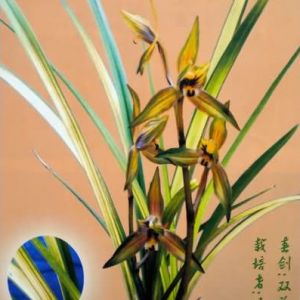
A summary of the flowering process of Cymbidium goeringii, explained in one article
A rare striped-leaf striped-flower cultivar of Chunlan: Tang Sancai, the leaves have central translucent stripes, and the flowers are central translucent striped flowers, very beautiful.
-
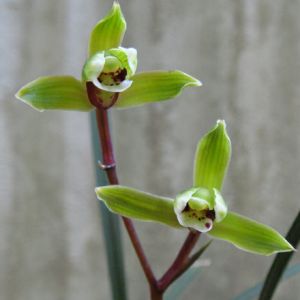
What is the growth process of orchid shoots?
A new local discovery from the end of November 2007, a new variety of Kanran (Cymbidium kanran) called Zixiu ("Purple Beauty"). Its overall form is dignified and elegant, delicate and refined. The three outer petals have white tips and a slight flutter, and the central column is especially beautiful against the square-notched lip. In the Kanran family, it is truly a rare new flower, though unfortunately it has no fragrance. Drawing on its fresh and elegant character, it was named "Qingqiao" ("Clear and Delicate").
-
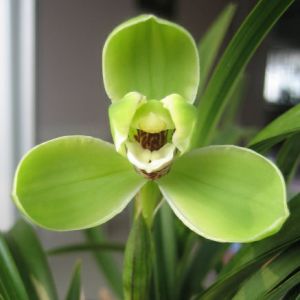
Is the Songmei orchid easy to grow? Characteristics, price and flowering process explained
In his book "300 Questions on Chinese Orchid Art", Mr. Ding Yongkang's assessment of Songmei is: for over 200 years, no single variety in plum-petal orchid art has surpassed her, and these words are truly not false. She, with her rich and delicate fragrance and unmatched elegance, embodies the essence of Chinese orchid culture, carrying people's pursuit of perfection, purity and ideals, and is precisely the representative of the orchid as a symbol of personality...
-
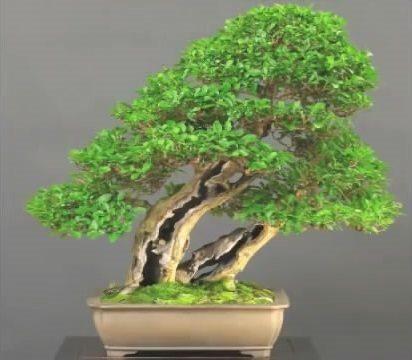
Illustrated guide to the whole process of making a multi-trunk old privet stump bonsai
Today we continue the story of Graham and his stump bonsai. Today's star is a multi-trunk privet. This kind of privet is very common in England, usually planted around houses as hedges, so this kind of stump is very plentiful. 20 years...
-
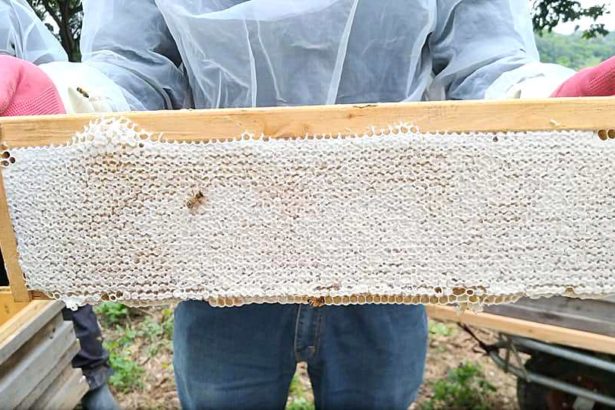
Honey Concentration Sparks Debate: Zhang Yuanming on the Difference Between Unprocessed Capped Honey and Concentrated Honey
Zhang Yuanming / Honey concentration sparks debate! What is the difference between "unprocessed capped honey" and "concentrated honey"?
-
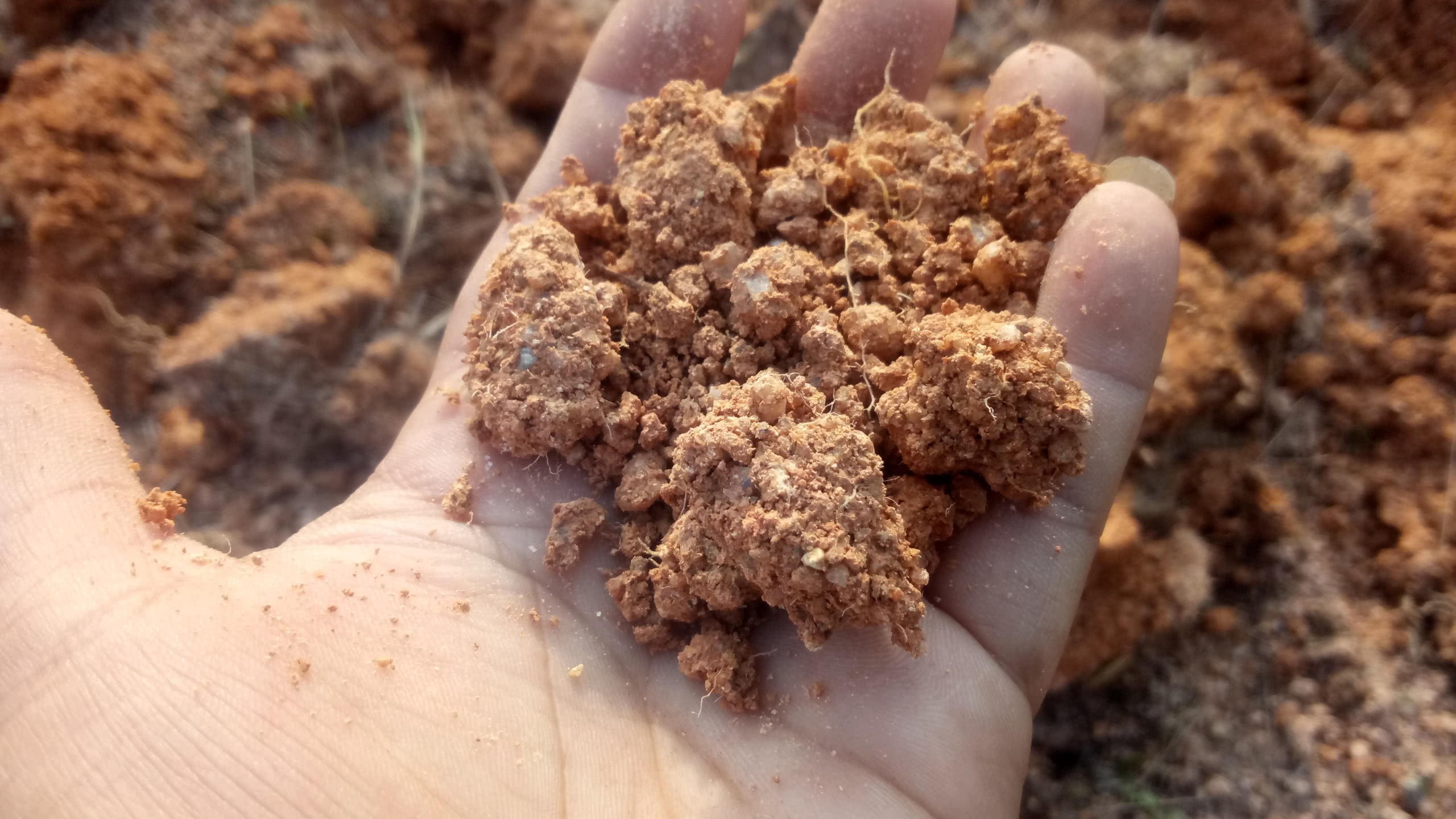
A detailed explanation of the whole soil improvement process: methods and steps clearly explained in one go
Soil environment: too much sand and gravel, acidic and clayey, prone to compaction, very poor water permeability and aeration, poor aggregate structure and cation exchange capacity. Plants grow weakly, flowers are weak, and they do not tiller or branch easily. Weeds are severe. The original soil here has been planted too many times...
-
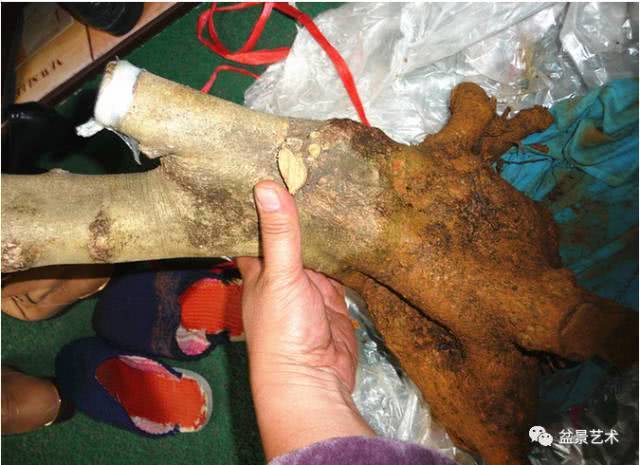
Detailed Explanation of the Cultivation Process and Methods for Collected Wild Tree Stumps
Cultivation Process and Methods for Collected Wild Tree Stumps, Part One. Rooting powder and alcohol. Use alcohol to mix the rooting powder like this, [only alcohol can dissolve rooting powder] the effect is better than mixing with water. Part Two. Soak the stump in rooting powder water for several hours, depending on the freshness of the stump, like...
条件筛选