-

How to open a bonsai shop? A detailed explanation of the opening process and preparatory work
When it comes to developing bonsai production, many people say that this project takes too long to get going, the production procedures are hard to master, and the market is limited. In fact, this is an incomplete understanding. If you produce medium and large bonsai, then it is indeed too long a cycle, the procedures are hard to master, the market is limited, and it will also lead to the destruction of wild resources
-

Southern yew (Taxus wallichiana var. mairei) planting methods: seed collection, processing, and pest and disease control
The yew is a precious landscaping tree species in China, with a graceful tree shape and evergreen leaves throughout the four seasons. Its fruit is red and it has excellent ornamental and medicinal value. Below are the methods for seed collection, processing, propagation, cultivation, and management of the southern yew, for your reference.
-

How to make a black pine bonsai? A detailed explanation of the production process
The black pine's trunk is lean and ruggedly aged, mottled like fish scales, with thick, sturdy and vigorous needles, and small branches that droop yet are full of strength, combining softness with firmness, possessing a kind of unadorned masculine beauty, natural in form yet full of spirit, rich in painterly charm. Below let us look at the making of a black pine bonsai
-

Detailed Explanation of Key Points on Chrysanthemum Cultivation and Processing Techniques
We are all familiar with chrysanthemums, and there are many different types. This article mainly introduces the cultivation and processing techniques of chrysanthemums grown for tea. The flower heads of chrysanthemums can be used as medicine, with effects of clearing the liver and improving eyesight, dispelling wind and dissipating heat, and clearing heat and detoxifying.
-

How to Propagate Pothos? A Detailed Guide to the Soil-Culture Cutting Process
Can soil-cultured pothos be propagated by cuttings? How is it done? Below, the editor has put together a detailed guide to the soil-culture pothos cutting process. Let's take a look.
-
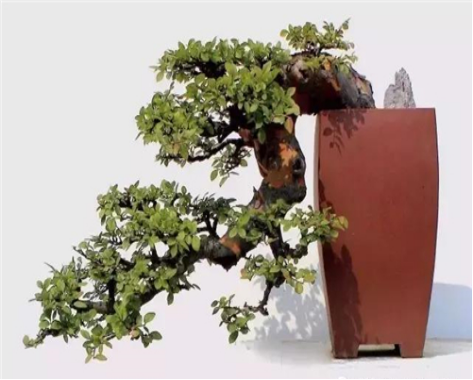
A detailed guide to the entire process of making an elm bonsai
Step 1: Pruning the roots and branches. Before planting, we first need to prune the branches and root system. The purpose is to make it easier to plant and also to help it grow better. Step 2: Treating the cut surfaces. Sticky sap often flows from the cuts on an elm. If the elm exudes too much liquid
-
A Detailed Guide to the Harvesting and Processing Methods of Camellia Oil
I. Harvesting: There are many varieties of camellia oleifera, and the fruit ripening period is generally from October to early November. Ripe fruit has the following characteristics: the camellia fruit is bright in color, red or yellow, with a glossy sheen; the fuzz on the fruit skin has fallen off completely; the hairs at the base of the fruit are hard and coarse; the fruit shell is slightly split; the seed shell turns black and shiny; and the kernel shows oil. Camellia fruit should be harvested promptly once ripe. For different varieties, harvest early-ripening fruit first and late-ripening fruit later, picking as they ripen; for ripe fruit of the same variety, harvesting should also be completed within about 7 days. The harvested camellia fruit should be piled indoors for 6 to 7 days to let
-
A Detailed Explanation of the Picking and Processing Technique of Haoming Tea
Haoming Tea was developed jointly by the Haoming Tea Company of Yizheng City, Jiangsu Province, and Nanjing University, and is produced in the western part of the ancient city of Yangzhou in the Jiangbei tea region. Influenced by the unique regional environment, its quality is deeply favored by consumers for its emerald green color, flat and straight shape, high and lasting aroma, clear and bright liquor, fresh, mellow and refreshing taste, tender and even brewed leaves, and its resistance to many infusions. In 1990, this tea was designated as the special tea for the rostrum of the main venue of the 11th Asian Games, and in 2000 it won China
-
A Detailed Explanation of Black Tea Manufacturing: The Complete Process and Key Steps
Chinese black tea includes congou black tea, broken black tea and souchong black tea. Their manufacturing methods are largely similar, all involving the four processes of withering, rolling, fermentation and drying. The quality characteristics of all kinds of black tea are a red liquor and red leaves, and the formation of their colour, aroma and taste involves similar chemical change processes, differing only in the conditions and degree of the changes. The following uses congou black tea as an example to briefly introduce the manufacturing process of black tea. (1) Withering Withering refers to the process in which fresh leaves lose water over a period of time, causing the somewhat hard and brittle stems and leaves to become limp and wilted. It is the first step in the primary processing of black tea.
-
A Detailed Explanation of the Manufacturing Process of Nanlubian Tea
Nanlubian Tea is a type of compressed tea produced in Sichuan and sold exclusively to Tibetan areas. In the past it was divided into six varieties: Maojian, Yaxi, Kangzhuan, Jinyu, and Jincang; now it has been simplified to two varieties: Kangzhuan and Jinjian. It was formerly mainly produced in the Ya'an and Leshan regions, and has now expanded to tea areas throughout the province. It is centrally processed at state-owned tea farms (factories) in Ya'an, Yibin, Chongqing, Wanxian and other places. The raw materials of Nanlubian Tea are coarse and old and include a portion of tea stems. Because of different fresh leaf processing methods, the crude tea is divided into two types: after fixation (de-enzyming) without steaming and rolling but
条件筛选