Honey Concentration Sparks Debate: Zhang Yuanming on the Difference Between Unprocessed Capped Honey and Concentrated Honey
"You must use cold water to make honey water, and the water temperature must not exceed 40°C, so that the most precious enzymes in honey won't be destroyed!" Recently I heard a certain honey brand marketing its honey with great solemnity. The question that popped into my mind was: "When your honey is low-pressure heated and concentrated, does the honey come into contact with a heat source exceeding 40°C?" If it does, then why bother acting so mysterious and telling consumers not to use water hotter than 40°C to make honey water!
The debate between capped honey and concentrated honey continues
In the face of the "unprocessed capped honey" emphasized by small-scale or artisanal beekeepers that has emerged in recent years, traditional professional beekeepers cannot help but raise doubts. In an online beekeeping community, a professional beekeeper came forward to counter: "Fellow beekeepers can search online for the national honey evaluation registration requirements themselves - one required item is the submission of a concentration record form. Amateur beekeepers can refer to this on their own. Fermented honey = spoiled sour honey. Selling such a thing only damages your own reputation..."
The debate over honey concentration has never ceased in beekeeping communities. As beekeeping techniques are no longer closed off, many emerging small-scale beekeepers have adopted the more labor-intensive "super box rearing method," emphasizing that they only harvest capped honey, and the harvested honey is not heated and concentrated, in order to win market recognition. This of course has also caused worry and dissatisfaction among traditional beekeepers, with both sides criticizing each other. Consumers, not understanding the honey harvesting process, receive messages from both sides - one accusing the other of selling fake honey, the other criticizing that without concentration the bottles will explode or the honey will ferment and turn sour - and can't help but feel utterly confused!
Capped honey vs. concentrated honey: After bees collect nectar and return, they place it into the comb cells and continue processing and brewing, constantly fanning their wings to promote evaporation and reduce moisture. After about 1 week or more of brewing time, the bees reduce the honey's moisture content to below 20%, which is the only way it can be preserved. The fully brewed honey is sealed by the bees with beeswax in the comb cells. This naturally ripened honey is called "ripened honey," which is capped honey.
Because the full ripening process is affected by factors such as climate humidity and short flowering periods, it takes a longer time and may even fail to fully ripen. Therefore, ordinary beekeepers harvest before capping. Because the full ripening process takes longer, ordinary beekeepers harvest early and then use a concentrator to dehydrate the honey by heating and vacuum extraction. Honey that has undergone heat treatment is called "concentrated honey."
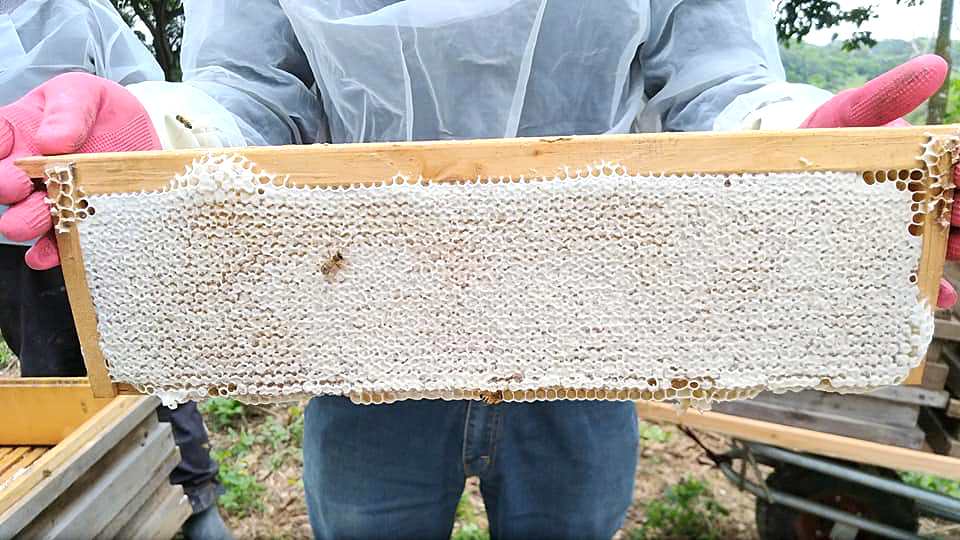
What everyone needs to distinguish clearly is that low-pressure concentration is meant to remove excess moisture. Heating increases dehydration efficiency but relatively destroys the enzymes in honey. This is the key to the debate.
So, the difference between capped honey and concentrated honey is that the former undergoes no processing at all - after harvesting and filtering out impurities, it is bottled and sold directly. Because it is unprocessed, the enzymes are not destroyed, but its moisture content sometimes cannot drop below 20% due to weather factors, and long-term storage at room temperature carries the risk of turning sour and bottles exploding (which can be solved by refrigeration). The purpose of concentrating the latter is to reduce the moisture content to below the national standard of 20%. Concentrated honey can be further divided into heated and unheated.
Since enzymes begin to be massively destroyed above 60°C, the heating temperature for low-pressure heated concentration is generally set at 60°C, and some are set even lower. This is heated concentrated honey.
Now some beekeepers, in pursuit of completely not destroying enzymes while still bringing moisture below the standard, adopt a method of only reducing pressure (lowering water's boiling point to room temperature) but completely not heating. This imitates natural air-drying but uses vacuum extraction and pressure reduction to shorten the time. It is another compromise to preserve all the enzymes in honey (though some question whether pressure reduction might also destroy enzymes).
Can we move toward room-temperature (completely unheated) concentration?
Low-pressure heated concentration is not an evil thing (using essences and sugar water to blend fake honey to deceive people is what should be condemned). It has its necessity in the honey market, just as processed foods produced by large food factories must add preservatives and many legal additives for mass production, transportation, storage, and shelf display - it is unavoidable but permissible. Whether to accept it is up to consumers to decide. After all, such products are relatively affordable and easy to purchase. Just like when organic agriculture appeared, conventional agriculture did not disappear because of it, but adjusted toward a better direction. I-Mei pudding is recognized, and Uni-President pudding still sells well on the market! The two are not a life-or-death chess game; they can coexist and prosper together.
The honey market is the same. The more diverse honey production is and the more varied the products, the better for consumers. From the most difficult physical mite removal, taking only capped honey without processing or concentration, to the traditional mass harvesting followed by low-pressure low-temperature concentration - different products have different costs. As long as consumers are fully informed and reasonable prices are set for each and accepted by consumers, there would be no trouble in the honey market - why create disturbances for oneself!
The last thought is this: since everyone knows that the enzymes in honey are precious, and Taiwan, China has such great beekeeping capacity, low-pressure to room-temperature (completely unheated) concentration equipment is mature and not so expensive as to be unaffordable. Why don't agricultural authorities and beekeeping groups move toward this goal? Although in the end it would still be distinguished from ripened honey, at least when emphasizing using cold water to make honey water, one could speak with complete confidence!