How to grow Sedum multiceps? The correct cultivation method beginners must read
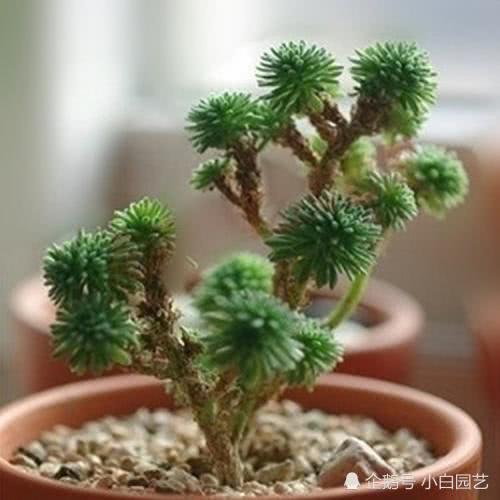
Sedum multiceps, also known as dwarf stonecrop, is a very short plant, just like a mini version of a pine tree. Its appearance is very small and distinctive. From a distance, it looks like a furry ball hanging on the tip of a tree, and it is very ornamental, so it is also favored by many friends. So do you know how to grow Sedum multiceps? Below we will introduce the correct cultivation method for Sedum multiceps.
Cultivation methods for Sedum multiceps
1. Soil selection for Sedum multiceps
Soil: requires dry, loose, breathable soil that does not retain water
You can mix garden soil, sandy soil, vermiculite and other materials, such as peat soil and granular soil at a 1:1 ratio
2. Water and fertilizer requirements for Sedum multiceps
Watering: Whether Sedum multiceps lacks water can be judged from the leaves. When the leaves slowly close up and look listless, it needs water. Sedum multiceps should be watered less rather than more, and the principle of keeping it dry rather than wet should be followed to avoid water accumulation, which can cause root rot.
Fertilizing: Sedum multiceps can be given a diluted decomposed liquid fertilizer or compound fertilizer once every 20-30 days to supplement the needed nutrients and promote plant growth.
3. Light and temperature requirements for Sedum multiceps
Light: Sedum multiceps likes light. Receiving sufficient light in spring and autumn can make the plant compact, with thick fleshy leaves and high ornamental value.
Temperature: Sedum multiceps likes warmth, but high temperatures in summer will cause it to enter a dormant state, so ventilation and shading measures should be taken in summer.
4. Acclimatization and pruning of Sedum multiceps
Acclimatization: When Sedum multiceps is first bought, its leaves are usually wilted. At this time, we need to acclimatize it. During acclimatization, it can be planted in moist soil and placed in a bright, ventilated place (1-2 weeks), then gradually increase light.
Pruning: Sedum multiceps grows relatively fast and tends to sprout side branches. During cultivation, overly dense and messy branches should be cut off in time, especially new branches at the base, to keep the plant naturally beautiful.
Propagation: The pruned branches can be used as cuttings for propagation.
The cultivation methods for Sedum multiceps are introduced here. Does everyone understand? In fact, Sedum multiceps is very easy to keep alive. Sedum multiceps itself already looks very distinctive, but did you know? Sedum multiceps can also bloom. So what does Sedum multiceps look like when it blooms?
Pictures of Sedum multiceps blooming
Sedum multiceps generally blooms in spring. The flowers are small, mainly yellow, and star-shaped. They are very small and charming, with yellow flowers and green branches, plus the sparse and varied form of Sedum multiceps, it naturally becomes a beautiful indoor scenery. So, if you are interested in Sedum multiceps, what are you waiting for?
Alright, that is all for today's content. Thank you for reading!