-

Detailed Explanation of Spring Tea Production Characteristics and Technical Countermeasures
Spring is the beginning of the tea plant's annual growth cycle, and it is also the key season when tea accounts for a large proportion of the year's total output and is of good quality. Usually, spring tea output accounts for 40%-50% of the annual total, and its output value exceeds 50% of the annual total. Therefore, great importance must be attached to spring tea production. After winter dormancy, by spring the nutrients accumulated in the tea plant reach their highest level; in addition, abundant spring rainfall, mild climate and few pests and diseases constitute the conditions for high yield and high quality of spring tea. Spring tea begins in April and ends in mid-to-late May, and in just over 1 month it must be picked
-
Why do continuous and alternating soybean cropping reduce yields? Cause analysis and countermeasures
With China's accession to the WTO and the opening-up policies of the grain market, the problem of continuous and alternating soybean cropping has become increasingly serious, and the yield reduction increases as the number of consecutive cropping years rises. According to surveys and research, alternating cropping reduces yield by 6.1%, one year of continuous cropping by 9.9%, two years of continuous cropping by 13.8%, and three years of continuous cropping by 19.0%. Moreover, in continuous and alternating cropping soybeans, the 100-seed weight decreases, the rate of diseased seeds and insect-damaged seeds increases, and commercial quality drops significantly. With long-term continuous cropping of more than 3 years, the protein content of soybeans increases markedly while the fat content decreases markedly. According to research by scientific research departments
-
Key technical points for mid-season management of cotton during the Major Heat solar term
Focus on promoting growth, combining promotion with control, achieve control of large seedlings, promotion of small seedlings, and supplementation of weak seedlings, promote the transformation of weak seedlings, achieve balanced growth of strong seedlings, and build a high-yield framework early. Scientific fertilizer and water management: First, apply bud fertilizer early and steadily. For weak seedlings, apply bud fertilizer early and steadily, generally applying 5-7 kg of urea per mu, and 25-50 kg each of cake fertilizer and phosphate fertilizer. Second, apply flower and boll fertilizer early and heavily. Generally in late early July, when 1~2 large bolls appear on the lower part of the cotton plant, carry out topdressing, applying 15~20 kg of urea per mu. Third, supplement with topping fertilizer.
-
Analysis of Limiting Factors in Cotton Production and Countermeasures (Part 2)
7. Main symptoms of premature senescence: First, after the peak boll-setting period of cotton, the leaves show interveinal chlorosis and yellowing; the yellowing leaves begin at the point farthest from the main stem and develop from top to bottom and from outside to inside, and the leaves gradually dry up and fall off. Second, in the late growth stage of cotton, the leaves turn red and lose their function of producing nutrients. The earlier the premature senescence of cotton appears, the more severe the yield reduction. Causes: First, the soil is poor and the soil fertility is insufficient. The soil nutrients cannot meet the requirements of cotton growth and development; second, fertilization is insufficient. In particular, potassium fertilizer and nitrogen fertilizer are insufficient, and some cotton farmers fear that when the amount of nitrogen applied is large, it will cause
-
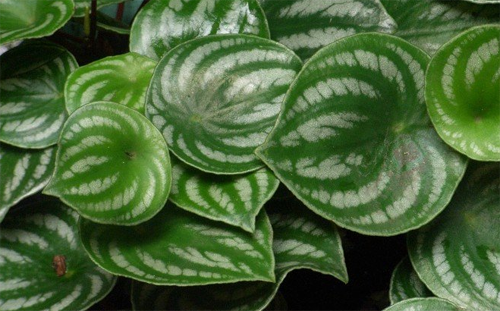
Is the Watermelon Peperomia Toxic? Detailed Propagation Methods
The Watermelon Peperomia (Peperomia argyreia) gets its name because its leaves look quite similar to watermelon rind. What are the propagation methods for Watermelon Peperomia? Is it toxic? Watermelon Peperomia propagation methods: division, generally done in spring and autumn, with a temperature of around 20 degrees being most suitable, carried out together with repotting and soil changing, since the plant has to be pulled up anyway.
-
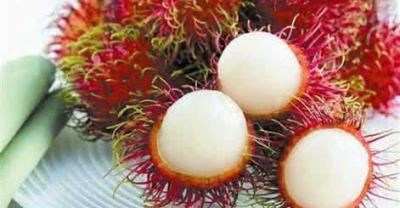
How to grow watermelon in pots? A step-by-step guide to growing methods
Recently, the news of Chen Sicheng's affair has dominated screens for the past few days. I had been quite optimistic about his film and television career, but now everything seems so difficult. Suddenly...
-

Complete cultivation technology plan for watermelon from planting to harvest
Summary of the keynote speech "Complete Cultivation Technology Plan for Watermelon" delivered by Researcher Wang Hanrong of the Zhejiang Academy of Agricultural Sciences at the 2nd Watermelon Industry Forum on November 7, 2017....
-
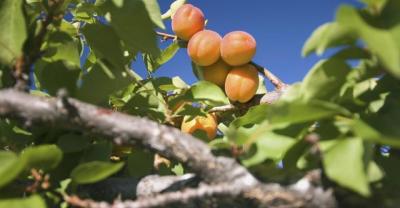
Detailed Explanation of Key Points of Soilless Watermelon Cultivation Techniques
In recent years, soilless cultivation of watermelon has become increasingly favored by melon growers, as it not only effectively solves the contradictions of water, air and nutrients in traditional soil cultivation, ...
-
Analysis of the Difficulties, Requirements and Countermeasures in Eustoma (Lisianthus) Cultivation
Difficulties, requirements and countermeasures in Eustoma cultivation? Eustoma (Eustoma grandiflorum Shinn.), honored as the "thornless rose", belongs to the Gentianaceae family, genus Eustoma...
-
Planting Methods and Techniques for Regenerated Watermelon Fields
Watermelon Regeneration Field Planting Techniques and Methods The varieties cultivated in greenhouses for watermelon are mostly early-maturing varieties, which creates the time condition for watermelons to set fruit again. According to experiments, currently...
条件筛选