Detailed Explanation of Key Points of Soilless Watermelon Cultivation Techniques
In recent years, soilless cultivation of watermelon has become increasingly favored by melon growers, as it not only effectively solves the contradictions of water, air and nutrients in traditional soil cultivation, but also truly achieves pollution-free production, effectively improving watermelon yield and quality, which is of great significance to watermelon planting.
I. Making of Cultivation Troughs and Cultivation Substrate
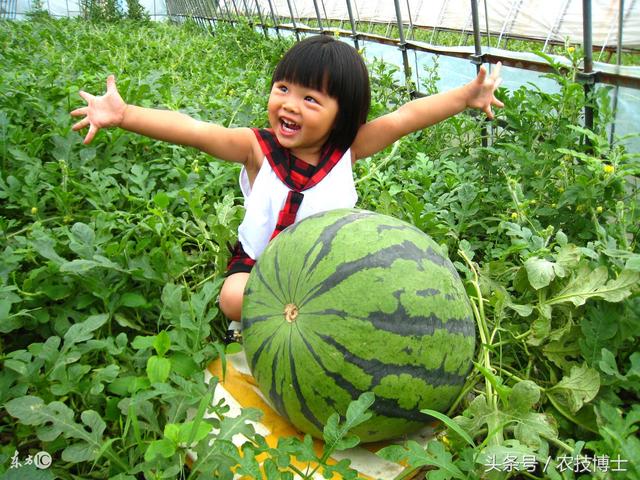
1. Construction of cultivation troughs:① Simple cultivation trough. Built with bricks, the length depends on the specific conditions of the greenhouse, generally no more than 20 m, the inner width of the trough is 90 cm and the height is 18 cm, and the walkway between troughs is 90 cm. Lay a layer of 0.1 mm thick polyethylene film on the bottom of the trough to isolate it from the ground soil; ② Utilization of hydroponic troughs. In soilless cultivation techniques, hydroponics requires relatively high technology, especially the management of fertilizers, which is quite difficult. Therefore, hydroponic cultivation troughs can be directly used for organic substrate cultivation; simply fill the trough with substrate and lay drip irrigation tape on top.
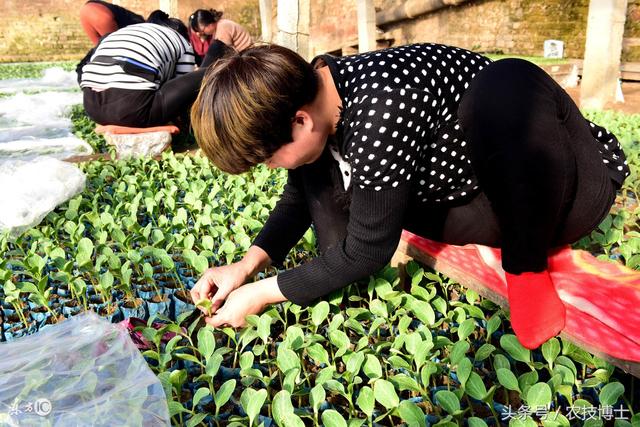
2. Making of soilless cultivation substrate:The raw materials for watermelon seedling substrate can be substrate nutrient soil fermented with the Jinbaobei substrate nutrient soil fermentation agent, plus vermiculite and river sand mixed evenly in a ratio of 5:2:3. The particle size of river sand is best at 0.2-0.4 cm. If sea sand is used, it must be rinsed with clean water several times before use. The substrate nutrient soil fermented with the Jinbaobei fermentation agent not only greatly reduces substrate cost, but also yields an ideal substrate with high nutrient content.
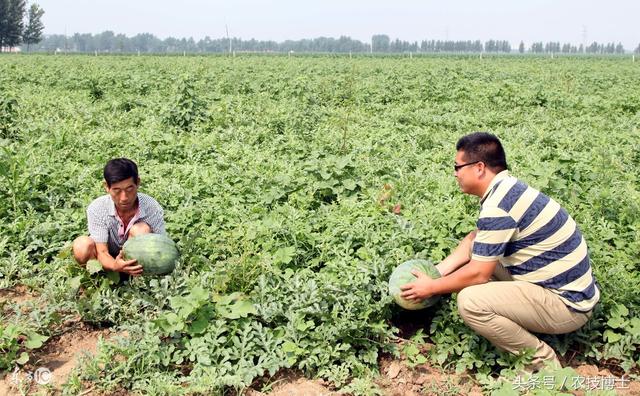
Special attention should be paid to the pH value of the soilless cultivation substrate, which is best controlled at around 6-7. The main thing is to control the pH value of the substrate nutrient soil. For details, please refer to the operation method of the Jinbaobei substrate nutrient soil fermentation agent.
① Prepare materials and make a pile. First pile up 10 cubic meters of broadleaf tree fallen leaves or crop straw and green grass separately into large piles, making sure to pile and compact at the same time, reducing the volume as much as possible; ② Prepare nutrient solution. Then use 2.5 kg of urea mixed with 150-200 kg of water to make urea water, and spread it evenly on the leaf pile. The water content of the fermentation pile is required to reach 60-70%. This process is to prepare a "nitrogen"-containing nutrient solution for microorganisms (microorganisms need nutrients such as "nitrogen" and "carbon" for their own reproduction, and urea is high in "nitrogen"). How to judge whether the moisture is appropriate: grab a handful of the material; if a water mark is visible but no water drips, and it falls apart upon hitting the ground, it is suitable. Less water means slow fermentation; too much water means poor ventilation and will also cause "spoilage bacteria" to work and produce an odor, so remember this;
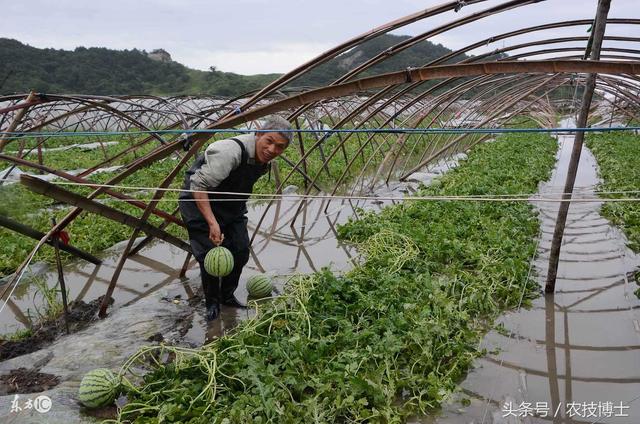
③ Sprinkle material and inoculate. After the urea water has soaked through, cover the top with a breathable covering and leave it naturally for 24 hours. On the second day, mix 2 kg of Jinbaobei microbial fermentation inoculant with 5 kg of rice bran to make an increased microbial inoculant (that is, "dilute" the 2 kg of fermentation agent into 7 kg of material, as having more material makes it easier to spread evenly and also provides nutrition for the microbial strains), and spread it evenly into the already piled broadleaf tree leaves or crop straw and green grass pile, turning and sprinkling at the same time. This process is called "inoculation" (that is, mixing the Jinbaobei microbial fermentation inoculant with the above-mentioned other materials and sprinkling them into the pile; in microbial engineering technology it is called "inoculation");
④ Cover and turn over. After inoculation is completed, add another breathable covering on top of the large pile, ensuring shading and rain protection. Under normal circumstances, after fermentation treatment begins, after 5-10 days of fermentation, the temperature can reach above 55-60°C. At this time, turn it once; with a cumulative 2-3 times, fermentation can be completed.
3. Water supply system:Lay 2 drip irrigation tapes in parallel in each cultivation trough. The diameter of the drip irrigation tape is 15 mm, and the spacing between water outlets is 50 cm. Install an independent water supply system and booster pump in each greenhouse so that the water output from the outlets of each drip irrigation tape is even, and install a filtration device to prevent the outlets from clogging.
II. Watermelon Cultivation Techniques
1. Variety selection:Choose varieties that grow quickly, have strong branching ability, tolerate low temperatures and weak light, and are disease-resistant and high-yielding.
2. Seedling forcing and raising:
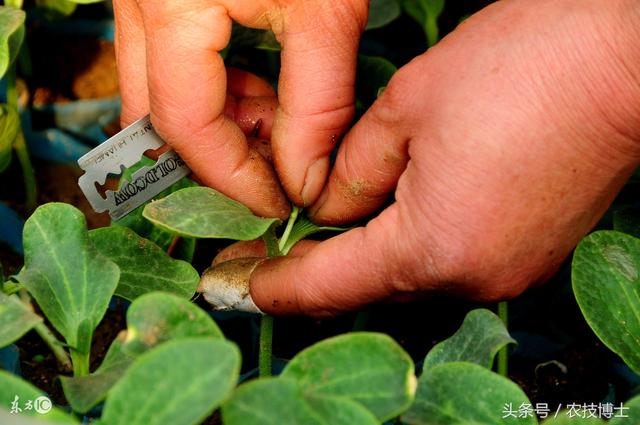
1、Seedling forcing. The arrangement of the sowing period can be determined according to the specific circumstances such as the purpose of cultivation and climatic conditions. Before raising seedlings, first remove impurities from the watermelon seeds, soak them in warm water at 20-30°C for 6-12 hours, take them out and rub them with a small amount of fine sand, wash off the sticky substance, then soak a cotton cloth or towel in water and wring it dry and spread it flat, spread the watermelon seeds in 1-3 layers, fold the edges into a tube shape, first place them in a 37°C environment to force sprouting for 4-6 hours, then place them at a constant temperature of 30-35°C to force sprouting, turn them over every day and wash them with warm water 1-2 times, pick out the seeds whose sprouts exceed 0.5 cm and place them in a wet cloth for storage. Generally after 24-48 hours they can sprout completely;
2. Soilless seedling raising. The seedling substrate formula is the same as the cultivation substrate, but the fertilizer amount is 8 kg per cubic meter. Put the substrate into seedling trays and water it, then sow. The sowing spacing for ordinary seedling trays is 10 cm x 10 cm; if plug trays are used for seedling raising, choose plug trays with a diameter of 6 to 8 cm. The sowing depth is about 1 cm. Place them in a small arched shed for seedling raising. Keep the daytime temperature at 25-30°C and the nighttime temperature not lower than 15°C. According to the growth situation during the seedling stage, spray 0.5 times concentration nutrient solution or clean water with a spray bottle. The seedling age is 30-40 days. When the seedlings grow to 3 true leaves and 1 heart leaf or 4 true leaves and 1 heart leaf, they can be transplanted.
3. Transplanting:Before transplanting, water the substrate thoroughly. Plant 2 rows per trough, with a row spacing of 70 cm and a plant spacing of 50 cm within the trough. The transplanting position of each plant should be close to the water outlet of the drip irrigation tape, and care should be taken to avoid damaging the roots during transplanting. After transplanting, keep the greenhouse closed for a few days and maintain a relatively high greenhouse temperature to promote rooting of the seedlings.
4. Temperature management:On sunny days, keep the greenhouse temperature at 25-35°C, and at night not lower than 15°C; on cloudy and rainy days, temperature management conditions can be appropriately lowered. When the day-night temperature difference is large, prepare for cold protection. If the seedlings grow excessively, measures such as lowering the greenhouse temperature or the nutrient solution concentration, or increasing the potassium concentration of the nutrient solution, can be used to control it.
5. Vine hanging and pruning:When the watermelon seedlings are 50 cm tall, nylon rope or plastic rope can be used to secure the main vine of the watermelon and guide the vine to grow upward. For pruning, double-vine pruning is more suitable, that is, when the plant is 30 cm tall, in addition to the main vine, keep 1 side vine and remove the rest. Only keep 1 fruit set on the 2nd-3rd female flower of the main vine, and keep the other side vine as a vegetative vine, with its 2nd-3rd female flowers reserved as backups. Above the fruit-setting node, pinch off the growing tip when 4-5 leaves remain.
7. Pollination and fruit retention:Hand pollination makes fruit setting easier and improves the fruit-setting rate. When selecting male flowers, try to choose those that opened before 10 o'clock on the same day, are well developed and have sufficient pollen. Remove the petals, gently dab them a few times on the stigma of the female flower, and mark the pollinated ones. When the fruit grows to the size of a ping-pong ball, it means the fruit has set. At this time, select one normally developed fruit between the 6th and 14th leaves to retain, and remove the others.
8. Management and harvesting:When the watermelon is almost fully grown, in addition to turning the fruit once to turn the shaded side to the sunny side so that the fruit colors evenly, you can also use Jinbaobei sweetening and coloring agent 2-4 times during the watermelon growth cycle, using a purely biological method to increase the sweetness of the watermelon and make the coloring even. Greenhouse watermelons generally mature 30-35 days after fruit setting, and can be harvested and marketed in a timely manner.
[Editor's Conclusion]Soilless cultivation technology is currently the most widely promoted method in watermelon planting, and it is of great significance for improving watermelon yield and quality.