Complete cultivation technology plan for watermelon from planting to harvest

Summary of the keynote speech "Complete Cultivation Technology Plan for Watermelon" delivered by Researcher Wang Hanrong of the Zhejiang Academy of Agricultural Sciences at the 2nd Watermelon Industry Forum on November 7, 2017.
Complete cultivation technology plan for watermelon, from Hangzhou Liangyi 00:00 11:41
I. Preface

II. Green pest and disease control technology
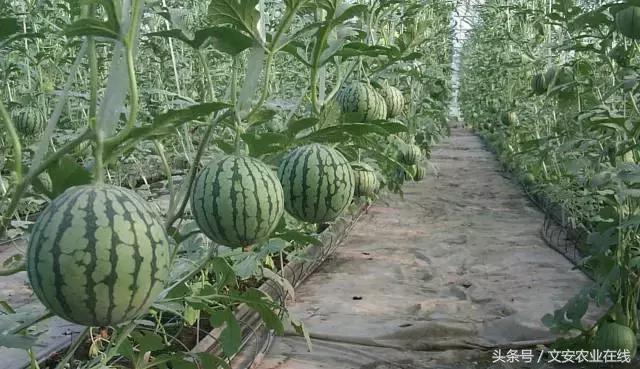
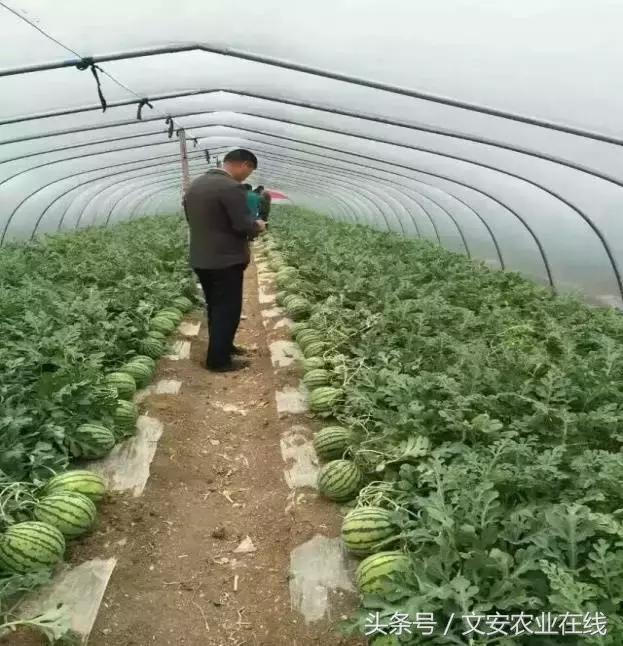
1. Occurrence and control of major watermelon pests and diseases
* Pest and disease control is the most frequent and most important work in watermelon field management, and is an important measure to ensure stable yield and increased income of watermelon.
* While strengthening water and fertilizer management, the strategy of "prevention first, integrated control" should be adopted to carry out pest and disease control work well. Frequent inspection and early prevention are required, so as to eliminate pests and diseases at the initial stage.
① Watermelon Fusarium wilt
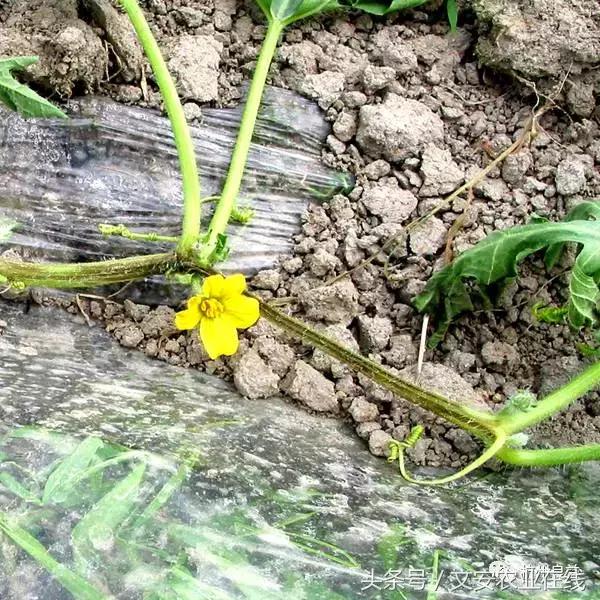
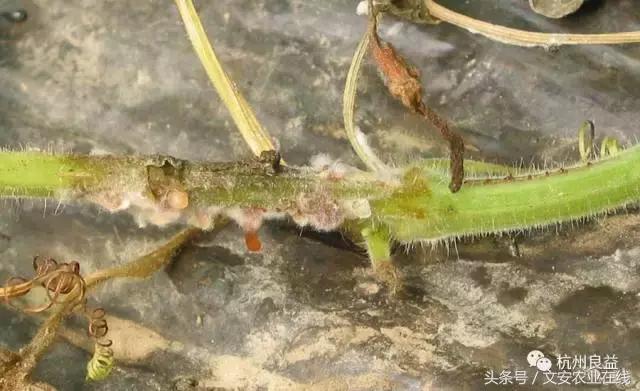
Grafted watermelon also suffers from Fusarium wilt (pumpkin rootstock, gourd rootstock, etc.)
Control methods for watermelon Fusarium wilt:
* Use disease-free seeds or disinfect seeds
* Reduce humidity ---- anti-drip film, ventilation, full plastic film mulching
* Crop rotation includes rotation between vegetables of different families and genera and paddy-upland rotation
* Soil disinfection
* Grafting
* Clean up the field
Grafting
Soil disinfection
Control methods for Fusarium wilt of watermelon and melon:
At the early stage of disease, the following can be used:
* 50% Huimeiqing WP 500-800 times dilution,
* 30% oxadixyl AS 1500 times dilution,
* 50% Kuweiling WP 500-800 times dilution,
* 10 billion Bacillus subtilis WP 500 times dilution,
* 50% Duomeiling WP 500-700 times dilution,
* 10% Score water-dispersible granules 3000-6000 times dilution,
* 9% Jianzhuang suspended seed coating agent 1500-3000 times dilution,
* 42.8% Luna Sensation SC 1000-1500 times dilution,
Pour 0.25 kg of the medicinal solution per plant, once every 5-7 days, for 2-3 consecutive applications.
② Low temperature and waterlogging - root rot
Melon field soil
Root rot
Main effects of free amino acids in Shifang on plants:
Usage method:
Use together with pesticides and fertilizers. Before and after crops suffer stress, it is recommended to spray 300-600 times dilution on leaves more than twice, to improve crop stress resistance and promote rapid recovery of crop growth. When transplanting melons, fruits, and leafy vegetables under continuous low temperature, using Shifang can quickly revive seedlings and increase plant frost resistance.
③ "Spring root"
Control of "spring root":
* Select rootstock varieties with strong moisture resistance.
* In areas with the conditions, choose fields with weak soil stickiness (loose).
* Dig ditches in the field for drainage.
* The soil must not be too wet at planting; preferably plant on a sunny day.
* The inner wall of the planting hole must not be smooth; it should be rough.
* Sealing the hole (planting hole) with mud should be done at the right time, and the mud consistency should be appropriate.
Ainuosen - full humic acid fertilizer
Activates root soil
- Improves rhizosphere microecology (microbial activity);
- Activates medium and trace elements fixed by the soil;
- Improves soil aggregate structure, improves water retention, and reduces the degree of soil salinization and alkalization.
Activates plants
- Stimulates root growth;
- Activates cells, enhances plant metabolism;
- Enhances frost resistance, drought resistance, and saline-alkali resistance.
After looking at the growth, look at the root system.
Effects of Ainuosen on watermelon:
* Rapid seedling revival
* Promotes root system (more white roots)
* Resists root frost damage
* More flowers, high fruit-setting rate
* Earlier market launch
Effects of Ainuosen on soil:
* Soil is looser
* More soil microorganisms
* Reduces saline-alkali and moss
* Less fertilizer waste
* Dead soil becomes living soil
Recommended usage and dosage of Ainuosen for watermelon:
④ Watermelon gummy stem blight
Control methods for watermelon gummy stem blight:
* Select disease-resistant varieties;
* Use disease-free seeds or disinfect seeds;
* Chemical control, in greenhouses or open fields at the early stage of disease, the following can be used;
* 30% Fudi SC 1000-1500 times dilution spray, for gummy stem blight 50-100 times dilution for smearing; or 50% Duomeiling WP 500-700 times dilution, or 50% Iprodione WP 1000-1500 times dilution, or 10% Score WCG 3000-6000 times dilution, etc.;
* Once every 7 days, 2-3 sprays in total. It can also be combined with smearing medicinal solution on diseased parts for control.
⑤ Watermelon anthracnose
Control methods for watermelon anthracnose:
* Use disease-free seeds or disinfect seeds.
* Chemical control, in greenhouses or open fields at the early stage of disease, the following can be used:
30% Fudi SC 1000-1500 times dilution spray, or 50% Duomeiling WP 500-700 times dilution, or 50% Iprodione WP 1000-1500 times dilution, or 10% Score WCG 3000-6000 times dilution, etc., once every 7 days, 2-3 sprays in total.
⑥ Watermelon black spot disease
.
Control methods for watermelon black spot disease:
* Use disease-free seeds or disinfect seeds.
* Chemical control, at the early stage of disease, the following can be used:
30% Fudi SC 1000-1500 times dilution spray, or 50% Duomeiling WP 500-700 times dilution, or 50% Iprodione WP 1000-1500 times dilution, or 10% Score WCG 3000-6000 times dilution, etc., once every 7 days, 2-3 sprays in total.
⑦ Watermelon powdery mildew
Control methods for watermelon powdery mildew:
Chemical control: at the early stage of disease, use 15% triadimefon wettable powder 1000-1500 times dilution; or 25% ethirimol SC 500-800 times dilution, or 25% ethirimol sulfonate ME 1000 times dilution, or 50% kresoxim-methyl SC emulsifiable concentrate 1500-2000 times dilution spray, or nitrobenzyl kresoxim 1000-1500 times dilution spray, 30-45 ml/mu; spray once every 6-7 days, 3 sprays in total.
⑧ Green mottle mosaic virus disease
Control methods for watermelon viral disease:
* Control aphids or avoid aphids to prevent disease. Lay silver-gray film, aluminum foil film, etc. in the field to avoid aphids and prevent disease, or use chemicals to control virus-transmitting insects, and try to avoid aphid damage during growth. Common chemicals for controlling aphids include 10% imidacloprid wettable powder 1500-2000 times dilution, or 10% flonicamid water-dispersible granules 1500 times dilution spray.
* At the early stage of disease, spray 20% Virus K wettable powder 500-800 times dilution; or 8% ningnanmycin aqueous solution 500-800 times dilution; or at the early stage of disease spray 5% Junduqing wettable powder 300 times dilution; or 7.5% Jundu·moroxydine aqueous solution 700-800 times dilution; or 30% moroxydine hydrochloride soluble powder 700 times dilution; in addition, spraying 98% zinc sulfate 1500 times dilution also has a certain effect. Once every 7-10 days, 2-3 consecutive controls, can reduce damage.
⑨ Watermelon downy mildew
Control methods for watermelon downy mildew:
58% Ridomil MZ WP 800-1000 times dilution, 25% metalaxyl WP 800-1000 times dilution, 40% phosethyl-Al WP 600-800 times dilution, 64% Sandofan WP 800-1000 times dilution, 58% Remidol·mancozeb WP 800-1000 times dilution, 72% DuPont Curzate WP 800-1000 times dilution, 50% Anc WP 1500-2000 times dilution, generally spray once every 7-10 days, depending on the disease, spray 1-3 consecutive times. After each spray, combine with ventilation to reduce humidity in the greenhouse.
⑩ Watermelon bacterial fruit blotch
Integrated control measures for watermelon bacterial fruit blotch:
* Watermelon seeds can be soaked in 55°C warm water for 25 minutes, then removed, rinsed with clean water, and germinated.
* Treat seeds with 1% calcium hypochlorite, or peracetic acid 1600 μg/ml for 30 min (seeded watermelon), thoroughly * * wash with water, can effectively remove pathogens carried by seeds and greatly reduce field incidence.
* Can use copper sulfate, hydrogen peroxide, and Tsunami 100 and other bactericidal agents (pay attention to concentration) for disinfection.
* Chemical control: 2% kasugamycin AS 600 times dilution; or 77% copper hydroxide WG 2000 times dilution foliar spray.
⑪ Watermelon root-knot nematode disease
Control of root-knot nematode disease:
Fluopyram (Velum) 1 drop per plant (0.03 ml/plant).
⑫ Watermelon potassium deficiency
Yijia K-express - golden potassium from Italy:
Yijia composition:
Comparison of several potassium types:
Yijia technical characteristics:
Yijia technical characteristics:
Yijia agronomic characteristics:
Target crops: fruits, vegetables
Target period: late growth stage
Usage method: foliar spray, suitable for all crops with high potassium demand.
⑬ Boron deficiency (hollow)
Control measures: start spraying Liangye boron-zinc 750-1000 times dilution from the rosette stage, for 2-3 consecutive times.
⑭ Melon aphid
Control chemicals:
* 20% Confidor concentrated emulsion 3000-4000 times dilution;
* 10% flonicamid WG 1500 times dilution;
* Spray with 10% imidacloprid WP at 1500-2000 times dilution for control.
* Spray with 240 g/L sulfoxaflor SC at 12000-15000 times dilution for control.
(1)(5) Melon thrips
Control agents:
20% acetamiprid concentrated emulsifiable concentrate at 3000-4000 times dilution
Spray with 10% imidacloprid WP at 1500-2000 times dilution for control.
Spray with 6% spinetoram (6% Exalt) SC at 1200-1500 times dilution for control.
(1)(6) Tobacco whitefly
Control agents:
* 20% acetamiprid concentrated emulsifiable concentrate at 3000-4000 times dilution
* 30% nitenpyram SL at 1000 times dilution;
* 20% dinotefuran SG at 3000 times dilution;
* Spray with 240 g/L sulfoxaflor SC at 12000-15000 times dilution for control;
* 20% buprofezin WP at 1500 times dilution;
* 2.5% bifenthrin EC at 3000-4000 times dilution, 2.5% cyhalothrin EC at 2000-3000 times dilution;
* Apply once about every 10 days, for 2-3 consecutive applications.
(1)(7) Red spider mite
* Clear weeds at field edges and remove dead branches and fallen leaves, then burn them in a centralized manner.
* Chemical control: spray promptly when localized infestations occur:
* 1.8% abamectin emulsifiable concentrate at 2000-3000 times dilution;
* 1.8% abamectin emulsifiable concentrate at 2000-3000 times dilution;
* 5% flufenoxuron emulsifiable concentrate at 1000-1500 times dilution;
* 5% hexythiazox emulsifiable concentrate at 2000-2500 times dilution;
* 43% bifenazate suspension concentrate at 2000 times dilution;
* 10% pyridaben emulsifiable concentrate at 2000-3000 times dilution;
* 73% propargite emulsifiable concentrate at 1000-1200 times dilution;
* Focus spraying on the underside of young leaves on the upper part of the plant, young stems, flowers, growing points and young fruit, and note to alternate and rotate the pesticides.
(1)(8) Watermelon leafminer
Control agents:
* 1.8% abamectin emulsifiable concentrate at 2000-3000 times dilution,
* 5% chlorfluazuron emulsifiable concentrate at 1500-2000 times dilution,
* 1.8% abamectin emulsifiable concentrate at 2000-3000 times dilution,
* 6% spinetoram (6% Exalt) SC at 1200-1500 times dilution;
* Spray with 60% cyromazine water-dispersible powder at 2000 times dilution for control.
Hangzhou Liangyi