Analysis of the Difficulties, Requirements and Countermeasures in Eustoma (Lisianthus) Cultivation
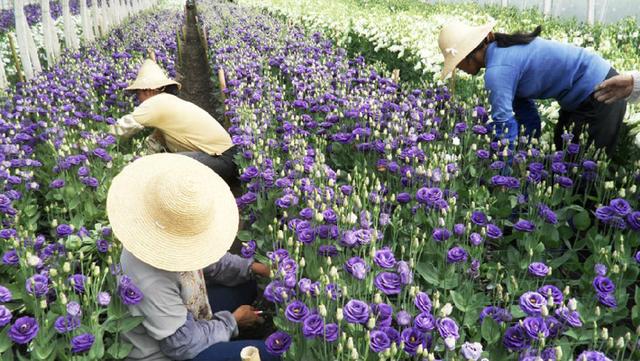
Difficulties, requirements and countermeasures in Eustoma cultivation?
Eustoma (Eustoma grandiflorum Shinn.), honored as the "thornless rose", is a herbaceous flower of the Gentianaceae family, genus Eustoma, also known as Texas bluebell, prairie gentian and lisianthus. It originates from the limestone-rich prairie and desert areas stretching from Nebraska and Colorado to Texas in the central United States. Eustoma has rich flower shapes and colors and a long vase life, and is currently a mainstream flower for weddings. In recent years, new cultivars have been continuously introduced, especially rose-shaped cultivars, which now dominate the market and have driven rapid growth in consumption. More recently, cultivars with carnation and lily flower shapes have been bred, and future market development should not be underestimated.
Eustoma is the cut flower species with the fastest-growing share of the world market in the past 20 years. As early as 2001, Japan's annual cut flower production had already reached 129 million stems, ranking fourth among cut flowers by sales value. European sales also reached 122 million stems, making it one of the top 10 cut flowers. At present, based on estimates from seed and seedling sales, the annual production in Yunnan Province, China is around 200 million stems, with an annual growth rate of about 15% or more, and it has risen to 4th place among major cut flowers.
Eustoma is recognized worldwide as one of the most difficult flowers to cultivate. Once problems arise during the growing process, either quality drops sharply or large numbers of plants die, causing severe yield reduction. During Eustoma cultivation, the main problems that easily arise can be summarized into 6 aspects, which can also be called the... 6 major difficulties under traditional cultivation conditions, namely: (1) The seeds are tiny, and the seedling-raising period is long and difficult; ... (2) It is sensitive to various stresses and prone to rosette dormancy, which greatly prolongs production time; (3) It is sensitive to high temperature and long-day conditions, and short-stem flowering that lowers quality easily occurs in summer and autumn; (4) Water and fertilizer management requires high precision, and careless management of either large or small seedlings can easily lead to seedling death or poor growth; (5) There are many types of soilborne diseases, and continuous cropping obstacles develop quickly; (6) There are many leaf diseases and pests, represented by downy mildew, making plant protection management relatively difficult. The editor analyzes each difficult issue in order to gain a deeper understanding of Eustoma cultivation techniques, turn difficulty into ease, and promote the sustainable development of the Eustoma growing industry.
1 Seedling raising
1.1 Difficulties in seedling raising
Among the world's top 10 cut flowers, Eustoma isthe only species propagated by seed. Eustoma seeds are extremely tiny, each weighing only 0.00005 g, carry very little nutrition of their own, and grow slowly in the early stage. Therefore, the seed seedling-raising period lasts as long as 3 months. Collecting F1 hybrid seeds is still the only propagation method, and no successful commercial asexual propagation model has yet been seen domestically or abroad. Throughthe editor'strials, both tissue culture propagation and cutting propagation can produce seedlings that flower, but there are still some problems that need to be overcome. There is a saying in Eustoma cultivation that "good seedlings are half the crop", meaning that once high-quality seedlings are raised, cultivation is already half successful. Eustoma seedling raising is a highly technical task, and depends even more on highly automated facilities, excellent environmental control and meticulous management. Although some flower growers raise their own seedlings, it is no longer common, and most rely on professional seedling companies, with a considerable portion even imported from the Netherlands.
1.2 Seedling-raising requirements
Eustoma seedling raising generally uses 200 to 860-cell plug trays as seedling trays, and light substrates such as imported peat, vermiculite and perlite as the growing medium. It requires modern equipment and facilities such as cold storage for germinating seeds, precision seeders, climate-controlled greenhouses, self-propelled watering booms, wet curtain cooling and artificial supplemental lighting, with relatively high investment costs. Eustoma requires the natural process of "low-temperature seedling raising, high-temperature flowering". Even with the above mechanical equipment, it still needs a cool climate, strict control of production conditions such as light, temperature, water, fertilizer and humidity, and mature experience and techniques. Improper management and substandard conditions during production can easily cause problems such as seedling rosetting, carrying diseases and pests, short-stem flowering and weak disease resistance.
2 Rosette dormancy
2.1 Factors causing dormancy
The wild characteristics of Eustoma indicate that rosetting is a growth state caused by adverse environments, and is a method evolved by Eustoma through long-term evolution to survive harsh conditions. Eustoma may undergo rosette dormancy during the seedling stage, planting stage, crop rotation stage, and even the bolting and flowering stage. In addition to temperature as the main factor, drought, root damage, dryness, strong light, use of seeds matured during high-temperature periods, and genetic characteristics of cultivars can also cause rosette dormancy. During artificial cultivation of Eustoma, if rosetting occurs, the cultivation time will be greatly prolonged, leading to severe yield reduction. After rosette formation, the leaves become dense, and if greenhouse management lacks experience, a low-temperature and high-humidity environment forms, which often induces outbreaks of downy mildew and in extreme cases can even lead to total crop loss.
2.2 Relationship between temperature and dormancy
Eustoma seedlings are very sensitive to temperature during the seedling stage, and temperature also has a decisive effect on the growth and development of adult plants. Temperature is the main factor causing rosetting. When the night temperature is 15°C and the air temperature is 25°C, Eustoma cut flower quality is best; when the average temperature is below 10°C, Eustoma growth almost stagnates; when the night temperature is below 8°C, most late or very late cultivars grow slowly and are prone to low-temperature-induced rosette dormancy, and flowering time can be delayed by 3 to 4 months; when the night temperature is above 23°C, most Eustoma cultivars are prone to high-temperature-induced rosette dormancy, sometimes not waking up again until the following spring, with production delays of more than half a year.
2.3 Methods to avoid rosette dormancy in Eustoma
(1) Cool-temperature seedling raising: raising seedlings after sowing in an environment with day/night temperatures of 23/18°C can avoid rosetting, or when seedlings have 2 to 4 pairs of leaves, growing them at 10°C... for 30 d can break rosetting. (2) Do not use seeds harvested under high temperature (day/night temperatures of 33/28°C). (3) In the early stage after field planting, avoid adverse environmental factors such as strong light, high temperature and water shortage. (4) Use plug tray seedling raising to avoid root injury during transplanting, and pay attention to water management so that seedlings do not age. (5) Choose early-maturing cultivars or those with low low-temperature requirements. (6) In high-temperature seasons, control the night temperature at 15 to 17°C; even if the day temperature reaches 30 to 33°C, rosetting will not occur.
3 Short-stem flowering
3.1 Occurrence period
Without heating and cooling equipment, flowering in winter is difficult, and short-stem flowering in summer and autumn is relatively easy to encounter in Eustoma production. Generally speaking, early-maturing cultivars flower early in winter and spring, but when planted in summer they are prone to short-stem flowering, and flower buds may appear when the plant is 20 cm tall. Flower buds or the growing tip must be repeatedly removed to extend stem length and barely make the grade. Late-maturing cultivars are difficult to flower in winter and early spring, but short-stem flowering occurs less often in summer and autumn. In this way, if two crops are produced year-round, it is relatively difficult to balance quality.
3.2 Causes
The flowering response of Eustoma is that of a quantitative cumulative relative long-day crop, meaning that under long-day and high-temperature conditions it flowers early, but plant height is relatively short and flower number is relatively small. Conversely, Eustoma can also flower under short-day conditions, but flowering is later, plant height is greater, and flower number is larger. The sensitive period for day length and temperature to induce flower bud differentiation in Eustoma is about 45 to 80 d after sowing, when there are 2 to 3 pairs of true leaves. At this time, encountering high temperature and long days easily advances flower bud differentiation, causing short-stem flowering after planting. If the period after planting happens to coincide with the summer high-temperature season, with long sunshine and an average temperature above 20°C, short-stem flowering is also easily caused. Under suitable growing temperatures, the longer the sunshine duration, the earlier flower bud differentiation and flowering occur, but the shorter the stem length, the fewer the branches, and the fewer the flowers on the same flowering stem. According to Japanese research, Eustoma can generally achieve flower bud differentiation when the day length exceeds 10.5 h. Under a night temperature of 15°C, the same cultivar treated with a 16 h day length flowers about 2 months earlier than one treated with an 8 h short day.
After planting, Eustoma is very sensitive to water shortage. Insufficient water supply can cause small growth, and excessively high soil EC can lead to poor nutrient uptake, root damage and possibly short-stem flowering.
3.3 Solutions
To solve the problems of short-stem flowering and rosette dormancy in Eustoma and achieve high-quality year-round production, the editor has 4 suggestions, namely to carry out production only inlow-latitude plateauclimatic regions, reduce seed costs, raise seedlings at cool temperatures, and use blackout heat-retaining curtains. In summer, apart from low-latitude plateau climatic regions such as Yunnan and severe cold regions in northern China, there is a high-temperature summer period, so year-round Eustoma production is not suitable. To ensure quality and facilitate management, foreign Eustoma production generally produces only 1 crop of flowers from 1 seedling; while in China all seeds are imported, making them expensive, and only by producing two crops of flowers from 1 seedling can costs be recovered. The Netherlands has a cool climate year-round and raises more than 200 million seedlings annually, supplying not only locally but also to China, Israel and Africa, which shows the importance of cool-temperature seedling raising. Using blackout heat-retaining facilities can keep warmth in winter and reduce day length in summer, and is a good way to simultaneously improve yield and quality.
4 Water and fertilizer management and soilborne diseases
4.1 Importance of water and fertilizer management
Eustoma is an introduced plant, and conditions under artificial cultivation differ greatly from its wild semi-arid environment. Eustoma is relatively sensitive to water supply. Insufficient supply causes growth stagnation, while excessive supply causes a severe decline in soil aeration, breeding diseases and causing gaps in the field. Water demand throughout the growth period is high at first and then declines gradually. That is, before planting and within 1 week after planting, relatively full irrigation should be given to maintain high soil moisture content. Once the root system has formed and gradually extends downward, attention should be paid to gradually reducing soil water content and increasing soil aeration. In any growth period, excessive water can cause direct death of Eustoma, accompanied by various soilborne pathogens spreading with water or multiplying in the soil, leaving hidden risks.
4.2 Reasons for high incidence of soilborne diseases
Eustoma has no resistance to the vast majority of soilborne diseases. Fusarium, gray mold, Phytophthora and Alternaria can all cause large gaps in Eustoma fields, while root-knot nematodes easily cause severe poor growth and induce other fungal diseases. Generally, flower growers use flower-vegetable rotation to grow Eustoma, and continuous planting generally does not exceed 1 year. According to the author's microscopic observations and field surveys, the most common among various soilborne diseases is Fusarium. Japan has now bred Fusarium-resistant cultivars, greatly reducing gaps in the field, but the growth vigor of resistant plants is still observed to decline significantly, and after the pathogen evolves, resistant cultivars may become non-resistant. Therefore, soil disinfection remains important. Root-knot nematodes are also very common under conditions lacking paddy-upland rotation and soil disinfection, and the disease develops rapidly, causing damage even in the first crop. When the water source for the cultivation site is surface water without disinfection measures, the possibility of various soilborne pathogens spreading through irrigation water also increases greatly.
5 Continuous cropping obstacles
5.1 Main causes of continuous cropping obstacles
Continuous cropping obstacles in Eustoma mainly manifest as high incidence of soilborne diseases, weak and thin plants, yellowing of old leaves, and yellowing and necrosis of roots. Continuous cropping obstacles in Eustoma can be caused by the massive accumulation of soilborne pathogens and nematodes in the soil, and are especially likely to occur when many gaps have already appeared in the previous crop. Soil compaction, excessively high soil EC, and high levels of toxic ions such as sodium ions and chloride ions are also important causes. Japanese research shows that Eustoma is more sensitive to EC in sandy soil than in clay soil. According to comparative trials measuring soil EC at a soil-to-water ratio of 1:5 and comparing flower seedling survival after planting, in sandy soil the EC value at which all plants survived was below 1.0 ds/m; when EC exceeded 1.0 ds/m, some plants died; and above 1.9 ds/m, all plants died. In clay soil, the EC value for full plant survival was the same as in sandy soil, below 1.0 ds/m; when EC exceeded... 1.0 ds/m, some plants died; and above 2.8 ds/m, all plants died.
Foreign research shows that the massive accumulation of allelopathic substances produced by Eustoma itself during cultivation is also an important cause of continuous cropping obstacles. Dutch Eustoma cultivation uses a model of producing 1 cut flower stem from 1 seed, harvesting 5 crops per year. Before each planting, regardless of whether many gaps have appeared, the soil is disinfected with high-temperature steam. One purpose is to remove allelopathic substances accumulated in the soil through high temperature.
5.2 Suggested solutions
Continuous cropping obstacles occur in many horticultural crops, but they are more prominent in Eustoma. This is closely related to traditional production methods, such as irrigation water carrying pathogens, lack of scientific soil testing and formula fertilization methods leading to rapid deterioration of soil physical and chemical properties, and excessive use of fungicide drenches reducing beneficial bacteria in the soil while resistant pathogens increase. Steam disinfection for continuous cropping obstacles has excessively high costs and low feasibility in China, while chemical disinfection with dazomet and metham sodium also has problems of high cost and unstable effectiveness. Rotation by flower growers is a relatively ecological and environmentally friendly method, but it clearly has problems of unstable economic benefits and production. International experience shows that continuous cropping obstacles cannot be solved by relying on a single agronomic measure; they must be addressed through multiple coordinated measures and integrated control, relying on scientific and technological innovation and the promotion and application of new technologies. In recent years, encouraging progress has been made internationally in ecologically friendly disinfection methods such as solar energy, biomass, and calcium cyanamide combined with flooding, and applied research and promotion should be vigorously carried out in China.
6 Aboveground diseases and pests
The main insect pests of Eustoma include Noctuidae pests, thrips, whiteflies, red spider mites and leafminers, all of which are relatively stubborn pests. Others such as aphids, white grubs and slugs also occur from time to time. Some pests are not only difficult to control and costly in terms of pesticide use, but the key point is that after Eustoma seedlings are infected, viral diseases are rapidly triggered, and the entire plant shows symptoms such as mosaic, yellowing and deformity, making normal flowering and sales impossible.
The main diseases of Eustoma include downy mildew, gray mold and powdery mildew, similar to most greenhouse flower crops, but its special feature is that after disease onset, not only are leaves damaged, but plant death is more likely. After Eustoma seedlings are infected with downy mildew, growth stagnates and they gradually die. If infected in the early stage after planting, growth stagnates; even after spraying to control it, repeated infection can still occur, resulting in poor growth and no yield. After Eustoma bolts, it is in a period of vigorous growth; because the soil is moist and the canopy is dense, infection of the root crown by gray mold can also cause plant death. When Eustoma encounters low-temperature and high-humidity conditions in the greenhouse at night during the flowering period, it is also prone to infection by downy mildew and gray mold. Eustoma originates from dry, low-rainfall prairie areas and prefers cool, dry conditions, with suitable growing air humidity between 50% and 75%. Because heated greenhouses easily develop low-temperature high-humidity and high-temperature high-humidity environments, very different from its native habitat, the possibility of Eustoma infection by diseases increases greatly.
7 Integrated solutions
The difficulties in the above 6 aspects are the problems faced by Eustoma under traditional production models, and they hinder the expansion of Eustoma production. General pesticide spraying and fertilization measures can no longer solve these problems. Taking downy mildew as an example, it is one of the more serious diseases during Eustoma cultivation in the Tonghai area of Yunnan Province. It develops acutely and rapidly. The key cause is that nighttime temperatures drop, and gaseous water in the humid air continuously precipitates, forming condensation water on the leaves. It is most likely to spread massively during the seedling stage when the soil is moist and during the harvest period when plants are dense. Spraying alone simply cannot control it. The best and most fundamental solution is to prevent condensation on the leaves through heating and heat-retaining measures.
In summary, Eustoma has broad market prospects and great potential. As labor prices continue to rise, traditional production methods carry high risks and unstable benefits, and the time has come for transformation and upgrading. To develop new Eustoma production, it should follow the requirements of industrialized and intensive modern flower production and adhere to the concepts of scientific and technological innovation and ecological environmental protection. It is necessary to comprehensively consider the dialectical relationships of mutual restraint and mutual promotion among pathogens, hosts and the environment, and to design production systems by coordinating ecological factors such as light, temperature and humidity, soil, fertilizer and water, and diseases, pests and weeds. Only through standardized, specialized and large-scale cultivation can stable returns be obtained and sustainable development achieved.
Difficulties, requirements and countermeasures in Eustoma cultivation?