-

Detailed Explanation of Key Technical Points for Scientific Application of Fishery Drugs
Fishery drugs are all substances used to prevent, control and treat diseases, pests and harm of aquatic animals and plants, promote healthy growth of cultured species, enhance the body's disease resistance and improve the quality of aquaculture water. Here we specifically introduce several correct medication methods for the prevention and treatment of aquatic animal diseases: 1. Apply drugs according to the disease. There are many varieties of fishery drugs, and their physical and chemical properties differ. Therefore, before using fishery drugs, the main diseases and pathogens of the cultured prevention and treatment targets must first be accurately diagnosed, a treatment plan must be made, and then a suitable drug variety must be selected for targeted treatment; otherwise, it will not only fail
-
Key Technical Points and Detailed Explanation of Epidemic Prevention Methods for Swine Disease Immunization
Reference Immunization Program 1. Vaccines Recommended for General Inoculation 1.1 Classical Swine Fever Immunization: Newborn piglets receive their first vaccination with the conventional dose of lapinized attenuated classical swine fever virus vaccine at 20 days of age. (It is best to promote zero-time pre-immunization.) Piglets at 50-60 days of age receive the routine second immunization. Selected replacement pigs receive a third immunization before participating in mating. 1.2 Swine Paratyphoid Immunization: The entire herd of adult and replacement pigs are immunized at conventional doses in March of spring and September of autumn. Pig
-
What are the key technical points of pig health inspection?
At present, pig production in China is still dominated by smallholder backyard farming. However, because most pig raisers lack scientific pig-farming knowledge and concepts, the level of technology in production and management - including pig breeds, feed formulation, feeding management and disease prevention and control - is very low. Pig production has long suffered from problems such as slow weight gain, low feed conversion efficiency, low profitability and even losses. Keepers and veterinary technicians should patrol and observe the health of the herd every day and deal with any problem promptly. To properly check whether a pig herd is healthy, the following technical points generally need to be mastered:
-
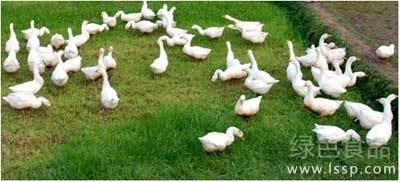
Technical points of "planting grass to raise geese" for improving economic benefits
Technical points of "planting grass to raise geese" for improving economic benefits
-

How to germinate chili pepper seeds? Methods and key technical points explained
Chili pepper seed germination methods
-
How to grow spring-planted soybeans in Northeast China? A detailed explanation of the technical guidance
In the autumn and winter of last year, precipitation in Northeast China was lower than normal, soil moisture was insufficient, and drought was relatively severe. This spring there has been more rain and snow, temperatures began to rise rapidly in early April, and temperature and precipitation are close to normal. The Soybean Expert Steering Group of the Ministry of Agriculture, together with the National Agricultural Technology Extension Service Center, based on full investigation, proposed the following technical guidance for spring soybean planting: 1. Strictly select excellent varieties. Because of the dry climate last autumn, soybeans may not have matured normally physiologically at harvest, and mechanical threshing increased the possibility of damage to the seed embryo
-
Key Technical Points for Spring Soybean Sowing in a Year of Severe Drought in Northeast China
Current drought situation in Northeast China and technical guidance for spring soybean sowing: I. Precipitation and temperature conditions last winter and this spring. In the autumn and winter of last year, the drought in Northeast China was severe, precipitation was lower than normal, and soil moisture was insufficient. From January to October 2007, the average precipitation in Heilongjiang Province was 402 mm, 20% less than the same period in previous years. In addition, this year's widespread "dry sealing of the soil" at the onset of winter was not conducive to soil moisture conservation. Since the beginning of winter, precipitation in southern Qiqihar, most of Daqing, the Hegang area, and some counties and cities in Jiamusi has been more than 90% less than the same period in previous years; other areas have had 10% to 90% less. In January 2008, the average precipitation across Heilongjiang Province was only 0.1 mm, 97% less than the same period in previous years, with most of the Songnen Plain and the western Sanjiang Plain receiving no precipitation at all for the entire month. After entering February, precipitation in various places continued to remain low. Snow depth across Heilongjiang Province also dropped significantly. Compared with the same period in previous years, snow depth in most areas of the province was about 25 cm less. In 2008, the area of cultivated land affected by drought before sowing in Heilongjiang Province may reach 50 million mu. In addition, the continuous warm winter was extremely favorable for soybean pathogens and pest eggs to survive the winter safely, and soybean diseases and insect pests may occur more heavily this year. The spring drought situation in Inner Mongolia is similar to that in western Heilongjiang Province.
-
Key Technical Points and Management Methods for Winter Soybean Cultivation
1. Sowing time. The sowing window for winter soybeans is quite flexible; yields do not differ noticeably when sowing from early April to early June. In practice, to ensure winter soybeans obtain a suitable stand of basic seedlings, in addition to correctly determining the number of hills per mu to provide the density basis, sowing should generally be done during the period before the corn canopy closes, so that the soybean seedlings have already formed the necessary vegetative mass before shading intensifies, which helps ensure the basic seedling stand. In strip-planting areas, it is best to sow together with corn or slightly later, that is, in mid-to-late April; in sole-cropping areas after the small spring crop, it is best to sow in early-to-mid May. 2. Planting method. Winter soybean planting method
-
Control Methods and Technical Key Points for Soybean Bacterial Blight
Soybean bacterial blight is a disease that occurs commonly in soybean-growing regions, reducing the percentage of fully filled seeds, lowering the 100-seed weight, and decreasing both quality and yield. Leaf lesions are initially round, brown to dark brown; as the lesions enlarge, the center turns black, the lesions do not appear raised, and diseased leaves drop easily. Lesions on stems and pods are brown and round, later becoming spindle-shaped. The seed surface is coated with a layer of bacterial slime, often appearing at one end of the seed, and its shape closely resembles a "frog eye." Diseased seeds are shrunken, and the pathogen overwinters on diseased leaves, stems, pods and seeds.
-
How to cultivate Schisandra chinensis? Detailed explanation of planting methods and technical key points
Schisandra is divided into southern Schisandra and northern Schisandra, both belonging to the Magnoliaceae family. They are perennial deciduous herbaceous plants, and their roots, bark, and stems can all be used as medicine, with very high economic and medicinal value. The following introduces new techniques for cultivating Schisandra: For seedling raising, first wash the fruit with water and remove the shriveled and thin fruits. In early February, soak the fruits in warm water for 3 days to 5 days, rub off the pulp, select plump seeds, then mix them with three times the amount of wet sand and bury them outdoors. The pit depth is about 0.6 m, and the diameter can be determined according to the amount of seeds. Pile
条件筛选