-

How to Store and Preserve Peaches? Key Technical Points Explained
Some peach varieties ripen in the high-temperature summer season, and their harvest maturity and eating maturity are reached almost simultaneously; in addition, the fruit is soft and juicy with poor storability. However, storability varies greatly among varieties. Honey peaches have the worst storability and can only be stored for about 1 week, while late-maturing varieties such as Fei peaches, winter peaches and Qingzhou honey peaches are more storable. The problems that peaches are prone to during storage include: over-ripening and softening, rot caused by pathogens, and chilling injury. The main technical measures adopted in production are: 1. Immediately pre-cool the fruit after harvest: immerse the fruit in 0.5-1°C
-
Potato Intercropping Cultivation Models and Key Technical Points
To improve land utilization and increase farmers' income, several intercropping and relay-cropping models with potato as the main crop are introduced here, for the reference of farmer friends and grassroots leaders in adjusting the agricultural structure. 1. Potato-cotton. Potatoes are sprouted in late January and sown in mid-to-late February, using plastic film mulch cultivation. The varieties selected are virus-free potatoes Zheng Yin No. 5 and Zheng Yin No. 7, bred by the Zhengzhou Fruit Research Institute of the Chinese Academy of Agricultural Sciences; for cotton, the large-plant, disease-resistant Biao Za A1 is preferable. Potatoes are planted in double rows on high ridges, with wide rows of 8
-
Detailed Explanation of Key Technical Points for Potato Sprout Planting
In order to prevent potato degeneration, prevent ring rot, and solve the problem of insufficient supply of improved seeds, we conducted a sprout planting experiment from 2000-2002 using the potato variety Longshu No. 3. The results were: light field disease, a yield of 3600 kg/mu, large and uniform tubers, and a high marketable rate. The cultivation techniques are introduced as follows: (1) Raising seedlings. 1. Selecting land and making beds. Choose a plot with flat terrain, loose soil, and convenient water source as the seedling-raising site. The seedbed width is 1.2 m, and the length is determined according to the planting area.
-
How Are Warm-Water Fish Harvested? Key Technical Points Explained in Detail
In summer and autumn, the fish-carrying capacity of intensive culture ponds reaches saturation, and some adult fish have reached marketable size and can be harvested for market. This not only benefits fish growth and the rearing of large-size high-quality fingerlings, but also reduces the fish-carrying load of the pond. According to production practice, the following key techniques should be grasped when harvesting warm-water fish. 1. Harvesting time is generally chosen in clear, fine weather, when the air temperature is cool, before and around dawn in the latter half of the night when fish are not gasping at the surface, or in the morning when the water temperature is relatively low (the specific time is determined according to the distance from the market and @#@136@#@ time). At this time, seining to harvest fish has little impact on the pond fish, and the freshly caught fish can be supplied to market in time. In overcast, muggy weather, or when pond fish show signs of gasping at the surface or fish diseases occur, seining should not be carried out, so as to avoid causing a large number of fish deaths. Seining cannot be done in the evening; otherwise it will cause premature convection between the upper and lower water layers, accelerate the consumption of dissolved oxygen in the pond water, and cause the pond fish to gasp at the surface.
-
Pollution-Free Fish Disease Prevention and Control Methods and Technical Key Points
Animal-Plant Symbiosis: Aquatic plants and fish coexist in the same pond, and the fish rarely get sick. The aquatic plants planted in the fish pond are rice or lotus root, oriented east-west, with a wide row spacing (greater than 33 cm), occupying no more than 50% of the total water area, so that the lighting effect is good. The water depth depends on the water tolerance of the aquatic plants; rice is generally within 30 cm, while lotus root can generally reach over 50 cm. The farmed fish can be conventional or famous, special, and excellent new varieties. The farming method can be fry rearing or grow-out fish farming. Because residual bait, fish feces, and other matter deposit at the bottom of the pond, ferment, and rot, not
-
Fast Breeding Methods and Key Technical Points for the Golden Coin Turtle
The three-striped box turtle (Cuora trifasciata), also known as the golden coin turtle, is a national second-class protected animal with high medicinal value. As wild turtles are becoming increasingly scarce, our farm carries out artificial breeding to protect wild resources. The techniques are as follows: 1. Construction of the turtle pond. Depending on the type of turtle pond, one may choose the burrow style or the land-and-water combined style. Since the latter is convenient to manage, it is more readily adopted. It consists of a water pool, land area, egg-laying pool and turtle nest. The turtle nest must be shaded from light and must prevent escape, prevent predators and be easy to clean and replace. The rearing density for adult turtles is about
-
How to prevent and treat black disease in sheep? Detailed explanation of key technical points for prevention and treatment
Black disease in sheep, also known as infectious necrotic hepatitis, is an acute, highly fatal toxemia of sheep. Both sheep and goats can be affected. Expert disease analysis: (1) Pathogen: The pathogen of this disease is Clostridium novyi type B, a Gram-positive, large bacillus with bluntly rounded ends, mostly occurring singly or in pairs, with a few 3-4 organisms forming short chains. Its toxins can be classified into types A, B, and C. (2) Epidemiological characteristics: It mainly occurs in spring and summer in low-lying, damp areas where liver flukes are prevalent. Clostridium nov
-
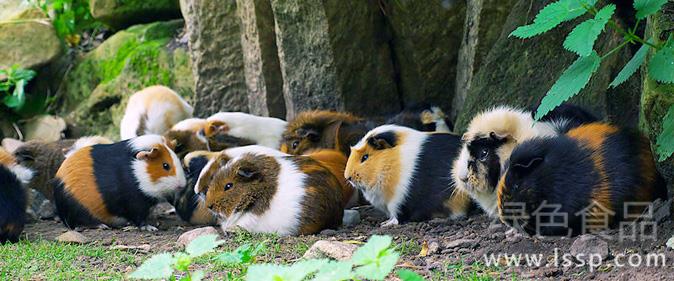
Detailed Guide to Guinea Pig Farming: Low Cost, Low Technical Difficulty
Introduction to Guinea Pig Farming Techniques: Low Cost, Low Technical Difficulty
-
Detailed Explanation of the Technical Regulations for High-Yield Cultivation of Soybean with Sparse Planting
Technical Regulations for High-Yield Cultivation of Soybean with Sparse Planting: 1. Selection of dedicated varieties: Choose branching-type varieties with tall and luxuriant plants, strong stalks that do not lodge, a long flowering period, large flower clusters, a high pod-setting rate, tolerance to high fertilizer and water levels, and medium or medium-late maturity. 2. Land selection, tillage and fertilization: Choose flatland plots with high soil organic matter content and good moisture conditions, plots with a previous crop, and plots of equal fertility; the best previous crop is corn stubble, and organic fertilizer should be applied in increased amounts. 3. Sowing: Carefully select seeds. Seeds should be free of pests and diseases, uniform in size and plump. The sowing period is generally when the 5 cm soil temperature steadily
-
Key Technical Points for Scientific Management of Soybeans Adapted to Seedling Conditions
Liang Huizhen, associate researcher at the Cash Crop Research Institute of the Provincial Academy of Agricultural Sciences, said that at present most areas of our province's soybeans are at the flowering and podding stage, which is the period of greatest nutrient and water uptake and also the peak period of root nodule nitrogen fixation. The main goal at this stage is to promote more flowering and more pod setting, prevent premature senescence, control excessive vegetative growth, increase flowers and preserve pods, reduce shedding, and lay the foundation for a high yield. Due to the tight time schedule at sowing, summer soybeans often receive no or little basal fertilizer, and by the time the soybeans set pods, nutrient deficiency occurs, so flower and pod fertilizer should be applied promptly. At
条件筛选