-
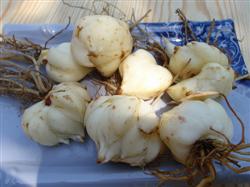
Detailed Explanation of Edible Lily Planting Methods and Technical Points
How do you plant edible lilies? How do you fertilize lilies and control pests and diseases? Please provide guidance. Edible lily planting can be carried out by referring to the following methods: 1. Site selection and land preparation: Choose fertile soil, high and well-drained terrain, and loose sandy loam for cultivation. While preparing the land, apply 2000 kg of organic fertilizer per mu plus Yangfeng...
-
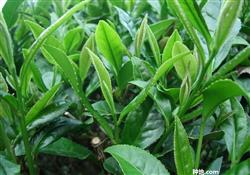
How are biological pesticides used on tea plants? Detailed explanation of methods and technical key points
How are biological pesticides used on tea plants? Please advise. The current tea market, especially tea exports, has very high requirements for tea quality and safety. Biological pesticides, including microbial pesticides and plant-derived pesticides, do not pollute tea or the environment, have very low toxicity to humans and livestock, and leave no toxic residues, so...
-
Detailed Explanation of Scientific Topdressing Methods and Technical Key Points for Tea Plants
How to scientifically topdress tea plants? Please provide guidance. Tea fertilization should, on the basis of adhering to the combination of organic fertilizers and inorganic fertilizers, control the total amount of nitrogen fertilizer, especially the amount of nitrogen fertilizer applied in the later stage, so as to improve tea quality. At the same time, pay attention to the combined application of the three major nutrients nitrogen, phosphorus and potassium and the balanced application of medium and trace elements. It is strictly prohibited to apply...
-
Tea Autumn Fertilization Methods and Technical Key Points
How to fertilize tea in autumn? Please advise. The tea garden is currently at a good time for fertilization. Based on my own experience, I will briefly introduce the issue of autumn fertilization in tea gardens. In production, many farmers are accustomed to fertilizing only when the tea grows in spring, do not attach much importance to autumn fertilization, and like to apply urea while neglecting phosphorus and potassium fertilizers and medium...
-
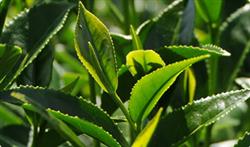
Tea Plant Winter Management Methods and Technical Key Points
How to manage tea plants in winter? Please advise. To make productive tea gardens sprout early and abundantly the following year, with strong, uniform buds, high yield, excellent quality free of pollution, and to sell at a good price when reaching the market early, strengthening winter management is key. As winter arrives, tea plants gradually stop growing and enter dormancy. At this time, the tea garden should carry out tea plant pruning, applying sufficient base fertilizer, pest and disease prevention...
-
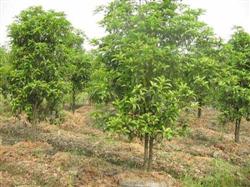
Detailed Explanation of Osmanthus Tree Grafting Methods and Technical Key Points
Osmanthus is also known as "Yuegui", "Muxi", "Yangui", "Jiulixiang", and "Qilixiang". The leaves are opposite, mostly elliptical or long-elliptical, with smooth, leathery surfaces and serrated edges. The tree crown is round-spherical. The trunk is rough and grayish-white. Flowers cluster together, 3 to 5 growing in the leaf axils, blooming from September to October, mostly bearing...
-
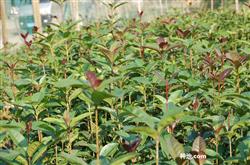
Detailed Explanation of Seed Sowing and Seedling Raising Methods and Technical Points for Osmanthus Trees
How to sow seeds and raise seedlings of osmanthus trees? Please advise. Osmanthus is generally propagated by cuttings, while single-trunk osmanthus is mostly propagated by sowing. The following is an introduction: 1. Seed collection. Osmanthus flowers from September to October, and the fruit matures from late March to late April of the following year. When the fruit enters the maturity stage and the peel gradually changes from green to purple-black, it can be collected...
-
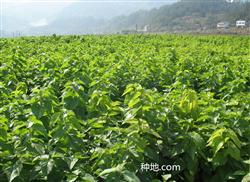
What are the key technical points for spring management of mulberry trees?
How should mulberry trees be planted to achieve high yields? Mulberry is a perennial woody plant. Mulberry leaves are the main nutritional organ of the mulberry tree and also the primary "food" for silkworms. Therefore, the amount of leaves produced by mulberry trees will directly affect the healthy growth of silkworms. High-yield cultivation techniques for mulberry leaves can be considered from the following aspects. 1...
-
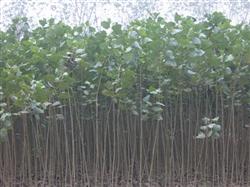
Detailed Explanation of Summer Poplar Seedling Cultivation Methods and Technical Key Points
Pre-planting preparation: select fast-growing, high-quality, high-yielding, and highly adaptable varieties, such as 80351, Populus × euramericana '72', Populus × euramericana '69', etc. From late July to late September each year, propagation begins when the cuttings are semi-lignified. For mass propagation, use mainly the branch shoots and thin, weak, inferior seedlings of the current-year seedlings in the nursery. Make beds 1 m wide, with length based on the number of cuttings, and 20 cm high. ...
-
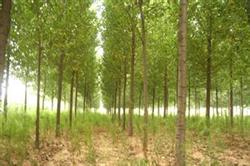
Poplar Pest Control Methods and Key Technical Points
Poplar pests can be divided into the following major categories based on their mode of damage and the corresponding control measures: 1. Leaf-eating pests: mainly including Clostera anachoreta (poplar prominent moth), Micromelalopha troglodyta (poplar small prominent moth), Cerura menciana (poplar two-tailed prominent moth), Botyodes diniasalis (poplar yellow leaf-roller), slug moths, and scarab beetles. Poplars from the seedling stage to the timber stage are all damaged by the above pests, which feed and cause leaf defects or completely strip the foliage...
条件筛选