-
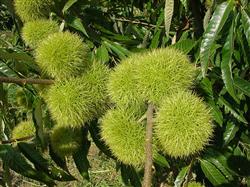
How to manage chestnut trees during the fruit expansion period? Key technical points explained in detail
How to manage chestnut trees during the fruit expansion period? Please give an introduction. Summer and autumn are the period when chestnut fruits expand rapidly, so fertilizer and water management and pest and disease control must be strengthened to allow the fruits to expand fully, the flesh to be plump, no fruit drop in the middle period, and good fruit quality, thereby achieving high yield and quality. The specific management measures are as follows:...
-
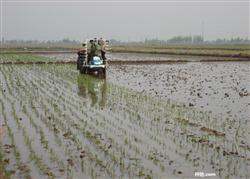
How to transplant rice seedlings properly? A detailed explanation of the key technical points
How to transplant rice seedlings well? Please guide: according to climate characteristics, the following work should be done well in rice transplanting techniques: 1. Transplant early at the right time, speed up progress, and expand the transplanting area. When the daily average temperature steadily passes 13°C and the field water temperature reaches 18°C, transplanting can begin. This year transplanting started on May 8 and [ended] before May 28...
-
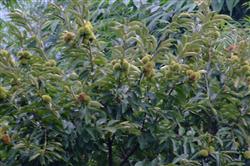
Correct Methods and Technical Key Points for Applying Biogas Fertilizer to Chestnut Trees
How should biogas fertilizer be applied to chestnut trees? Please provide an introduction. Chestnut growth requires nutrient elements such as nitrogen, phosphorus, potassium, calcium, iron and boron, and the soil must be permeable and well aerated, with good water and fertilizer retention. Using biogas fertilizer to grow chestnuts can meet most of the nutrients needed for their growth. Biogas fertilizer is rich in elements such as nitrogen, phosphorus, potassium, calcium, magnesium and iron...
-
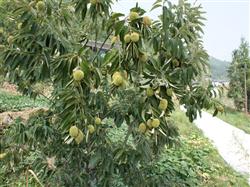
Chestnut Tree Summer Fertilization Methods and Technical Key Points
How should chestnut trees be fertilized in summer? Please provide guidance methods. For growing chestnut trees in summer, the following two fertilization methods can be used as reference: Soil fertilization method: For chestnut orchards with thin, poor soil and severe fertilizer deficiency, the soil fertilization method produces better results. Dig a circular ring trench within the drip line of the chestnut tree canopy for fertilization, with a trench width of 2...
-
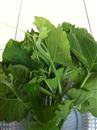
Cultivation Methods and Key Technical Points for Edible Pumpkin Shoots
How are edible pumpkin shoots cultivated? Please give some guidance. During cultivation, pumpkins are generally not treated with pesticides, and their young fruit, mature fruit, flowers, leaf stalks, and tender shoots can all be eaten as vegetables. Stir-frying the tender shoots in particular yields a mild, crisp, and tender texture with a fresh, delicious flavor, truly an excellent vegetable that is highly favored by consumers. Yuan'an, Hubei Province...
-
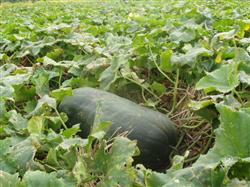
Spring Open-Field Winter Melon Planting Methods and Technical Key Points
How is winter melon planted in open fields in spring? How is it managed after planting? For spring open-field winter melon planting, you can refer to the following methods: 1. Variety selection: choose mid- and late-maturing varieties with good plant vigor, relatively weak branching ability, strong resistance to sunscald, large fruit type, and a waxy bloom, such as Beijing Ground Winter Melon and Fenpi Winter Melon. Generally...
-
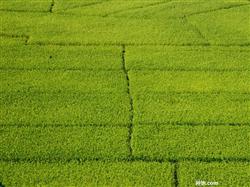
Correct Methods and Technical Key Points for Rice Field Drying
How to balance fertilization in rice? Please advise. Balanced fertilization technology for rice is a scientific fertilization method that involves understanding soil fertility status through soil testing, and based on information such as the crop's nutrient requirements, implementing rational fertilizer ratios and application to promote high yield, high quality, and high efficiency in crops. It includes combining organic fertilizer with chemical fertilizer, nitrogen fertilizer...
-
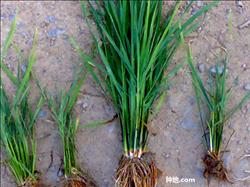
How to manage rapeseed cultivation? Key technical points explained in detail
How to prevent and control rice "sitting stump" disease? Please help. Rice "sitting stump" disease, namely rice red blight, is a common physiological disease in rice production. It generally begins to develop about 15 days after transplanting. If a cold wave occurs after transplanting, in cold-waterlogged fields, muddy fields, deep-water fields, fields where undecomposed organic fertilizer has been applied, fields with one-sided application of single-element chemical fertilizers, or fields lacking potassium...
-
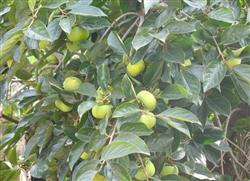
What are the key technical points for summer management of persimmon trees?
How should persimmon trees be managed in summer? Please provide guidance. The summer management methods for persimmon trees can refer to the following points: 1. Fruit thinning. For astringent persimmons, from mid-May to early June; for sweet persimmons, from early June to early July. After the physiological fruit drop ends, select and keep healthy young fruits free of pests and diseases at a ratio of 20-25 leaves to one fruit. What should be removed are deformed fruits, pest- and disease-damaged fruits, fruits set on branches less than 15 cm long or with fewer than 5 leaves, and fruits on the base and tips of bearing branches.
-
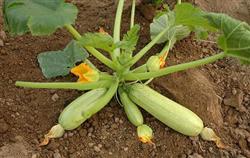
Zucchini Fall Planting Methods and Key Technical Points
How do you plant zucchini in fall? What does the planting process look like? For fall zucchini planting, you can refer to the following methods: Select good varieties Choose varieties such as Cuiying 101, Yinqing Yidai, Yuguan, Yuchun, Yunu, and others. Pre-sowing preparation Choose fertile vegetable garden soil for cultivation, with the previous crop preferably non-cucurbit crops such as corn or solanaceous vegetables...
条件筛选