Key Technical Points for High-Quality, High-Yield Cultivation of Wood Ear Mushroom (Black Fungus) on Sawdust Bags
The wood ear mushroom (Auricularia auricula-judae) is a precious native specialty product and a traditional export product of China, and it is also one of the main artificially cultivated edible fungi in China, ranking first in the world in both yield and quality. China's wood ear-producing regions are widely distributed, and because of its low production cost, short cycle and quick returns, it is deeply welcomed by the vast number of mushroom growers. Taking bag cultivation as an example...
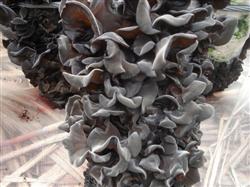
The wood ear mushroom (Auricularia auricula-judae) is a precious native specialty product and a traditional export product of China, and it is also one of the main artificially cultivated edible fungi in China, ranking first in the world in both yield and quality. China's wood ear-producing regions are widely distributed, and because of its low production cost, short cycle and quick returns, it is deeply welcomed by the vast number of mushroom growers. Taking bag cultivation as an example, a 55 x 15 cm bag generally costs 0.6-0.7 yuan per bag; in the first year, including equipment investment, the cost is about 1 yuan per bag, and it can produce about 75 g of dried wood ear. Calculated at 50 yuan per kg, each bag can yield a net profit of more than 2 yuan. One mu of land can hold 10,000 bags, and after harvesting it does not affect rice or other crops. In places with irrigation water available, two crops can be grown per year, and one mu of land can yield a profit of 40,000 yuan. However, bag-cultivated wood ear has relatively weak mycelial growth and poor mold resistance, is easily contaminated by mold during cultivation, and is not tolerant of high temperatures, so its production is greatly constrained. Based on this biological characteristic of the wood ear mushroom and combined with the local climate features, we have carried out many years of experimental research and mastered a set of high-quality, high-yield cultivation techniques for bag-cultivated wood ear suitable for local cultivation, which has already been promoted and applied over a large area, achieving remarkable economic and social benefits. The relevant key cultivation technical points are introduced as follows:
1 Environmental Conditions for the Growth and Development of Wood Ear Mushroom
1.1 Temperature The wood ear mushroom belongs to the medium-to-high temperature type. A temperature of about 20-28°C is relatively suitable for mycelial growth and fruiting body formation. The optimum temperature for mycelial growth is 25-28°C. Above 32°C, mycelial growth is inhibited; below 20°C, mycelial growth is slow.
1.2 Humidity During the mycelial culture stage, an environmental humidity of 50%-70% is sufficient. During fruiting, the environmental humidity is required to reach above 80%. The moisture content of the substrate should be on the high side so that there is sufficient water in the later fruiting stage; generally it should reach about 65%. This can be judged by feel: squeeze the substrate tightly in your hand, and it is ready when water droplets appear between the fingers but do not drip.
1.3 Air The wood ear mushroom is an aerobic fungus. Sufficient oxygen is needed for mycelial growth and fruiting body development. When the carbon dioxide concentration is too high, the mycelium is not easily restored and grown.
1.4 Light Light is not needed during mycelial growth; cultivate the logs in dim light. When the mycelium has grown well and fruiting is about to begin, strong light stimulation is needed to induce fruiting.
1.5 pH The suitable pH for wood ear mycelial growth is 6-6.5. Generally, when mixing the substrate, the pH should be brought to about 8, and after sterilization the pH naturally drops to 6-6.5.
2 Cultivation Season
The cultivation seasons for bag-substrate wood ear are autumn and winter. For winter cultivation, the season is generally arranged from late October to the end of November for making the logs; for autumn cultivation, the season should be arranged from late August to early September, or bag-making should begin when the maximum indoor temperature in summer is below 30°C. The standard is to count back 60-70 days from when the average daily temperature is 20°C. Making the bags late will affect yield.
3 Selection of Substrate
Use oil-free hardwood sawdust, corn cobs, cottonseed hulls (must be new material that has not become moldy), wheat bran, rice bran, gypsum powder, brown sugar, quicklime, etc. as the substrate.
4 Several Commonly Used Formulas
(1) Mixed hardwood sawdust 81.5%, bran 10%, cornmeal 5%, soybean powder 2%, quicklime powder 0.5%, gypsum powder 1%:
(2) Mixed hardwood sawdust 81.5%, bran 15%, soybean powder 2%, quicklime powder 0.5%, gypsum powder 1%; if conditions permit, 20%-30% cottonseed hulls may be added;
(3) Mixed hardwood sawdust 70%, cottonseed hulls 17%, bran 10%, brown sugar 1%, gypsum 1.5%, quicklime powder 0.5%;
(4) Mixed hardwood sawdust 80%, bran 8%, rice bran 10%, brown sugar 1%, gypsum powder 1%.
(5) Mixed hardwood sawdust 80%, bran 7.5%, rice hull bran 7.5%, rice bran 3%, brown sugar 1%, gypsum powder 1%.
For the above formulas, the ratio of material to water is 1:1-2.
5 Mixing the Substrate and Filling the Bags
There are three requirements for mixing the substrate: first, it must be uniform (generally dry-mix 3 times); second, the moisture content must be controlled (mix 3 times after adding water); third, the pH must be appropriate. When mixing, first mix dry, then mix wet, and be sure to mix thoroughly; otherwise sterilization will not be thorough and it will easily be infected by contaminant fungi. If the formula contains cottonseed hulls, they must first be soaked in lime water; if soybean powder is added, it must be ground fine to avoid large particles. The rest of the mixing method is the same as for shiitake mushroom logs. For moisture content, the culture medium should form a ball when squeezed in the hand, and when rubbed with the fingers, the fingers should feel moist.
The plastic bags used for cultivating wood ear are 15 x 55 cm polyethylene bags. Each bag is filled with 800 g of dry material to make a wood ear log. Since the ratio of material to water is 1:1-1:2, after filling, the bag should weigh 1.5-1.7 kg.
6 Sterilization
During sterilization, the logs in the container must not be arranged too densely, so that the steam can flow freely and sterilization is thorough. When the temperature reaches 60-65°C, release cold air once. When the temperature reaches above 98°C, maintain it for 15-16 hours. During sterilization, prevent air leakage; otherwise the required temperature cannot be reached inside the container and the sterilization effect will be affected.
7 Inoculation
Inoculation can be carried out when the logs have cooled to below 25°C. The variety "Xinke No. 5" is mainly used. Generally, about one jin of spawn per package can inoculate 25-30 bags. Inoculation and disinfection must be strict. The hands of the inoculation personnel should be wiped with 75-degree alcohol. The inoculation box should be disinfected with a disinfectant. After the disinfectant is ignited and the box is sealed, enter the box for inoculation 30 minutes later. One box of logs must be fully inoculated within one hour. During inoculation, take care to damage the spawn as little as possible and avoid pressing hard with the fingers, which would cause the spawn not to germinate.
8 Mycelial Culture of the Fruiting Bags
First, do a good job of cleaning and sanitation in the culture room. In the culture room, 5-7 days before stacking the logs, use 250 mL of cresol soap solution diluted with 20-25 jin of water for spray disinfection. Two days before stacking the logs, use formaldehyde and potassium permanganate for sealed smoke disinfection. In the early stage, mycelial growth should be controlled or selected to occur at 20-30°C, and try to avoid temperatures below 20°C or above 30°C (above 30°C affects mycelial growth and the finished-product rate; below 20°C the mycelium recovers and colonizes the substrate slowly, also affecting the survival rate). For the first ten days of culture, it is best to maintain 25-28°C, and after ten days maintain 20-23°C. The humidity in the culture room should be kept below 70%. During the mycelial growth period, do a good job of ventilation and air exchange according to the temperature and air conditions in the culture room. When the mycelium has spread to a diameter of 8-10 cm, the outer bag can be opened to increase oxygen. Later, when mycelial growth is slow, it is advisable to use a group needle to puncture holes for oxygen supplementation, but the amount should not be too much. The light in the culture room should be kept dim. After about 50-60 days, when the mycelium has filled the bag, culture for a few more days as appropriate; when the bag becomes soft, light can be used to induce fruiting.
During the log culture period, if patches of yellow, red, green, blue-green or other colors are found in the bag, these are contaminant fungi. For milder cases, alcohol can be injected into the affected area and the bag moved to another room for separate culture. For seriously contaminated bags, especially those infected with orange-red Neurospora, immediately isolate them and bury them deep or burn them far away, so as to prevent spread and environmental contamination.
9 Preparation of the Fruiting Site
The cultivation site for bag-grown wood ear should be chosen as a clean place with good ventilation, abundant sunlight and close to a water source. Turn the soil from the paths onto the beds to form convex beds (turtle-back shape). The soil should be broken up, and it is best to spread a small amount of weeds or rice straw, or use plastic film with holes punched in it to cover the beds, to prevent mud and sand from sticking to the wood ear on rainy days. The bed width is about 1.2 m, and the length depends on the site. Leave a 60 cm path in the middle. Stretch a wire or use small wooden poles in the bed as slanted support for the logs. Arrange them in the open air in a herringbone pattern, with a density the same as or slightly sparser than that for shiitake, generally with 12-15 cm between bags.
10 Fruiting Management
For spring cultivation in early February or autumn cultivation in late October, move the logs with fully grown mycelium to the fruiting site. Choose a cloudy or sunny day for arranging them. Use 6 mm iron nails on a nail board designed in advance to punch holes around the bag with grown mycelium (generally the nail board has a plum-blossom pattern spacing of 1.5-2 cm), with 170-180 holes per bag, depth 1-1.5 cm. After punching, the main management task is to preserve moisture, prevent the hole openings from drying out, and promote mycelial recovery. When air humidity is insufficient, water can be poured into the bed furrows and paths to increase humidity. After about 10 or more days, ear buds form. During the ear bud stage, do not spray water directly on the ear buds; only when the ear pieces are relatively large may water be sprayed directly on the ear pieces. After the ear buds open into pieces, spray once in the morning and once in the evening. When spraying, temperature must be taken into account: do not spray when the temperature is above 25°C. Keep alternating dry and wet conditions to promote the growth of the ear pieces. Around the fruiting shed and the paths, spray carbendazim or mushroom mold-killing solution once a week to keep the cultivation environment clean and sanitary and reduce opportunities for contamination by foreign fungi.
11 Harvesting
When the wood ear has grown to 80% maturity (when the ear pieces are fully expanded), harvest it. Stop spraying water two or three days before harvesting. Harvest when the ear pieces have shrunk and dried. Pick them all cleanly in one go and remove the residual ear bases. After harvesting, stop watering for 7 days, then resume water spraying management a week later to promote continued fruiting. After the second harvest of wood ear, the bags lose a relatively large amount of water and should be properly injected with water. When injecting water, it is best if the air temperature is below 25°C; otherwise they are prone to contamination by foreign fungi. Generally, one bag can be harvested 3-4 times, with an interval of about 15 days between batches. The first batch has a high yield, and the latter two batches are lower. After harvesting, dry the wood ear in the shade; it is best to dry it in a shaded place, and it must not be exposed to strong sunlight. After drying, the product can be marketed.