-
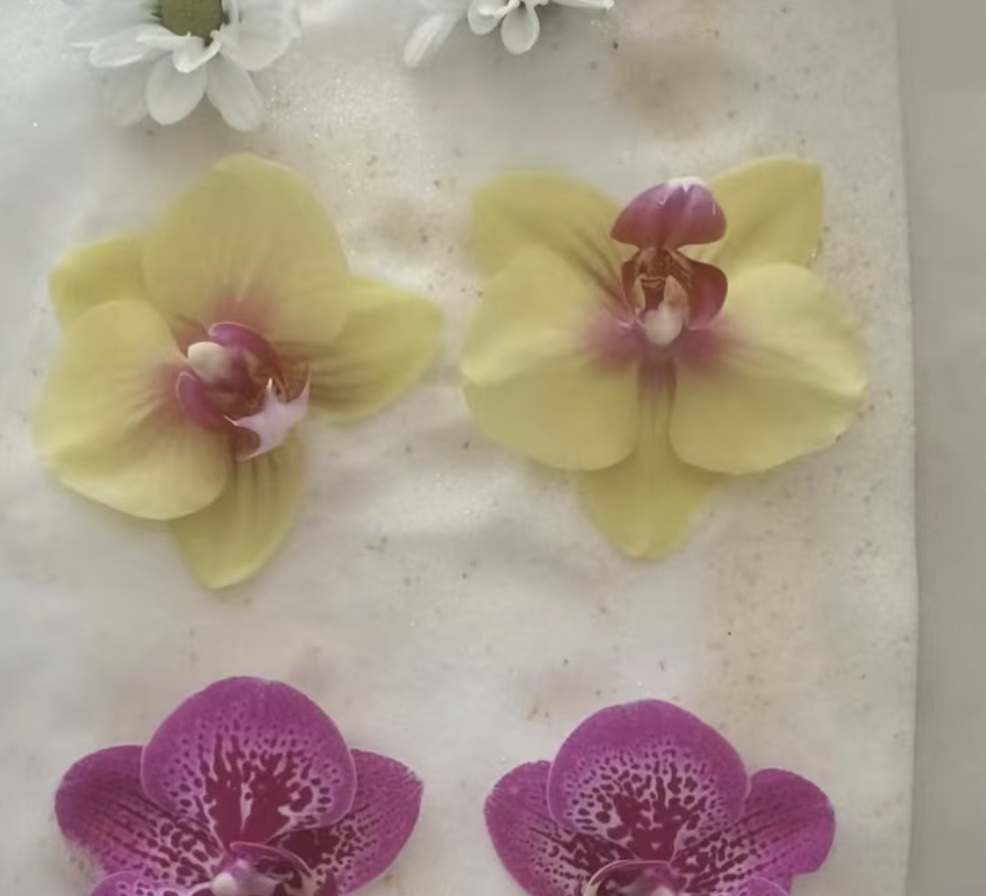
What are the three simplest steps for drying Phalaenopsis orchids? How to dry Phalaenopsis orchids in a way that looks good and doesn't cost money?
There is a flower that looks like a butterfly in flight, with petals in a variety of colors, some even featuring unique patterns. I’m sure you’ve guessed
-

After upgrading the cup of young Phalaenopsis seedlings, learn step by step how to grow strong seedlings, identify roots, and care for them all in one go
When growing young Phalaenopsis seedlings, many flower enthusiasts always think "young seedlings don't need an urgent cup change," and end up stifling the seedlings! Just like this 1.7-inch tissue-cultured seedling at the base, after only 4 months of growing, the roots are already densely emerging and look about to drill out from the bottom of the cup - at this point, it must be upgraded in time, switched to a 2.5-inch cup, to give the young seedling enough
-

Is a Phalaenopsis bonsai just one plant? A step-by-step guide to growing one into a bonsai
In the world of floral decoration, the Phalaenopsis (moth orchid) is highly favored for its elegant bearing and is often crafted into exquisite bonsai. Many people wonder: is a Phalaenopsis bonsai just one plant? And how do you cultivate a Phalaenopsis into a uniquely charming bonsai? A Phalaenopsis bonsai can be a single plant styled on its own, or it can be composed of multiple plants
-

How to Make Honey Pomelo Tea and Detailed Step-by-Step Instructions
Honey pomelo tea is a mixture of honey and pomelo, in which the honey has a laxative effect and is remarkably effective for people suffering from constipation. Pomelo can also clear heat and detoxify, and if consumed over the long term it also has a remarkable effect on beauty care. The honey pomelo tea made from pomelo and honey
-
What conditions are needed for bamboo rat farming? These preparatory steps must be done well
The bamboo rat farming industry is a new farming project that has only emerged in recent years. In the early days, bamboo rats were merely wild animals living in bamboo forests, but later their nutritional value became widely known and they gradually appeared on the market. So, what conditions are needed for farming bamboo rats? 1. Farming bamboo
-
How to Grow Garlic Sprouts? A Detailed Guide to the Latest Correct Planting Steps
I. Sowing Season Because the seed varieties chosen differ, there is no particularly fixed time. Generally speaking, sowing is done in October, and by June of the following year the garlic sprouts will have grown and can be harvested. However, if it is in a greenhouse, then
-
How to Grow Dendrobium in Pots? 5 Easy Steps to Do It at Home
How do you grow dendrobium at home? To grow potted dendrobium at home, you first need to prepare a plain clay pot, some crushed bark, wood shavings and small dendrobium seedlings. Place the seedlings into the pot, then fill the pot with bark and wood shavings. Then water, soaking the bark and wood shavings completely.
-
How to Grow Rice? A Clear Explanation of the Detailed Steps in One Go
The steps of rice planting include seven stages: land preparation, seedling raising, weeding and pest control, fertilizing, irrigation and drainage, drying, and screening. Nowadays, machines are mostly used for land preparation to save manpower. For seedling raising, you can choose rice seedlings cultivated by specialized seedling centers; those engaged in large-scale planting will choose
-
How to Grow Purple Avens (Geum aleppicum)? A Detailed Guide to Key Cultivation Techniques
The first step is sowing, which can be done in spring and autumn; the spring sowing period is from mid-April to early May, and October is suitable for autumn sowing. The second step is site selection and land preparation: choose low-lying, fertile land, and do a good job of ploughing, levelling and fertilising. The third step is seedling-stage management
-
How to raise river shrimp? Master these six key steps
1. Pond conditions and clearing. Choose a freshwater pond or shrimp pond with an area of 3-5 mu, a water depth of 1.5-2.5 m, abundant freshwater sources, no pollution, and a sandy bottom. 2. Fertilizing to cultivate feed. One week before stocking shrimp fry, filter with a 60-80 mesh silk screen, fill with 30 cm of water, and apply 50 kg of base fertilizer (fermented livestock manure) or 5 kg of urea per mu to cultivate basic feed.
条件筛选