-

What kind of soil standards do high-yield rice require?
(1) Distinct profile horizons, deep plough layer, good texture. For high-yield rice, a plough layer depth of about 20 cm is best. The plough layer should be fertile, thick and soft, with a high aggregate content, good structure and aeration, and suitable tillage properties. If the plough layer is too shallow, rice roots develop poorly; if too deep, floating mud forms easily, which is unfavourable for rice rooting and early growth. The texture should be moderate, neither too sandy nor too clayey: when dry-ploughed, the plough does not turn up large clods and the soil breaks up easily under harrowing; when wet-ploughed, it does not settle into a hard pan; when drained and dried, it does not crack widely, and the cracks close up easily after re-flooding.(2) Organic
-
Detailed Explanation of the Content of Edible Mushroom Spawn Quality Standards
Grade 1 spawn: For oyster mushroom, Hypsizygus marmoreus (shimeji), enoki mushroom, Pleurotus nebrodensis (white lingzhi mushroom), king oyster mushroom, abalone mushroom, and Ferula mushroom, the mycelium is pure white with strong wall-climbing ability; the mycelium is robust and vigorous; the substrate does not shrivel; aerial mycelium does not collapse; and when observed from the reverse side, there are no spots, streaks, or shadows except for the inoculation block point. For shaggy mane mushroom, the mycelium is grayish-white, sparser than that of oyster mushroom, and slightly earthy-yellow after maturation, with the inoculation block showing heavier pigmentation; the rest is the same as oyster mushroom. For straw mushroom, the mycelium is grayish-blue, greatly elongated, and semi-transparent, and after maturation most produce chlamydospores.
-
What are the specification standards for bonsai art?
Some years ago, when Chinese bonsai specifications were rapidly developing toward the two extremes of "extra-large", "super-giant" and "ultra-miniature", Mr. Naiweng pointed out in a timely manner that tree bonsai should have "a certain sense of proportion" in their specifications, "if too large, it becomes merely planting a tree; if too small, it cannot express the beautiful posture of the potted tree." Mr. Naiweng's incisive exposition is full of dialectical philosophical thought, is scientific and artistic true insight, and is a dose of cooling medicine for overheated minds. Now, regarding the question of bonsai specifications, the bonsai world is paying increasing attention,
-
What are the similarities and differences between Chinese and American cotton grading standards?
The United States is a major cotton-producing and cotton-consuming country, with half of its annual cotton production used for domestic consumption and half for export. As a result, American cotton standards have an important influence worldwide and are used by 24 countries and regions; they are also known as the universal cotton standards. Below is a brief introduction to the similarities and differences between Chinese and American cotton grading standards: Cotton grade is a reflection of the overall quality performance of cotton, and the cotton standards of most cotton-producing countries in the world include a cotton grade inspection item. In the U.S. cotton standard
-
Detailed Explanation of Rearing Standards and Key Technical Points for Young Silkworms
The key to rearing young silkworms is to master reasonable temperature and humidity, appropriately mature fresh mulberry leaves and reasonable techniques for handling molting and awakening. For leaves used for collecting newly hatched silkworms, the leaf color is yellow with a hint of green, slightly wrinkled; in spring pick the 2nd leaf, in summer and autumn pick the 2nd-3rd leaf. For the 1st instar, use moderately mature leaves that are green with a hint of yellow, with a flat leaf surface, the 3rd-4th leaf, preferably tender rather than old, depending on the climate. For the 2nd instar, moderately mature leaves have a normal green color; for the 3rd instar in spring, three-eye leaves can be used. For the 1st-2nd instars, cut leaves into square pieces 1.5 times the body length of the silkworm, and use strip leaves when expanding the rearing bed. During the spring silkworm season, one can aim for 10 days to the third molt.
-
A Detailed Guide to the Harvesting Standards and Processing Methods for Goji Berries
1. Harvesting requirements: Medicinal goji berries (Lycium barbarum) ripen successively from June to November and should be harvested at the right time. They can be picked when the fruit turns from green to red or orange-red and the fruit stalk and flesh become slightly soft. If picked too early, the fruit is not plump and its color after drying is dull; if picked too late, the sugar content is too high and the fruit easily drops off, becoming dark purplish-black after sun-drying or oven-drying (commonly known as oil seeds) and losing its commercial value. Picking is best done after 10 a.m. on a clear day. Never pick fruit after rain or when covered with dew. Handle it gently when picking and remove it together with the fruit stalk. Otherwise, the juice will flow out and affect its internal quality.
-
Detailed Explanation of Grading and Packaging Standards for Button Mushrooms (Agaricus bitorquis)
Quality Standards Basic quality requirements: fresh and clean, free of abnormal odor or taste, free of abnormal foreign moisture, carefully picked, fully developed, with maturity suitable for market or storage requirements. Special grade: same variety, excellent shape and color, cap not opened, with the inherent color of the variety, no water damage, no rot. Grade I: same variety, normal shape and color, cap not opened, with the inherent color of the variety, no water damage, no rot, no pests or diseases or other damage. Grade II
-
Introduction to Raccoon Dog Breeds and Detailed Explanation of Selection Standards
The raccoon dog belongs to the order Carnivora, family Canidae, and is a medium-sized fur-bearing animal. According to "Fauna Sinica" (1987), the raccoon dog in China can be divided into 3 subspecies, namely the nominate subspecies, the Northeast subspecies, and the Southwest subspecies: ① Nominate subspecies: found in Jiangsu, Zhejiang, Anhui, Jiangxi, Hunan, Hubei, Fujian, Guangdong, Guangxi and other provinces and regions, body length 50-53cm, short coat, underfur is brownish-yellow, guard hairs have fewer black tips, and the black longitudinal stripe on the back is not obvious. ② Northeast subspecies: found in Heilongjiang, Jilin, Liaoning and other provinces, body length 56-90c
-
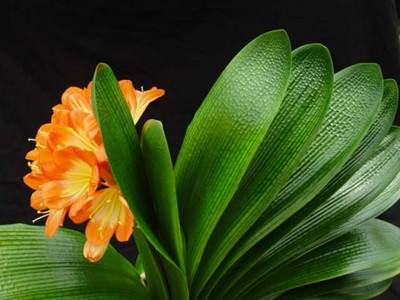
A Comprehensive Analysis of Clivia Appreciation and Evaluation Standards
For many years, when people have purchased mid-to-high-end clivias, they have mostly based their choice on the quality of the leaves, essentially disregarding the flowers and other conditions. Therefore, the clivia appreciation and evaluation standards are of course leaf-oriented. To sum up, there are mainly + criteria
-

Spice Management to Align with International Standards; Health and Welfare Ministry Hopes to List 3,000 Items by Year-End
Aligning with international standards, the Health and Welfare Ministry hopes to list 3,000 spices by the end of the year
条件筛选