-

What kind of soil standards do high-yield rice require?
(1) Distinct profile horizons, deep plough layer, good texture. For high-yield rice, a plough layer depth of about 20 cm is best. The plough layer should be fertile, thick and soft, with a high aggregate content, good structure and aeration, and suitable tillage properties. If the plough layer is too shallow, rice roots develop poorly; if too deep, floating mud forms easily, which is unfavourable for rice rooting and early growth. The texture should be moderate, neither too sandy nor too clayey: when dry-ploughed, the plough does not turn up large clods and the soil breaks up easily under harrowing; when wet-ploughed, it does not settle into a hard pan; when drained and dried, it does not crack widely, and the cracks close up easily after re-flooding.(2) Organic
-
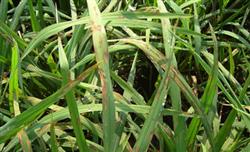
Detailed Explanation of the Grading Standards and Control Methods for Rice Blast
Grading standards Leaf blast: Grade 1 occurs sporadically, and disease can only be seen upon careful investigation. Grade 2 has slightly more incidence, with diseased leaves concentrated in the lower part. Grade 3 has widespread incidence, with diseased leaves concentrated in the middle and lower parts. Grade 4 has relatively severe incidence, with diseased leaves concentrated in the middle and upper parts, and a small number of patches appearing. Grade 5 has severe incidence, with obvious patches...
-
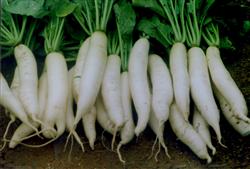
How should radishes be grown to meet pollution-free standards?
How do you grow pollution-free radishes? Here is a detailed introduction to the growing method. To grow pollution-free radishes, you can refer to the following: site selection and sowing. For pollution-free radishes, the key point in site selection is that they must not be near heavily polluted industrial factory areas, and the source of irrigation water must not be polluted either. In addition, radishes have a relatively wide adaptability to soil...
条件筛选