-

How to source materials and cultivate Chinese juniper bonsai? A detailed guide to practical methods
Chinese juniper (Juniperus chinensis), native to China, has a slender, pointed tree form, cylindrical in shape, rising straight upward, with new branches growing around the trunk, resembling a green dragon coiled around a pillar, hence the name "dragon juniper." Its leaves are small and dense, emerald green, scale-like and alternately arranged, with spherical blue fruits that remain unchanged through the four seasons. It is a relatively superior and high-quality ornamental tree for parks and courtyards.
-
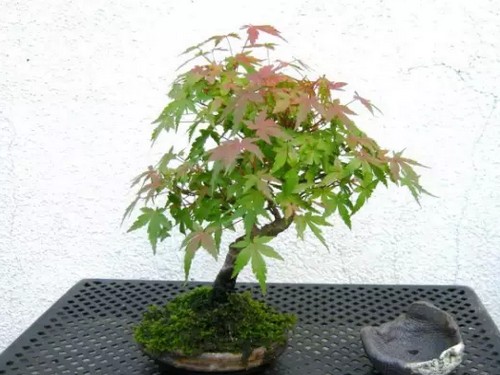
How to source material for a Japanese maple (Acer palmatum) bonsai
Acer palmatum is native to the provinces in the middle and lower reaches of the Yangtze River basin in China, and is also found in Shandong and Zhejiang. It is distributed in Japan as well. It is a common ornamental tree species in gardens, and also grows wild in mountainous areas. It prefers light, and a warm, humid climate; it is not very cold-tolerant, and thrives in humus-rich, fertile, moist acidic or neutral soil. For pot cultivation, avoid the western sun and direct sunlight.
-
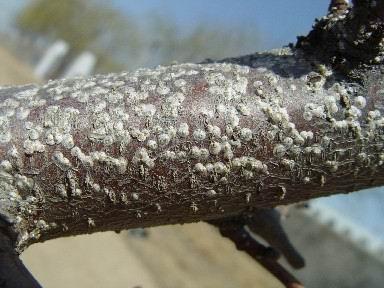
Scale insect species identification sources and whether plant scale insects parasitize and harm humans?
Scale insects are small insects and one of the pests most hated by many fruit growers and flower enthusiasts. They mainly harm fruit trees and forest trees and are one of the most common pests on ornamental flowers. Their reproductive capacity and resistance to pesticides are both very strong, making them generally difficult to control or eradicate. Where do scale insects come from?
-
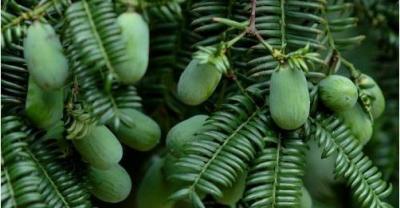
Source analysis of the American ginseng planting base of Dongyu Shennong
Origin of the name of Wendeng City After Qin unified China, writing was standardized, cart axles were made uniform, and the differing cart track widths of the Warring States were unified at a width of 6 chi, with the capital Xian...
-
Introduction to the Cotton "Dong A" Genic Male Sterile Germplasm Resource
In 1972, a male sterile cotton plant was discovered in the field, and after 3 years and 6 seasons of research, the cotton "Dong A" genic male sterile germplasm was successfully developed. Its male sterility trait is mainly controlled by a pair of recessive nuclear genes. It has the characteristics of stable inheritance of male sterility, easy transfer, strong combining ability, a wide range of restorer lines, a population male sterile plant rate of about 50 percent, and 100 percent male sterility per individual plant. It also has good yield potential and wide adaptability. Using the Dong A genic male sterile germplasm, 1 derivative male sterile line was developed. Among them, several derivative male sterile lines were further combined and screened to produce 12 hybrid
-

Crabapple Variety Resources and Pest and Disease Control Cultivation Techniques
Crabapple is the general and common name for several plants of the genus Malus and several plants of the genus Chaenomeles. The several plants of the genus Malus mainly include Malus 'Radiant', Malus 'Sparkling Sprite', Malus 'Kelsey', Malus 'Pink Roof', Malus 'Fire of the Plateau', Malus 'Adams', Malus 'Ruby', and Malus 'Winter Red Fruit'
-
Jiangsu Huaihai Farm Develops Wild Aquatic Flower Planting Resources
Once inconspicuous wild weeds growing in ditches and fields, after artificial introduction, domestication and propagation at the Ailian Aquatic Flower Garden of Jiangsu Huaihai Farm, they have now become sought-after flowers for beautifying the environment and purifying water quality. In early October
条件筛选