Scale insect species identification sources and whether plant scale insects parasitize and harm humans?
Scale insects are small insects and one of the pests most hated by many fruit growers and flower enthusiasts. They mainly harm fruit trees and forest trees and are one of the most common pests on ornamental flowers. Their reproductive capacity and resistance to pesticides are both very strong, making them generally difficult to control or eradicate.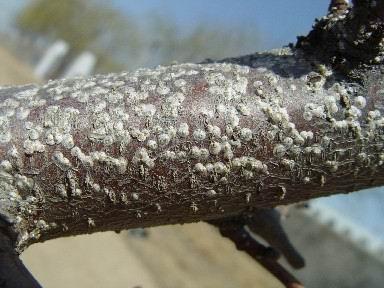
Where do scale insects come from?
The occurrence and damage of scale insects are closely related to environmental conditions. Various environmental factors have direct effects on the growth, development, reproduction, lifespan and population dynamics of scale insects. These environmental factors are usually divided into 2 major categories: abiotic factors and biotic factors.
Abiotic factors include climatic factors such as temperature, humidity, light, wind and rain, while biotic factors mainly include host plants, natural enemies and human activities. Scale insects have 2 reproductive modes: sexual reproduction and parthenogenesis. Most species reproduce sexually, that is, they reproduce offspring through mating between male and female adults.
Scale insects and their species identification
There are many species of scale insects. Scale insects that harm ornamental flowers include the cottony cushion scale, citrus mealybug, hibiscus mealybug, grass scale, red wax scale, Japanese wax scale, horned wax scale, globular scale, brown soft scale and so on. Below, several main species of scale insects are introduced one by one.
1. Japanese wax scale
The Japanese wax scale is also called the jujube tortoise wax scale, jujube louse and so on. Its appearance resembles a “turtle”, with a white exterior. It is widely distributed in China, especially causing serious outbreaks in jujube-producing areas of Hebei, Henan, Shanxi, Shaanxi, Shandong and other provinces. In addition to harming jujube, it can also harm persimmon, pear, apple, chestnut and so on.
Nymphs and female adults gather on branches and leaves to pierce and suck sap. Their secretions can also induce sooty mold, affecting photosynthesis. When the infestation is severe, it causes tree vigor to decline, buds and leaves to shrink, and yield and quality to drop.
2. Giant mealybug
The giant mealybug is also called the straw-sandal scale insect and persimmon naked scale. It mainly harms many fruit trees such as peach, persimmon, pear and apple, as well as garden ornamental plants such as cherry blossom, southern magnolia, wintersweet, Chinese rose, rose and Chinese pagoda tree.
Morphological characteristics. The female adult body is oval, 8-10 mm long and 4-5 mm wide. The center of the back is grayish purple, and the outer area is pale yellow, shaped like a straw sandal. The back is covered with a layer of fine hairs and white thin wax powder. The nymph body is similar in shape, reddish brown.
3. Korean globular wax scale
The Korean globular wax scale is also called the peach globular scale, apricot globular scale and so on. Abroad, it is distributed in Japan and Korea. In China, it is distributed in Northeast China, Hebei, Henan, Shandong, Shaanxi, Ningxia and other provinces and regions. Its hosts include plum, apricot, peach, cherry and so on, and it is common on mountain peach and apricot trees.
4. Globular scale group
The globular scale group includes many kinds of globular scales, such as the peach globular wax scale and apricot round globular scale. They mainly occur on fruit trees and landscaping plants such as peach, apricot, cherry, plum, white ash, willow, shrubby false indigo and purple-leaf plants. Morphological characteristics. This type of scale insect mainly parasitizes plant branches. The female adult body is nearly hemispherical or spherical, with body colors such as yellow-brown and red-brown, making it relatively easy to identify.
5. Jujube globular wax scale
The jujube globular wax scale is also called the large globular scale and the nodular large globular scale. It causes quite extensive damage and can harm more than 20 species of trees and shrubs, including jujube, apricot, apple, pear, almond, peach, grape, yellowhorn, black locust, elm, Euphrates poplar and wild rose.
In mild cases, it affects tree budding and shoot growth and weakens tree vigor. In severe cases, it forms dead branches and withered tips, seriously reduces fruit yield, and may even kill the entire plant.
6. San Jose scale
The San Jose scale is also called the pear tooth scale, pear round scale insect, wheel-center scale insect and so on. Its feeding habits are extremely diverse, and more than 150 host plant species are known. It mainly harms fruit trees and forest trees. The main fruit trees include pear, apple, jujube, walnut, peach, apricot, plum, Japanese apricot, cherry, grape, persimmon and hawthorn.
It can parasitize all aboveground parts of fruit trees. Especially after branches and trunks are damaged, it causes cortex suberization and the decline and death of phloem and vascular tissues, cracking of the cortex, inhibition of growth, leaf drop, and even drying of branch tips and death of the entire plant.
Will plant scale insects parasitize and harm humans?
When scale insects generally appear, their numbers are extremely large, usually forming dense distributions that make people feel very disgusted and frightened. However, you can be reassured that scale insects do little harm to humans.
Scale insects mainly harm plants. After female adults lay eggs, within a few days they hatch into small movable larvae without a waxy scale covering. The larvae crawl on ornamental plants. After finding a suitable place, they pierce their mouthparts into the flower and plant body, suck sap, and begin a fixed life, causing the host plant to lose nutrients and lose a large amount of water.
After young buds and tender shoots are damaged, growth is poor and often turns yellow and withers. While harming ornamental plants, some also excrete large amounts of honeydew, thereby causing sooty mold, which prevents leaves from carrying out photosynthesis. Severely damaged plants decline in vigor and eventually the whole plant dies.
Therefore, during flower cultivation, if scale insects are found on individual branches or leaves, they can be gently brushed off with a soft brush, or removed together with pruning by cutting off infested branches and leaves. They must be brushed clean, cut clean and burned in a centralized manner. Do not throw them away randomly.
Plant flowers and trees appropriately sparsely, place potted flowers more sparsely, and strengthen ventilation in greenhouses and conservatories to reduce humidity, reduce scale insects and allow flowers and trees to grow robustly. In winter, combine this with branch training, cut off shoots and handle them promptly, and cut off diseased and pest-infested branches, weak branches and overly dense branches to help ventilation and reduce humidity.
In winter, brush tree trunks with whitewash to prevent scale insects and freezing. For the whitewash, use quicklime:sulfur powder:salt in a ratio of 0.5:1:0.25, add an appropriate amount of animal glue and water, and make it suitable for easy brushing without running off. For a small number of potted flowers kept at home, scrape off scale insects with bamboo or wooden strips, or wipe them off by hand. Scale insects that leave the plant will not climb back onto the tree to cause damage.